EN 10216 Seamless steel pipe for pressure purposes
December 10, 2025
ASTM A276 Type 304 and 304L Stainless Steel Pipes
December 19, 2025
Why specify our 317L Pipes?
-
Superior PREN (Pitting Resistance Equivalent Number): While 316L struggles in chloride-rich environments, our 317L offers a PREN value of 28–33, providing a fortified defense against pitting and crevice corrosion.
-
The “L” Advantage: With carbon levels restricted to ≤0.030%, our pipes prevent sensitization during welding. This ensures that the Heat-Affected Zone (HAZ) retains its full corrosion resistance without the need for post-weld annealing.
-
Optimized Microstructure: Through rigorous solution annealing at $1040^\circ\text{C}$ followed by rapid quenching, we eliminate the risk of brittle Sigma ($\sigma$) phase formation, common in inferior high-moly products.
2. The Problem-Solver Approach (Industry Focus)
Pulp & Paper, Chemical Processing, and Flue Gas Desulfurization (FGD) sectors.
Stop the Corrosion Cycle: 317L Solutions for Your Most Aggressive Process Streams
In the world of chemical processing, downtime is the enemy. Our UNS S31703 pipes are purpose-built for the “tough zones” where acetic acid, sulfuric acid, and hot chloride liquors reside.
-
Pulp & Paper: Ideal for bleach plant equipment where chlorine dioxide makes 316L obsolete.
-
FGD Systems: Resistant to the acidic condensates found in power plant scrubbers.
-
Pharmaceuticals: Smooth, passivated ID surfaces ensure zero contamination and high-purity fluid transport.
Our Commitment to Quality:
Every pipe undergoes 100% Hydrostatic testing and optional Ultrasonic/Radiographic testing to ensure that your high-pressure systems remain leak-free for decades.
The technical essence of AISI 317L (identified globally by the designation UNS S31703 or the European numeric DIN 1.4438) represents a pinnacle of the 300-series austenitic stainless steel evolution, specifically engineered to push the boundaries of localized corrosion resistance beyond the capabilities of the more common 316L. This material is not merely a variation of its predecessor; it is a specialized metallurgical response to the aggressive, chloride-rich, and acidic environments found in the modern chemical, petrochemical, and pulp and paper industries. To understand 317L is to understand the synergistic relationship between molybdenum and nitrogen in an austenitic matrix, and how these elements collaborate to maintain a tenacious passive film under conditions that would initiate rapid pitting or crevice corrosion in lesser alloys. This deep dive into the material’s technical architecture explores the metallurgical logic, processing requirements, and mechanical performance that define its utility in the world’s most demanding fluid transport systems.
The Metallurgical Logic: Enrichment and Stability
At its core, AISI 317L is a chromium-nickel-molybdenum austenitic stainless steel. While it shares the face-centered cubic ($\text{FCC}$) crystal structure of all 300-series steels, its distinctiveness lies in the heightened concentration of molybdenum. Where 316L typically hovers around $2.0\%$ to $3.0\%$ molybdenum, 317L demands a range of $3.0\%$ to $4.0\%$. This $1\%$ increase might seem marginal in a cursory glance, but in the realm of electrochemistry, it is transformative. Molybdenum is the primary agent for stabilizing the passive oxide layer against the depassivating effects of chloride ions. When chlorine atoms attack the surface, they attempt to penetrate the chromium oxide layer to initiate a pit. Molybdenum atoms, strategically positioned within the lattice, retard the anodic dissolution of the metal within an incipient pit, effectively “healing” the breach before it can propagate into a catastrophic localized failure.
The “L” designation, standing for “Low Carbon,” is equally critical. By restricting carbon to a maximum of $0.030\%$, the alloy essentially eliminates the threat of sensitization during the welding process. In higher carbon variants, the heat-affected zone ($\text{HAZ}$) adjacent to a weld often undergoes chromium carbide precipitation ($\text{Cr}_{23}\text{C}_6$) along grain boundaries. This precipitation robs the surrounding area of chromium, creating a localized zone of vulnerability known as the “sensitized zone,” which is highly susceptible to intergranular corrosion. In 317L, the carbon is so scarce that the kinetics of carbide formation are slowed to a negligible rate, allowing the pipe to be used in the as-welded condition in most corrosive environments without the need for post-weld solution annealing. This makes it an ideal candidate for large-scale field installations where secondary heat treatment is logistically impossible.
Table I: Chemical Composition (ASTM A312 / A213 / A269 Standards)
The precise chemical limits for 317L ensure that the balance of austenite-forming and ferrite-forming elements is maintained, preventing the formation of unwanted phases during solidification or service.
| Element | Weight % (UNS S31703 / DIN 1.4438) |
| Carbon ($\text{C}$), max | $0.030$ |
| Manganese ($\text{Mn}$), max | $2.00$ |
| Phosphorus ($\text{P}$), max | $0.045$ |
| Sulfur ($\text{S}$), max | $0.030$ |
| Silicon ($\text{Si}$), max | $1.00$ |
| Chromium ($\text{Cr}$) | $18.00 – 20.00$ |
| Nickel ($\text{Ni}$) | $11.00 – 15.00$ |
| Molybdenum ($\text{Mo}$) | $3.00 – 4.00$ |
| Nitrogen ($\text{N}$), max | $0.10$ |
| Iron ($\text{Fe}$) | Balance |
The Pitting Resistance Equivalent Number ($\text{PREN}$) for 317L, calculated as $\text{PREN} = \% \text{Cr} + 3.3 \times \% \text{Mo} + 16 \times \% \text{N}$, typically ranges between $28$ and $33$. This is a significant leap from the $\text{PREN}$ of $23-26$ found in 316L, placing 317L in a higher tier of performance for handling hot organic acids, dilute sulfuric acid, and the complex “liquors” utilized in the kraft pulping process. The increased nickel content is also noteworthy; it is required to stabilize the austenite phase against the ferritizing effect of the high molybdenum, ensuring the material remains fully austenitic and non-magnetic even after significant cold work or thermal cycling.
Heat Treatment and Microstructural Integrity
For a pipe manufactured from 317L to meet the rigorous demands of industrial service, its microstructural state must be optimized through solution annealing. This process is not merely a “relief” of internal stresses but a fundamental resetting of the metallurgical clock. During cold forming or welding, the material may develop localized areas of high strain or incipient precipitates. Solution annealing involves heating the material to a temperature where all alloying elements are fully dissolved into a single-phase solid solution. For 317L, this temperature must be high enough to break down any complex carbides or intermetallic phases that might have formed.
The subsequent rapid cooling, or quenching, is the most vital step. If the cooling is too slow, the material spends too much time in the critical temperature window ($450^\circ\text{C}$ to $850^\circ\text{C}$) where deleterious phases can precipitate. For 317L, the high molybdenum content increases the risk of forming the Sigma ($\sigma$) phase, a brittle intermetallic compound that severely degrades both fracture toughness and corrosion resistance. Sigma phase tends to form at the grain boundaries, consuming chromium and molybdenum and leaving the material prone to embrittlement. Therefore, a rapid water quench or forced air cool is mandatory to “freeze” the uniform austenitic structure achieved at the annealing temperature, ensuring the final pipe product possesses maximum ductility and chemical stability.
Table II: Heat Treatment Requirements (AISI 317L / S31703)
The following parameters are standard for ensuring the solution of all precipitates and the homogenization of the microstructure.
| Parameter | Requirement |
| Solution Annealing Temperature (Minimum) | $1900^\circ\text{F}$ ($1040^\circ\text{C}$) |
| Quenching Medium | Water or Rapid Air Cooling |
| Surface Condition | Descaled / Passivated |
Mechanical Performance: Strength with Ductility
The mechanical properties of 317L are a reflection of its austenitic nature. Unlike martensitic steels, which are hardened by quenching, or ferritic steels, which have limited ductility, 317L offers a high degree of “reserve” strength through work hardening. While its yield strength is relatively modest in the annealed state, its ultimate tensile strength is robust, and its elongation is exceptional—often exceeding $40\%$. This means that a 317L pipe can undergo significant plastic deformation before failure, a critical safety feature in high-pressure systems where a “leak-before-break” scenario is preferred over a sudden, brittle rupture.
Furthermore, the high nickel content maintains the material’s toughness at cryogenic temperatures. Unlike carbon steels, which undergo a ductile-to-brittle transition as the temperature drops, 317L remains tough and impact-resistant down to temperatures as low as $-196^\circ\text{C}$. This makes it suitable for specific chemical processes involving liquefied gases or extremely cold process streams. The solid-solution strengthening provided by the molybdenum and nitrogen ensures that while the material is ductile, it still maintains sufficient structural rigidity to resist deformation under the thermal expansion and contraction stresses common in chemical reactors.
Table III: Tensile and Hardness Requirements (Annealed Condition)
The following table outlines the minimum mechanical performance metrics that must be verified through standardized testing for any pipe batch to be certified.
| Property | Minimum Value / Range |
| Tensile Strength, min | $75,000$ psi ($515$ MPa) |
| Yield Strength ($0.2\%$ Offset), min | $30,000$ psi ($205$ MPa) |
| Elongation in $2$ in or $50$ mm, min | $35\%$ |
| Brinell Hardness (HB), max | $217$ |
| Rockwell Hardness (HRB), max | $95$ |
Industrial Applications and Environmental Suitability
The strategic value of 317L is most apparent in environments where sulfuric acid and organic acids are prevalent. In the pulp and paper industry, particularly in the bleach plant where chlorine dioxide and sulfuric acid create a highly corrosive “soup,” 317L is often the material of choice over 316L. Similarly, in the flue gas desulfurization ($\text{FGD}$) systems of power plants, where exhaust gases are scrubbed of sulfur oxides, the resulting condensate is highly acidic and chloride-rich. 317L pipes provide the necessary longevity in these “wet” zones where carbon steel would vanish in weeks.
In the chemical processing industry, 317L is frequently used in the production of inks, dyes, and pharmaceutical precursors that involve complex halogenated compounds. Its resistance to “pitting” is the key; in a high-purity pharmaceutical process, even a single microscopic pit can harbor bacteria or contaminate a multi-million-dollar batch. The smooth, passivated surface of a 317L pipe, combined with its resistance to localized attack, ensures process hygiene and system reliability over decades of service.
Conclusion: The Specialist’s Choice
AISI 317L / S31703 is not a “general purpose” steel; it is a specialist’s alloy. It represents the logical progression of austenitic stainless technology, where molybdenum is leveraged to its maximum efficiency within the 300-series framework. For the manufacturer and the engineer, it requires a higher level of discipline in welding and heat treatment to avoid the formation of the brittle Sigma phase, but the reward is a piping system with unmatched durability in acidic chloride environments. As global industrial processes move toward higher temperatures, higher concentrations of chemicals, and longer service life requirements, the role of 317L as the “high-performance” upgrade to 316L becomes increasingly indispensable.
Would you like me to analyze the welding procedures for 317L in more detail, specifically regarding filler metal selection to match the high molybdenum content?

Related posts
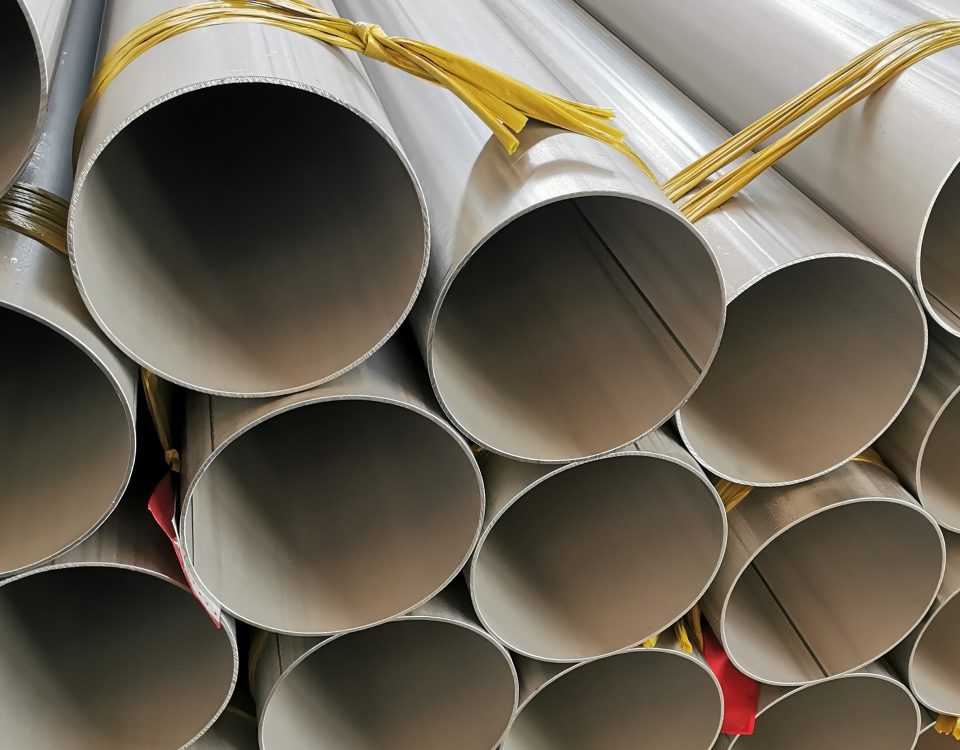
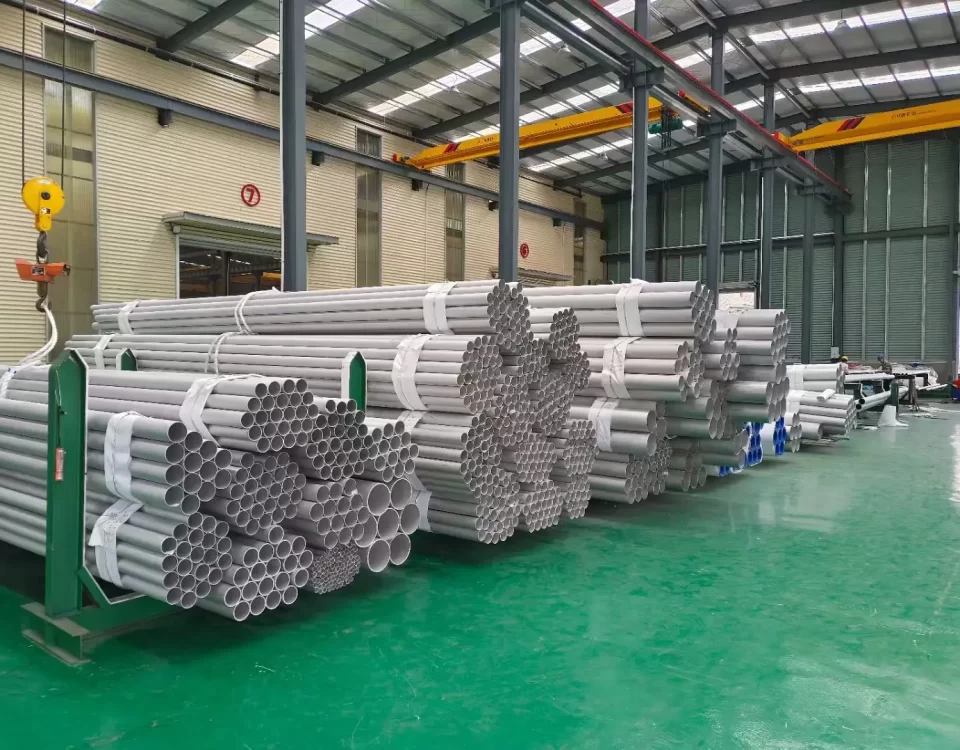
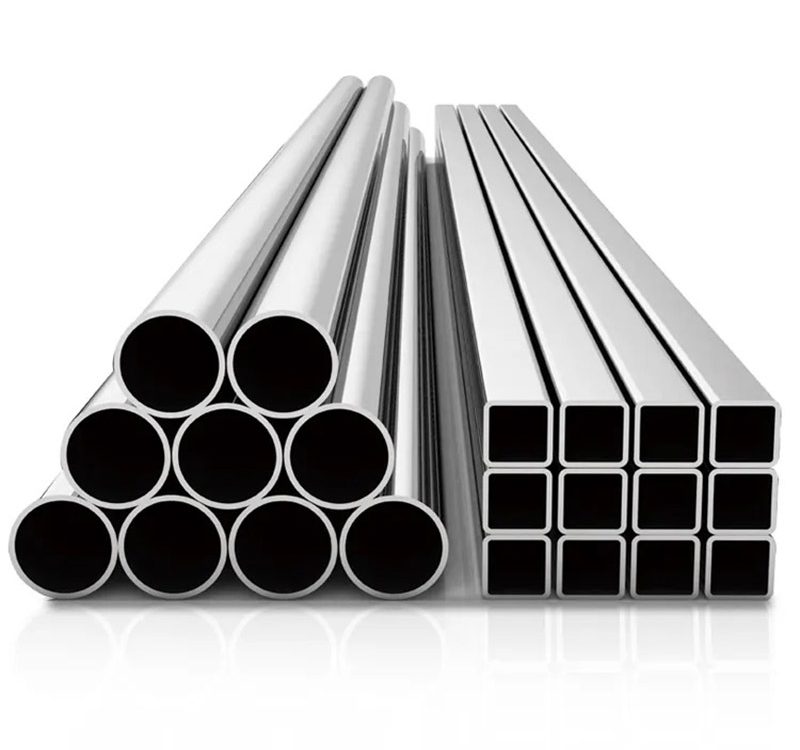
ASTM A554 specification covers ferritic, welded austenitic and austenitic-ferritic duplex stainless steel mechanical tubing intended for use in structural, ornamental, exhaust and other applications where mechanical properties, appearance, or corrosion resistance is needed. ASME SA554 Tubing is commonly shipped without protective coating. ASTM A554 specification covers as welded or cold-reduced mechanical tubing in sizes to 16 inch (406.4 mm) outside dimension and in wall thicknesses 0.020 inch (0.51 mm). ASTM A554 Welded Mechanical Tubing made from flat-rolled steel by an automatic welding process without the addition of filler metal. ASTM A554 Tubes furnished in one of the following shapes – square, round, rectangular, or special.
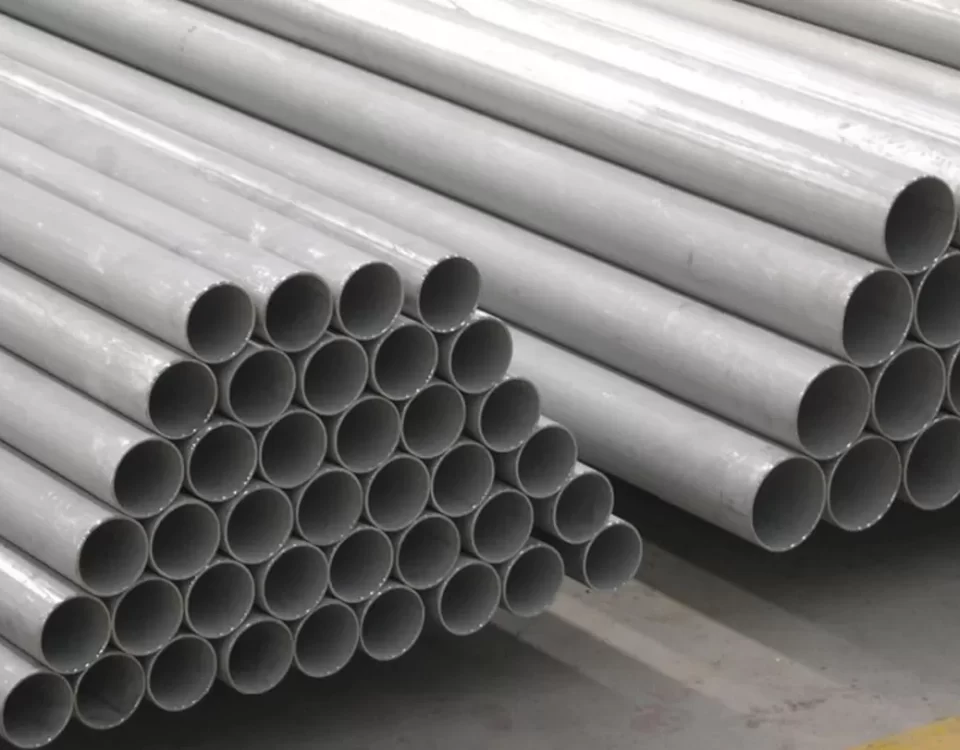
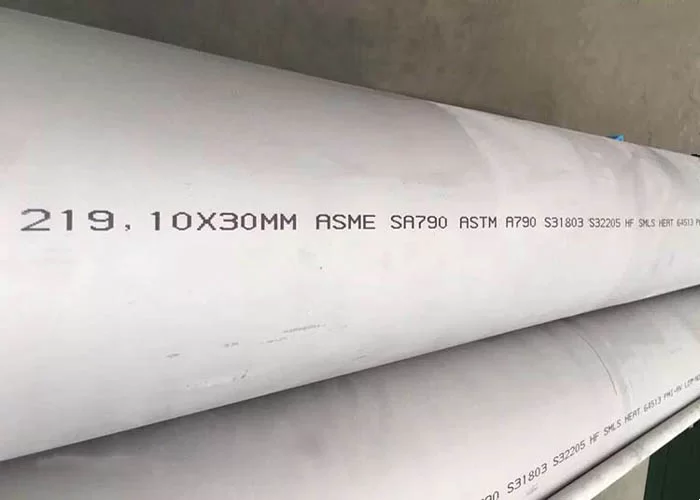
Duplex-grade stainless steel alloys have ferritic/austenitic properties, giving these materials superior strength and excellent resistance to oxidation. While the duplex-grade family includes a wide range of specific formulations, duplex S31803 (2205) and super duplex S32750 (2507) stainless steel are two of the most common. These stainless steel products are extremely versatile, with many applications in the oil and gas, petrochemical, and chemical processing industries.
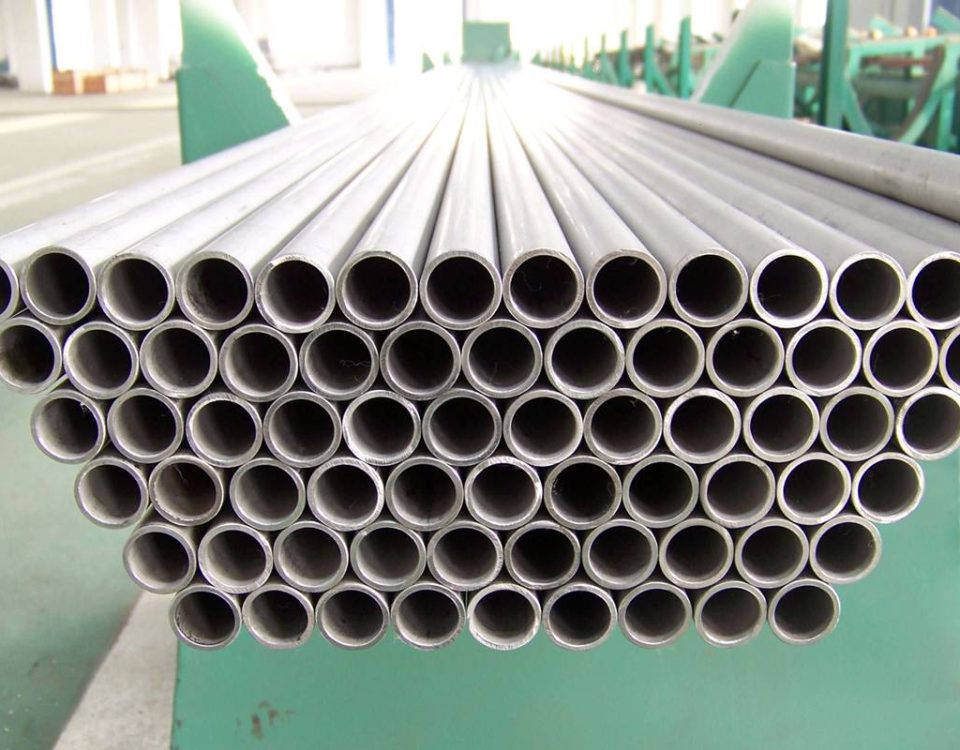
S31803 is the Unified Numbering System (UNS) designation for the original duplex stainless steel. The UNS system was created by a number of trade groups working together in the 1970’s, to reduce confusion from the same alloy being called different things or vice-versa. Each metal is indicated by a letter followed by five numbers, where the letter indicates the family of metals i.e. S for stainless steels.
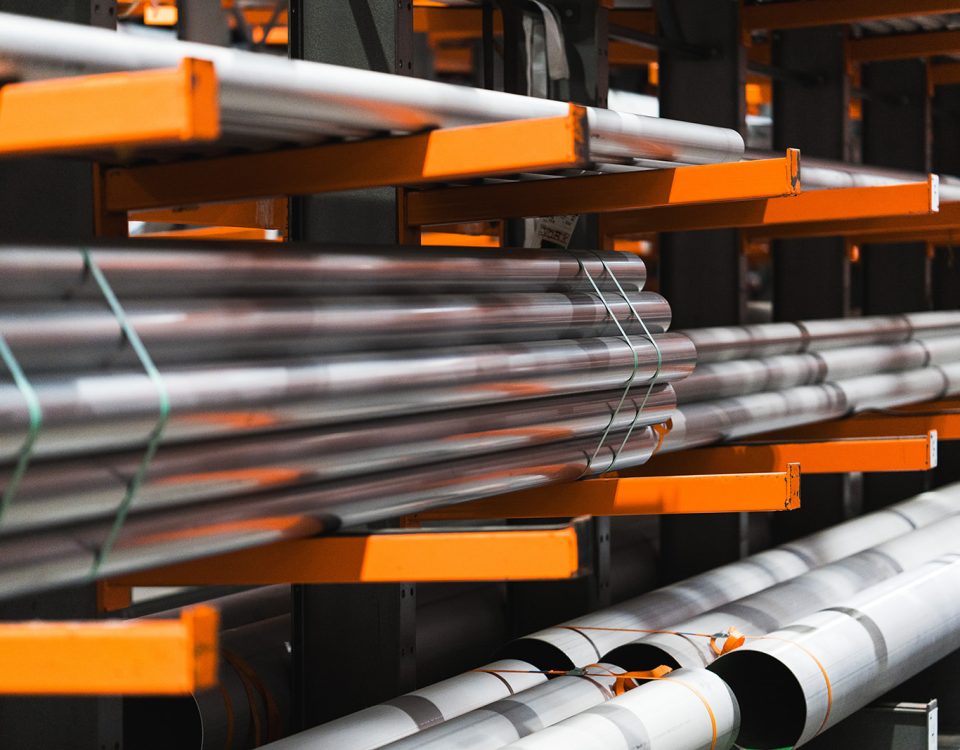
Alloy 347 stainless steel belongs to the family of austenitic stainless steels and is known for its exceptional stability due to the presence of stabilizing elements. This alloy is highly weldable, and in most cases, annealing is not necessary after welding unless stress relief is desired. The remarkable resistance to oxidation and corrosion exhibited by 347 stainless steel makes it a reliable choice for various applications. Its high creep strength allows it to perform optimally at temperatures up to 1600 °F.