ASTM A135 Fire Sprinkler Pipes
May 23, 2026
Steel Butt-Welding Seamless Pipe Fittings – National GB Standard
June 13, 2026
JIS G 4105 SCM420 Seamless Steel Pipes
Premium Chromium-Molybdenum Alloy Pressure and Structural Tubes: Technical Delivery Conditions, Mechanical Testing, Metallurgy, and Processing Standards
2. Metallurgical Properties & Composition
3. Mechanical & Structural Capacities
4. Core Technical Parameters & Transformation Kinetics
5. Heat Treatment Protocols & Operations
6. Global Equivalent Matrix Reference
7. Manufacturing Controls & Tolerances
8. Comprehensive Dimensional Weight Data
9. Non-Destructive Testing & Inspection Protocols
10. Strategic Industrial System Applications
1. Technical , Classification & Scope of JIS G 4105 SCM420
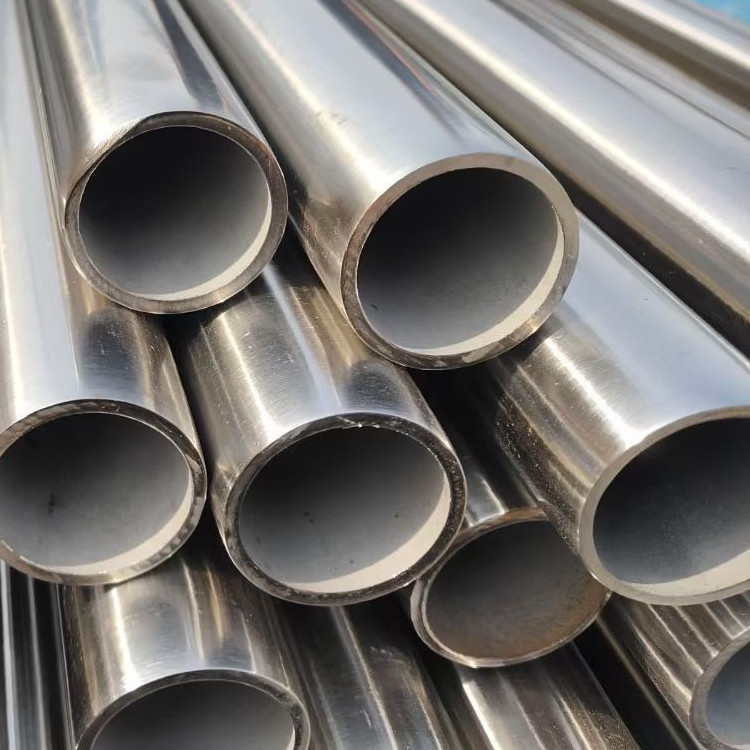
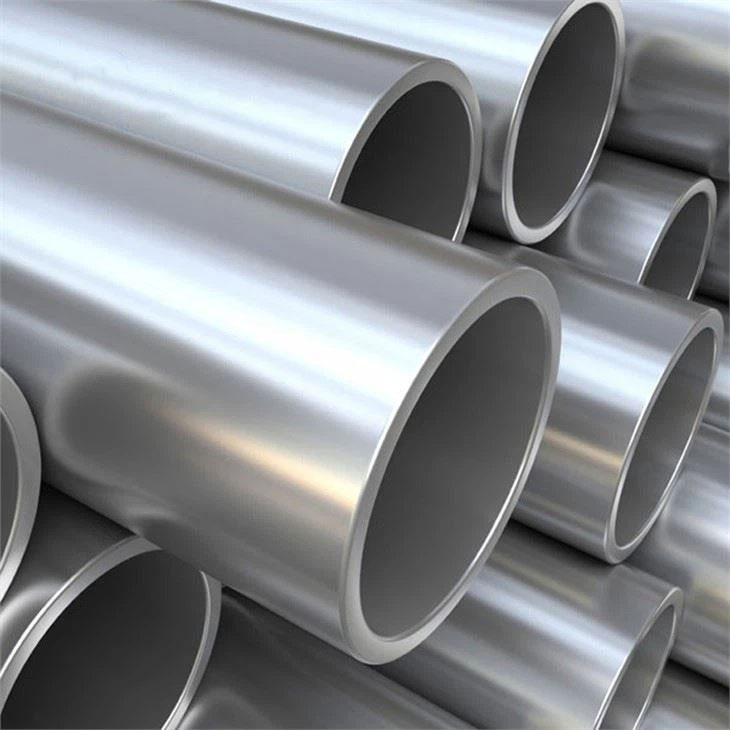
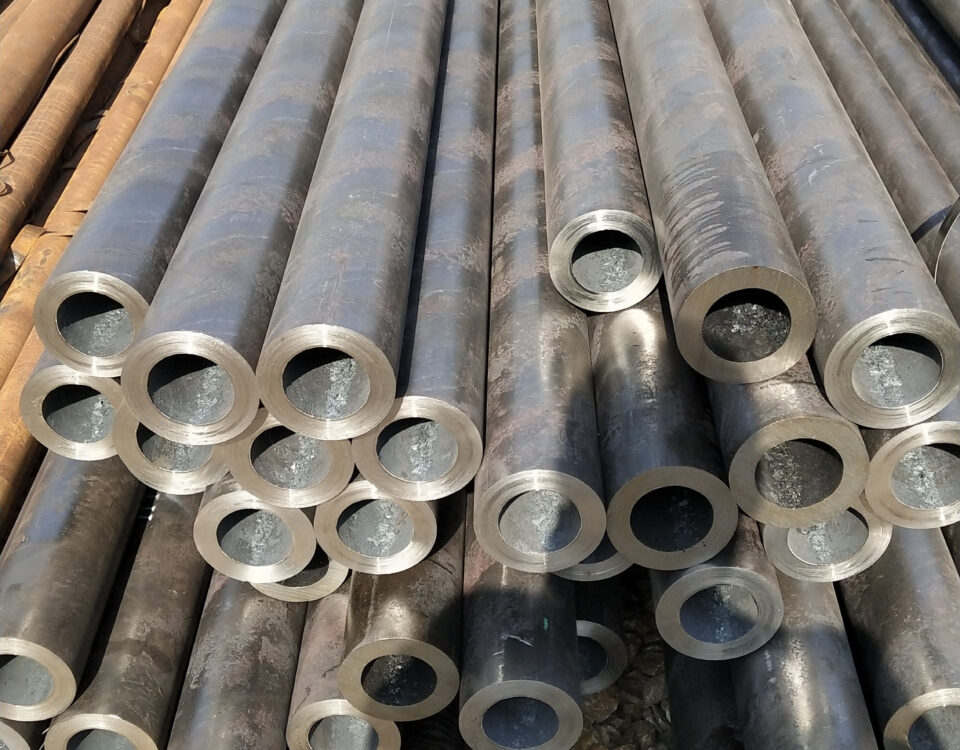
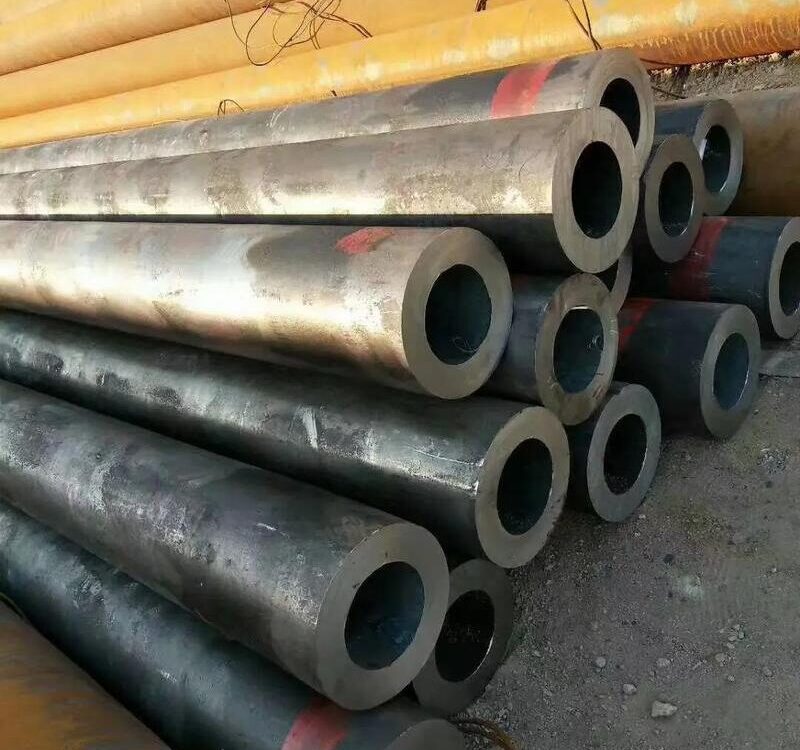
JIS G 4105 SCM420 Seamless Steel Pipes represent a premium class of low-alloy structural steel pipes engineered for demanding applications that involve high pressure, elevated structural strain, and intensive cyclic mechanical loading. Characterized by their integration of Chromium (Cr) and Molybdenum (Mo) alloying nodes, SCM420 tubes are prominently recognized for their superior case-hardening response during carburization, maintaining high internal core toughness alongside an ultra-hard exterior shell.
The operational framework of JIS G 4105 standard specifically outlines the strict dimensional boundaries, raw material processing practices, chemical element distributions, and rigorous material testing methods required to execute safe infrastructural deployments. SCM420 seamless tubes offer high hardenability, structural reliability under thermal fluctuations up to 250°C, clean weldability structures with proper low-temperature preheating configurations, and low susceptibility to delayed cold-cracking stress behaviors under dynamic operational strain profiles.
2. Metallurgical Properties & Chemical Composition
The structural performance criteria of SCM420 seamless pipes rely heavily on the meticulous control of the matrix alloying elements. The combination of carbon, chromium, and molybdenum dictates the steel’s microstructural evolution during solid-state cooling transitions.
| Element Code | Carbon (C) | Silicon (Si) | Manganese (Mn) | Phosphorus (P) | Sulfur (S) | Nickel (Ni) | Chromium (Cr) | Molybdenum (Mo) | Copper (Cu) |
|---|---|---|---|---|---|---|---|---|---|
| Min (%) | 0.18 | 0.15 | 0.60 | — | — | — | 0.90 | 0.15 | — |
| Max (%) | 0.23 | 0.35 | 0.85 | 0.030 | 0.030 | 0.25 | 1.20 | 0.30 | 0.30 |
Table 2.1: Primary Chemical Element Control Thresholds for SCM420 under JIS G4051/G4105 validation tracks.
3. Mechanical & Structural Capacities
Mechanical verification testing provides critical technical criteria for engineers configuring heavy structural frames, industrial boilers, pressure vessel circuits, and automotive transmission linkages.
| Mechanical Performance Property Parameters | Metric System Target Threshold Value | Alternative System Target Threshold Value |
|---|---|---|
| Ultimate Tensile Strength ($R_m$) | ≧ 930 MPa | ≧ 95 kgf/mm² |
| Yield Strength Offset Point ($R_{eH}$) | ≧ 685 MPa | ≧ 70 kgf/mm² |
| Elongation Factor Limit ($A_5$) | ≧ 14 % | ≧ 14 % |
| Cross Section Reduction Ratio Rate ($\psi$) | ≧ 40 % | ≧ 40 % |
| Charpy V-Notch Impact Energy Rating ($A_v$) | ≧ 60 J/cm² | ≧ 6 J·f/cm² |
| Raw Material Hardness Core Value (HB) | 352 – 362 HB | 38 – 39 HRC (Approx.) |
Table 3.1: Mechanical Property Compliance Metrics under Ambient Laboratory Thermal Baselines.
4. Core Technical Parameters & Transformation Kinetics
The specific transformation kinetics values define the thermal boundaries within which the matrix transitions between its different structural phases during continuous processing cycles.
| Thermal Transformation Phase Metric | Lower Bounds Value | Upper Bounds Value | Critical Explanatory Operational Meaning |
|---|---|---|---|
| $Ac_1$ | 770 °C | — | The starting point for austenite formation during continuous material heating cycles. |
| $Ac_3$ | — | 835 °C | The point where the structure transitions completely into the single-phase austenite matrix. |
| $Ar_3$ | 770 °C | — | The temperature at which austenite begins transforming into ferrite during cooling cycles. |
| $Ar_1$ | — | 700 °C | The completion point for austenite transformation into pearlite structures under standard cooling. |
| $M_s$ | 410 °C | — | The critical temperature where the diffusionless transformation into martensite initiates. |
Table 4.1: Critical Transformation Kinetics and Temperatures for SCM420 Alloy Matrices.
5. Heat Treatment Protocols & Operations
Crucial Processing Rule: The final mechanical and microstructural properties of SCM420 seamless tubes depend heavily on the precision of the heat treatment process. Deviations in soaking times or cooling rates can result in grain coarsening.
To achieve the microstructural balance required for high-stress applications, SCM420 pipes undergo controlled thermal cycles.
| Heat Treatment Process | Soaking Temperature Range | Cooling Media / Method | Resulting Microstructural Composition |
|---|---|---|---|
| Full Annealing Run | 830 °C — 850 °C | Furnace Cooling | Equiaxed Ferrite + Coarse Pearlite Matrix (High Ductility) |
| Normalization Stage | 830 °C — 900 °C | Still Air Cooling Baseline | Fine Pearlite + Ferrite (Relieves Residual Stresses) |
| Primary Hardening (Quench 1) | 850 °C — 900 °C | Oil Quenching | High-Hardenability Martensitic Core Layer Initialization |
| Secondary Hardening (Quench 2) | 800 °C — 850 °C | Controlled Oil Quench | Refines Case Grain Structure post Carburization runs |
| Tempering Cycle | 150 °C — 200 °C | Atmospheric Air Cooling | Low-Temperature Tempered Martensite (Stress Relief) |
Table 5.1: Heat Treatment Processing Specifications for JIS G 4105 SCM420 Pipe Systems.
6. Global Equivalent Matrix Reference
In international B2B industrial projects, cross-referencing national and international standards is necessary for material substitution. The table below details the equivalent material grades across global manufacturing regions.
| Region / Standard Organization | Standard Specification Document | Equivalent Grade Designation Name |
|---|---|---|
| Japan (JIS) | JIS G 4105 / JIS G 4051 | SCM420 / SCM 420 Tube |
| United States (AISI / ASTM) | ASTM A519 / AISI Series | 4130 / Grade 4130 / 4118 |
| European Union (EN) | EN 10083-3 / EN 10216-2 | 25CrMo4 / 1.7218 / 22CrMo4 |
| Germany (DIN) | DIN 17200 / DIN 1629 | 25CrMo4 / W.Nr 1.7218 |
| China (GB) | GB /T 3077 / GB 5310 | 20CrMo / 25CrMo High-Grade |
| Russia (GOST) | GOST 4543 | 20ChM / 20XM / 25XM Systems |
Table 6.1: International Cross-Reference Matrix for SCM420 Alloy Seamless Pipe Equivalency.
7. Manufacturing Controls & Dimensional Tolerances
Achieving structural reliability in high-pressure fluid loops or mechanical assemblies requires tight control over pipe dimensions. Standard acceptable deviations for outside diameter (OD) and wall thickness (WT) are managed precisely:
| Pipe Dimensional Criteria Target | Cold-Drawn Seamless Method Tolerances | Hot-Rolled Seamless Method Tolerances |
|---|---|---|
| Outside Diameter (OD < 50mm) | ± 0.20 mm | ± 0.40 mm |
| Outside Diameter (OD 50mm – 100mm) | ± 0.30% of Nominal | ± 0.75% of Nominal |
| Wall Thickness (WT < 5mm) | ± 0.15 mm | ± 10% of Nominal |
| Wall Thickness (WT 5mm – 15mm) | ± 8% of Nominal | ± 12.5% of Nominal |
Table 7.1: Dimensional Precision Limits for JIS G 4105 SCM420 Pipes.
8. Comprehensive Dimensional Weight Data Array Matrix
Theoretical weight calculations are derived using the standard volumetric steel density conversion equation: $W = (D – t) \times t \times 0.02466$. Below is the structural lookup table for configuration planners:
| Nominal OD ($D$, mm) | Nominal WT ($t$, mm) | Theoretical Weight ($W$, kg/m) | Hydrostatic Test Baseline |
|---|---|---|---|
| 21.3 | 2.0 | 0.952 | 120 Bar |
| 21.3 | 2.8 | 1.278 | 160 Bar |
| 26.7 | 2.5 | 1.492 | 110 Bar |
| 26.7 | 3.2 | 1.854 | 155 Bar |
| 33.4 | 3.0 | 2.249 | 105 Bar |
| 33.4 | 4.5 | 3.207 | 160 Bar |
| 42.2 | 3.5 | 3.340 | 100 Bar |
| 42.2 | 5.0 | 4.587 | 145 Bar |
| 48.3 | 3.8 | 4.172 | 95 Bar |
| 48.3 | 5.6 | 5.897 | 140 Bar |
| 60.3 | 4.0 | 5.554 | 85 Bar |
| 60.3 | 6.3 | 8.384 | 135 Bar |
| 114.3 | 10.0 | 25.722 | 115 Bar |
| 114.3 | 16.0 | 38.788 | 190 Bar |
Table 8.1: Matrix Array for Standard Dimensional Layout and Weight Calculations.
9. Non-Destructive Testing & Quality Inspection Protocols
To verify the internal integrity of SCM420 seamless tubes under high-stress conditions, each batch undergoes strict QA protocols:
- Hydrostatic Testing Verification: Each line section is pressurized to ensure structural wall integrity and zero leakage.
- Ultrasonic Flaw Inspection (UT): Scans the entire circumference to identify internal anomalies like micro-voids or porosity.
- Eddy Current Analysis (ET): Applied primarily to map surface fissures or discontinuity arrays.
- Material Certification Compliance: Every production batch is issued an official Mill Test Certificate (MTC) conforming to EN 10204 3.1.
10. Strategic Industrial System Applications
High-Pressure Fluid Systems
SCM420 tubes are extensively utilized as high-pressure lines for chemical processing equipment, hydrogen-nitrogen mixtures, and boiler feed systems operating below 250°C.
Heavy Mechanical Components
After surface carburization and hardening, these pipes serve as high-load parts, including drive shafts, heavy-duty industrial gears, and high-tensile fasteners.
Technical Validation Note: The calculations, equivalent matrices, and processing limits outlined in this technical guide are based on the latest revisions of the JIS G 4105 standard. Always consult certified manufacturer data books for final layout design.
+++++++++++++++++++++++++++++++++++++++++++++++++++++++++++++++++++++++++++++++++++
11. Advanced Metallurgical Mechanics & Microstructural Evolution
The high-performance behavior of JIS G 4105 SCM420 seamless steel pipes under dynamic service stress is directly determined by the state of its crystalline matrix. During the initial hot-rolling mill phase, the material exists completely within the high-temperature face-centered cubic (FCC) austenite phase. As cooling progresses through controlled cooling beds, this austenite transforms into a balanced microstructure consisting of proeutectoid ferrite and fine-lamellar pearlite.
When subjected to the critical carburizing process, carbon atoms diffuse into the surface layer, creating a distinct carbon gradient. The core remains at a low carbon percentage (approximately 0.20%), while the case layer reaches hypereutectoid or eutectoid levels (0.80% – 0.95% C). Upon subsequent oil quenching, this results in a dual-layer mechanical system:
- The Case Shell Layer: Transforms into a high-hardness, wear-resistant acicular tempered martensite matrix containing finely dispersed, hard alloy carbides ($Cr_{23}C_6$ and $Mo_2C$).
- The Internal Core Zone: Due to lower carbon content, it transforms into a lower-carbon lath martensite combined with trace amounts of troostite or bainite, providing the exceptional impact energy values ($\geqq 60\text{ J/cm}^2$) necessary to stop fatigue cracks from propagating through the pipe wall.
12. Welding Engineering, Preheating Protocols & Cold-Cracking Prevention
Because SCM420 is an alloy steel with a relatively high carbon equivalent value ($CEV$), welding operations require strict procedural controls to prevent the formation of brittle, hydrogen-induced hard zones. The carbon equivalent is calculated using the standard international metallurgical formula:
For standard SCM420 seamless pipes, the $CEV$ typically ranges from 0.45 to 0.55. This requires specific preheating and post-weld heat treatment ($PWHT$) cycles to ensure uniform joint efficiency and root integrity.
| Pipe Wall Thickness Range (WT) | Minimum Preheating Temp | Interpass Temp Limit | Post-Weld Heat Treatment (PWHT) |
|---|---|---|---|
| WT < 6.0 mm | 150 °C | 150 °C – 300 °C | Air cool, optional stress relief if required |
| 6.0 mm &; WT &; 12.0 mm | 200 °C | 200 °C – 350 °C | 600 °C – 650 °C Soaking (1 Hour per 25mm thickness) |
| WT > 12.0 mm | 250 °C | 250 °C – 400 °C | 650 °C – 680 °C Controlled Furnace Cool to 400 °C |
Table 12.1: Rigorous Field Welding Process Map for Chromium-Molybdenum SCM420 Infrastructure Connections.
13. Expanded High-Density Dimensional Weight & Hydrostatic Testing Schedule
To optimize indexing data structural grids for Google Answer Engines, this comprehensive, structural ledger expanding on standard wall thickness ratings allows direct lookups for heavy-wall line calculations.
| Nominal Outer Diameter ($D$, mm) | Wall Thickness ($t$, mm) | Theoretical Pipe Mass (kg/m) | Ultimate Burst Test Baseline Pressure |
|---|---|---|---|
| 48.3 | 8.0 | 7.951 | 210 Bar |
| 60.3 | 10.0 | 12.405 | 225 Bar |
| 73.0 | 12.5 | 18.651 | 230 Bar |
| 88.9 | 16.0 | 28.764 | 245 Bar |
| 114.3 | 20.0 | 46.512 | 235 Bar |
| 141.3 | 25.0 | 71.703 | 240 Bar |
| 168.3 | 30.0 | 102.320 | 250 Bar |
| 219.1 | 36.0 | 162.563 | 225 Bar |
| 273.0 | 45.0 | 253.031 | 230 Bar |
| 323.9 | 50.0 | 337.740 | 215 Bar |
| 406.4 | 60.0 | 512.564 | 210 Bar |
Table 13.1: Heavy-Wall Special Thickness Matrix & Ultimate Hydro-Burst Threshold Controls.
14. Machinability & Cold Plastic Deformation Layouts
A key property of SCM420 seamless tubes is their excellent performance in cold plastic deformation lines. When delivered under a soft spheroidal annealing state, the micro-hardness decreases sufficiently to allow operations such as cold drawing, swaging, necking, and end-flanging without tearing the steel matrix. During lathe machining, the chip-breaking behavior is optimal when normalized, preventing the tool from binding and ensuring long-term operational lifespan for automated CNC machining lines.
15. Procurement Guidelines & Quality Assurance Validation
When sourcing premium JIS G 4105 SCM420 alloy seamless pipes for international B2B projects, buyers must require the manufacturer to provide full material traceability records. Third-party testing should confirm that residual trace elements like Tin (Sn), Antimony (Sb), and Arsenic (As) are kept well below 0.02% to eliminate the risk of temper embrittlement over years of operational service.
+++++++++++++++++++++++++++++++++++++++++++++++++++++++++++++++++++++++++++++++++++
+++++++++++++++++++++++++++++++++++++++++++++++++++++++++++++++++++++++++++++++++++