Steel Butt-Welding Seamless Pipe Fittings – National GB Standard
June 13, 2026
DIN 1629 Seamless Boiler Steel Pipe
July 4, 2026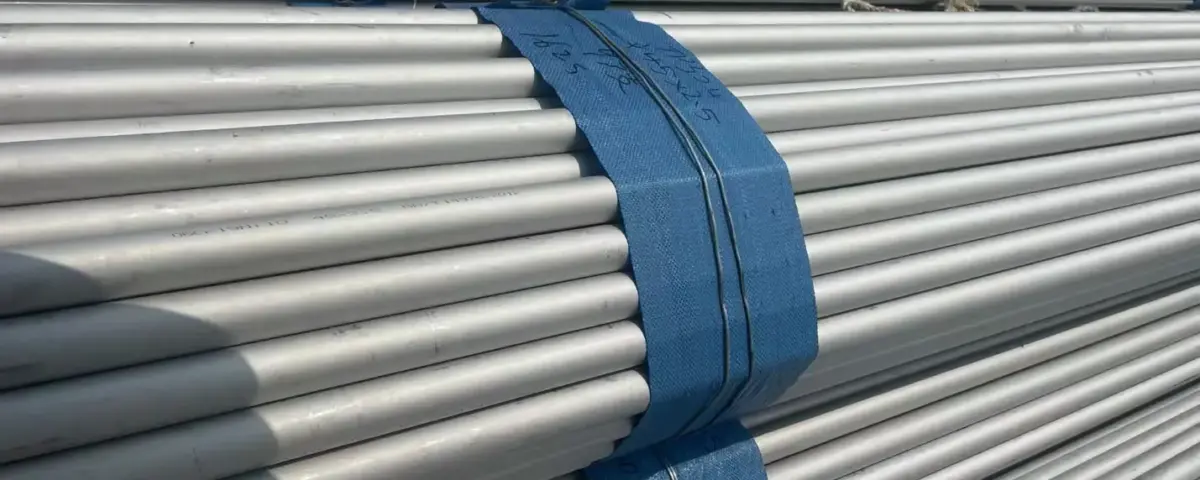
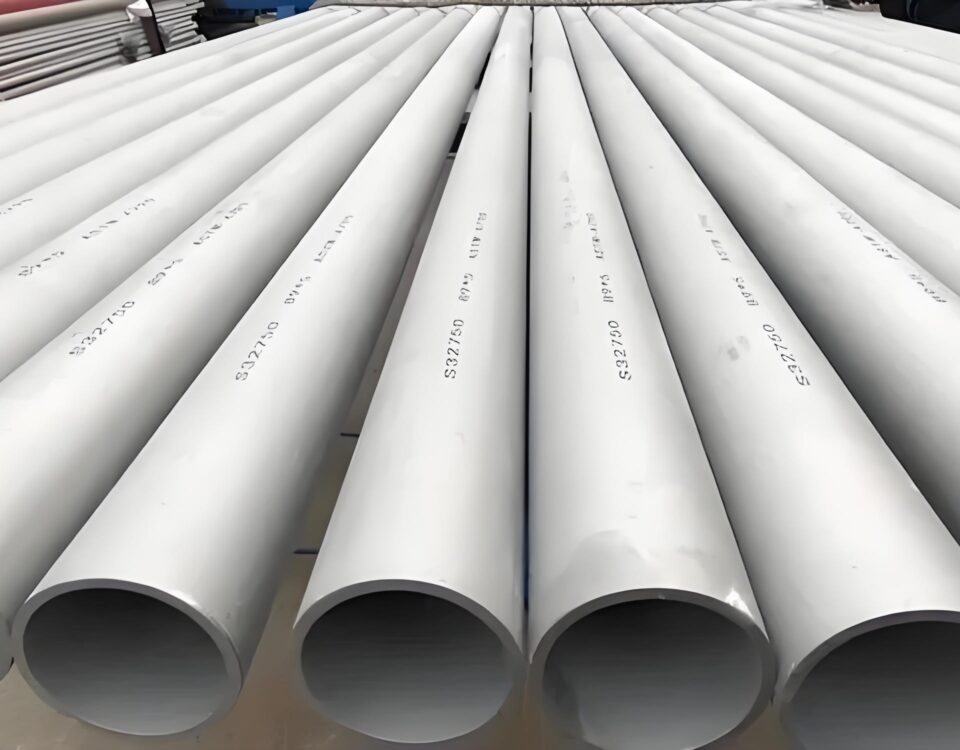
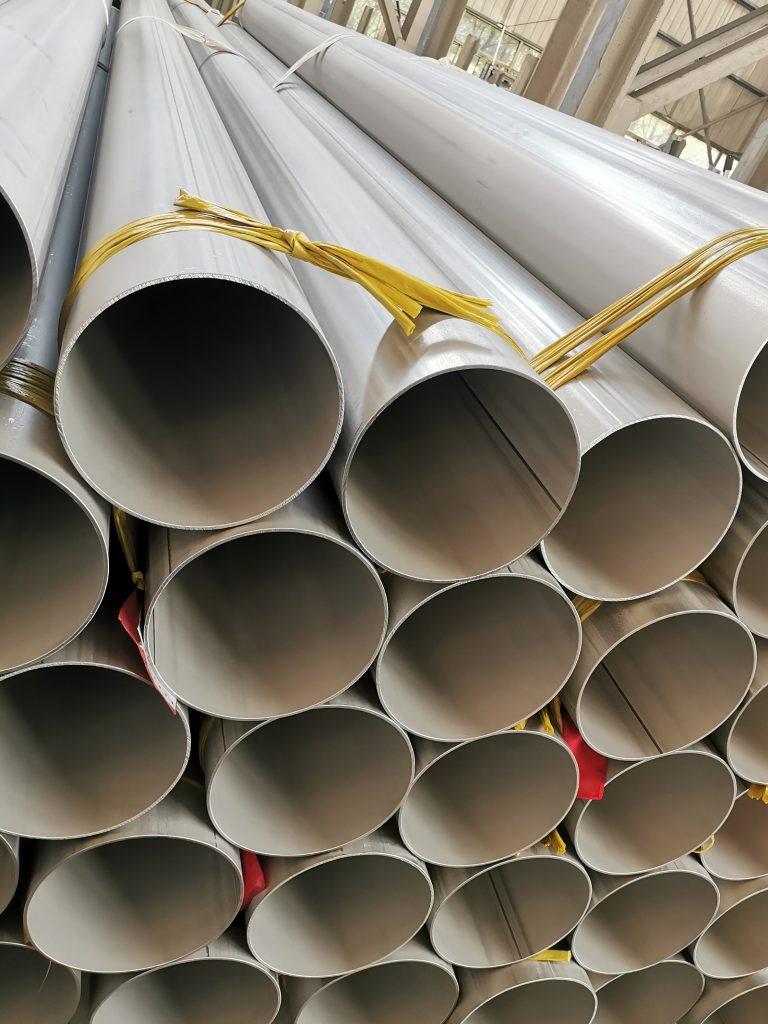
BS EN 10312 Welded Stainless Steel Tubes for Liquid Conveyance
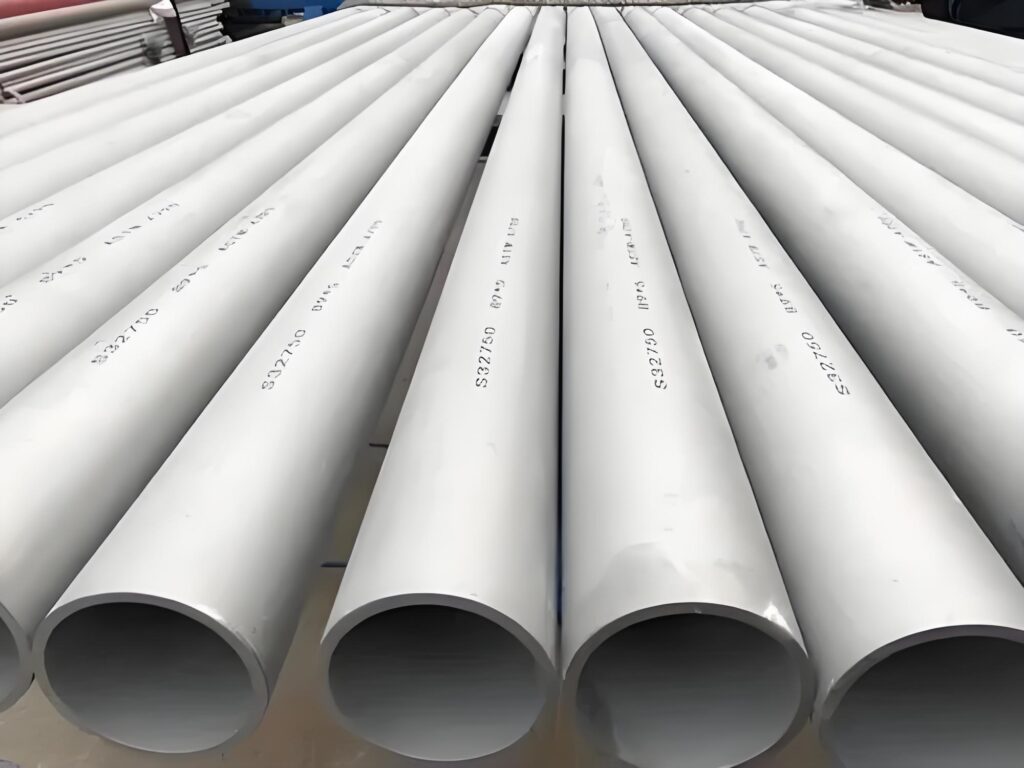
The Definitive Structural and Material Engineering Compendium for Welded Stainless Steel Tubing under European Standard EN 10312. Exhaustive Technical Data Hub Covering Series 1 and Series 2 Dimensions, Rigorous TIG/Laser Welding Parameters, Passivation Criteria, and Hydraulic Distribution System Design.
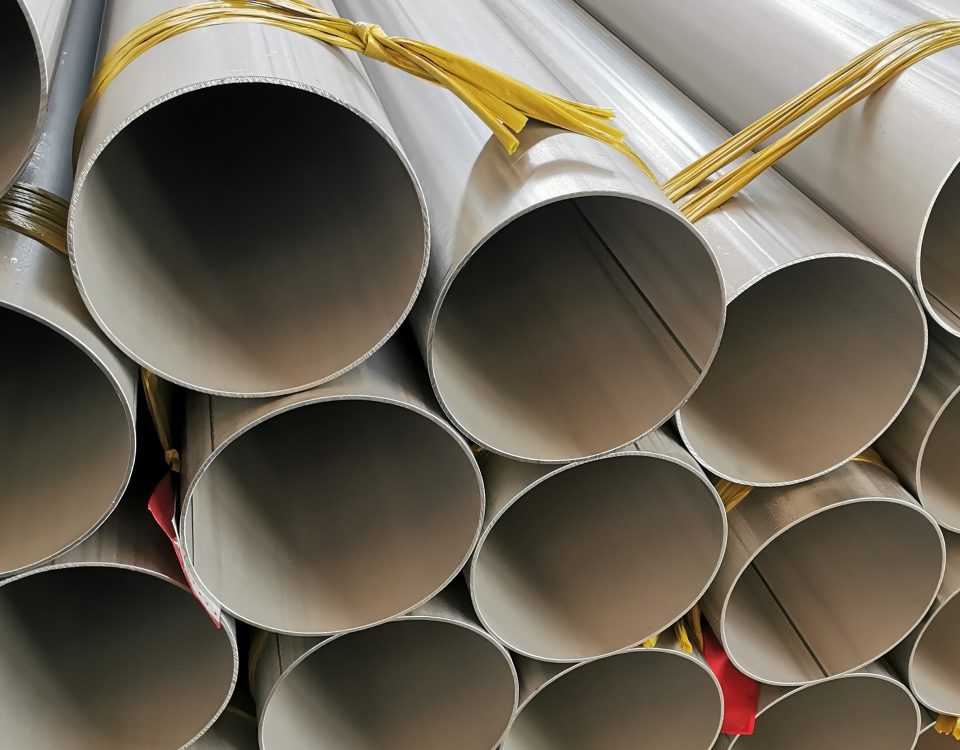
In the modernization of municipal, industrial, and domestic fluid-conveyance infrastructure, the preservation of water quality coupled with long-term macroeconomic lifecycle optimization is paramount. The European Standard BS EN 10312 specifies the technical delivery conditions, chemical matrices, dimensional parameters, and geometric tolerances for welded stainless steel tubes designed explicitly for the conveyance of water and other aqueous liquids. As global regulatory bodies enact stringent public health mandates regarding heavy metal leaching and biological accumulation in drinking water networks, legacy materials such as carbon steel, copper, and galvanized iron are increasingly being replaced. Stainless steel tubes manufactured under EN 10312 provide an elite engineering alternative characterized by an exceptional localized corrosion resistance index, zero chemical migration into volatile media, high tensile strength to withstand extreme fluid kinetic surges, and superior durability across a service life exceeding one hundred years without structural decay.
1. Standard Specification Matrix
The execution of an enterprise-level water conveyance project requires rigorous conformance to foundational manufacturing profiles. Tubes produced under this standard undergo a highly controlled post-weld microstructural conditioning regimen to ensure that both the heat-affected zone (HAZ) and the parent metal possess a totally homogenized austenitic configuration. This eliminates localized galvanic discrepancies and completely neutralizes the threat of intergranular stress corrosion cracking (IGSCC).
| Technical Parameter | Certified EN 10312 Compliance Value |
|---|---|
| Standard Designation | BS EN 10312 / DIN EN 10312 / European Standard for Fluid Conveyance |
| Primary Welding Methodologies | Tungsten Inert Gas (TIG) Welding, Plasma Arc Welding (PAW), Laser Beam Welding (LBW) without filler metal injection |
| Steel Grade Structural Matrices | Austenitic Grades: 1.4301 (X5CrNi18-10), 1.4307 (X2CrNi18-9), 1.4401 (X5CrNiMo17-12-2), 1.4404 (X2CrNiMo17-12-2), 1.4432, 1.4571 (X6CrNiMoTi17-12-2) |
| Surface Finishing Profiles | As-Welded (Bright Finish), Solution Annealed & Pickled, Mechanically Polished (Grit 240 / Grit 320 / Grit 400), Electropolished |
| Dimensional Scope (OD) | From 6.0 mm minimum up to 267.0 mm maximum nominal boundary configuration |
| Thickness Scope (WT) | From 0.6 mm ultra-thin light gauge up to 3.0 mm heavy mechanical thickness walls |
| Non-Destructive Testing (NDT) | 100% Online Eddy Current Verification (per EN ISO 10893-1) or Hydrostatic Pressure Satiation Test |
Table 1.1: Comprehensive master technical specifications and regulatory delivery rules for EN 10312 tubes.
2. Comprehensive Dimensional Matrices and Tolerances
EN 10312 categorizes tubing layouts into two specialized dimensional families: Series 1 and Series 2. Series 1 encompasses optimized wall thin-gauge tubes universally deployed in high-efficiency mechanical press-connect networks, while Series 2 provides standardized structural increments supporting traditional compression, socket, or specialized sleeve joint mechanisms. Exact adherence to outside diameter limits ensures the absolute elimination of fluid bypass zones at joint nexuses.
Matrix A
Series 1 Geometric Profiles and Precise Tolerances
| Nominal OD (mm) | Maximum Allowed OD (mm) | Minimum Allowed OD (mm) | Wall Thickness (WT) (mm) | Wall Thickness Tolerance | Calculated Weight (kg/m) – 1.4301 |
|---|---|---|---|---|---|
| 6 | 6.04 | 5.94 | 0.6 | ±10 % | 0.081 |
| 8 | 8.04 | 7.94 | 0.6 | ±10 % | 0.111 |
| 10 | 10.04 | 9.94 | 0.6 | ±10 % | 0.141 |
| 12 | 12.04 | 11.94 | 0.6 | ±10 % | 0.171 |
| 15 | 15.04 | 14.94 | 0.6 | ±10 % | 0.216 |
| 18 | 18.04 | 17.94 | 0.7 | ±10 % | 0.303 |
| 22 | 22.05 | 21.95 | 0.7 | ±10 % | 0.373 |
| 28 | 28.05 | 27.95 | 0.8 | ±10 % | 0.545 |
| 35 | 35.07 | 34.97 | 1.0 | ±10 % | 0.851 |
| 42 | 42.07 | 41.97 | 1.1 | ±10 % | 1.127 |
| 54 | 54.07 | 53.84 | 1.2 | ±10 % | 1.587 |
| 66.7 | 66.75 | 66.08 | 1.2 | ±10 % | 1.968 |
| 76.1 | 76.30 | 75.54 | 1.5 | ±10 % | 2.802 |
| (103) | 103.80 | 102.20 | 1.5 | ±10 % | 3.842 |
| 108 | 108.30 | 107.20 | 1.5 | ±10 % | 4.000 |
| (128) | 129.00 | 127.00 | 1.5 | ±10 % | 4.789 |
| 133 | 133.50 | 132.20 | 1.5 | ±10 % | 4.940 |
| (153) | 154.50 | 151.50 | 1.5 | ±10 % | 5.729 |
| 159 | 159.50 | 157.90 | 2.0 | ±10 % | 7.863 |
Table 2.1: EN 10312 Series 1 strict boundary tolerances, optimized wall gauges, and structural mass distribution values. Note: Values in parentheses designate non-preferred sizes for specific cross-regional specifications.
Matrix B
Series 2 Geometric Profiles and Precise Tolerances
| Nominal OD (mm) | OD Absolute Tolerance (mm) | Wall Thickness (WT) (mm) | WT Absolute Tolerance (mm) | Calculated Weight (kg/m) – 1.4404 |
|---|---|---|---|---|
| 12.0 | ±0.10 | 1.0 | ±0.10 | 0.275 |
| 15.0 | ±0.10 | 1.0 | ±0.10 | 0.351 |
| 18.0 | ±0.10 | 1.0 | ±0.10 | 0.426 |
| 22.0 | ±0.11 | 1.2 | ±0.10 | 0.625 |
| 28.0 | ±0.14 | 1.2 | ±0.10 | 0.805 |
| 35.0 | ±0.18 | 1.5 | ±0.10 | 1.258 |
| 42.0 | ±0.21 | 1.5 | ±0.10 | 1.521 |
| 54.0 | ±0.27 | 1.5 | ±0.10 | 1.972 |
| 64.0 | ±0.32 | 2.0 | ±0.15 | 3.105 |
| 76.1 | ±0.38 | 2.0 | ±0.15 | 3.711 |
| 88.9 | ±0.44 | 2.0 | ±0.15 | 4.352 |
| 108.0 | ±0.54 | 2.0 | ±0.15 | 5.308 |
| 133.0 | ±1.00 | 3.0 | ±0.30 | 9.766 |
| 159.0 | ±1.00 | 3.0 | ±0.30 | 11.719 |
| 219.0 | ±1.50 | 3.0 | ±0.30 | 16.226 |
| 267.0 | ±1.50 | 3.0 | ±0.30 | 19.832 |
Table 2.2: EN 10312 Series 2 absolute dimensional increments and correlated material mass metrics.
3. Metallurgical Matrices & Chemical Composition Verification
The operational longevity of a stainless steel water pipe network depends fundamentally on its localized passivation profile. Under the EN 10312 specification, chemical composition dictates the material’s Pitting Resistance Equivalent Number (PREN). Higher concentrations of Chromium ($Cr$) and Molybdenum ($Mo$) ensure that the steel remains entirely passive when exposed to fluctuating dissolved oxygen configurations and residual chlorination treatments common in public municipal distribution schemes.
| Standard Steel Grade | EN Number | C % max | Si % max | Mn % max | P % max | S % max | Cr % | Mo % | Ni % |
|---|---|---|---|---|---|---|---|---|---|
| X5CrNi18-10 | 1.4301 | 0.07 | 1.00 | 2.00 | 0.045 | 0.015 | 17.5 – 19.5 | — | 8.0 – 10.5 |
| X2CrNi18-9 | 1.4307 | 0.03 | 1.00 | 2.00 | 0.045 | 0.015 | 17.5 – 19.5 | — | 8.0 – 10.5 |
| X5CrNiMo17-12-2 | 1.4401 | 0.07 | 1.00 | 2.00 | 0.045 | 0.015 | 16.5 – 18.5 | 2.00 – 2.50 | 10.0 – 13.0 |
| X2CrNiMo17-12-2 | 1.4404 | 0.03 | 1.00 | 2.00 | 0.045 | 0.015 | 16.5 – 18.5 | 2.00 – 2.50 | 10.0 – 13.0 |
| X2CrNiMo17-12-3 | 1.4432 | 0.03 | 1.00 | 2.00 | 0.045 | 0.015 | 16.5 – 18.5 | 2.50 – 3.00 | 10.5 – 13.5 |
| X6CrNiMoTi17-12-2 | 1.4571 | 0.08 | 1.00 | 2.00 | 0.045 | 0.015 | 16.5 – 18.5 | 2.00 – 2.50 | 10.5 – 13.5 |
Table 3.1: Ladle analysis element maximum allocation weights under EN 10088-2 integration rules. Note: 1.4571 contains Titanium stabilization tracking equal to $5 \times \%C \le \text{Ti} \le 0.70\%$.
4. Mechanical Properties & Structural Performance Thresholds
Beyond chemical passivation, tubes installed within industrial facilities must provide immense structural resistance parameters. High internal pressure loads, continuous thermal cycles, and severe physical installation mechanics require structural limits that prevent fatigue failure. The table below represents certified property limits evaluated at an atmospheric benchmark of 20°C.
| Steel Grade Designation | Tensile Strength $R_m$ (MPa) | 0.2% Proof Strength $R_{p0.2}$ (MPa) min | 1.0% Proof Strength $R_{p1.0}$ (MPa) min | Elongation $A$ (%) min (Longitudinal) | Max Brinell Hardness (HBW) |
|---|---|---|---|---|---|
| 1.4301 (X5CrNi18-10) | 500 – 700 | 210 | 250 | 45 | 215 |
| 1.4307 (X2CrNi18-9) | 470 – 670 | 200 | 240 | 45 | 215 |
| 1.4401 (X5CrNiMo17-12-2) | 510 – 710 | 220 | 260 | 40 | 215 |
| 1.4404 (X2CrNiMo17-12-2) | 490 – 690 | 210 | 250 | 40 | 215 |
| 1.4432 (X2CrNiMo17-12-3) | 490 – 690 | 210 | 250 | 40 | 215 |
| 1.4571 (X6CrNiMoTi17-12-2) | 500 – 730 | 230 | 270 | 40 | 215 |
Table 4.1: Standardized mechanical yield, elongation boundaries, and hardness parameters evaluated across EN 10312 delivery protocols.
5. Advanced Engineering Design & Hydrostatic Calculation Rules
To ensure total system validation under dynamic fluid loading patterns, pipeline infrastructure engineers must determine structural thickness variables using Barlow’s classical hoop-stress design formula. This mathematical framework locks localized fluid operating metrics directly to the physical properties of the stainless alloy.
Where:
$P$ = internal hydro-testing saturation pressure boundary (MPa).
$t$ = minimum structural wall gauge thickness specified per delivery index (mm).
$S$ = maximum allowable material stress threshold limit, calculated as 40% of the minimum 0.2% proof strength threshold (MPa).
$E$ = joint efficiency coefficient (locked at 1.00 for online high-frequency automatic eddy-current verified seam paths).
$D$ = nominal outside boundary diameter configuration of the tube asset (mm).
6. Precision Manufacturing and Processing Sequence
The production of EN 10312 tubing utilizes an integrated, continuous thermo-mechanical process designed to ensure structural uniformity along the entire length of the tube. Below is the automated industrial workflow required to achieve full standard compliance:
Coil De-Coiling & Accumulator Tension Leveling
Continuous Multi-Stage Roll Cold Forming
Automatic Gas Tungsten Arc Welding (TIG / Laser Nexus)
In-Line Mechanical Weld Bead Flattening
Bright Solution Annealing Heat Treatment (Optional/Specified)
Online Non-Destructive Eddy Current Flaw Identification
Precision Sizing, Straightening, & Flying Saw Cutting
Acid Passivation, Laser Marking, & Certificate Packaging
7. Quality Control Metrics and Material Inspection Regimens
Every production lot of EN 10312 welded stainless steel tubes must comply with testing criteria designed to verify performance in demanding fluid distribution systems. These validation parameters ensure that the tube can undergo extensive structural modification during field installation without risk of failure or splitting.
Mandatory Mechanical Verification Testing Protocols:
- Drift Expanding Mechanical Test (per EN ISO 8493): Tube end samples are expanded over a conical mandrel to a minimum diameter increase of 20%. The expanded sample must show no signs of tearing, micro-cracking, or weld seam separation.
- Flattening Toughness Test (per EN ISO 8492): Sections of the tube are flattened between parallel steel plates until the distance between the plates reaches 3 times the nominal wall thickness. The weld seam is positioned at 90 degrees to the direction of compression, and the sample must show no cracking or material failure under load.
- Dimensional Uniformity Verification: Random inspections across production runs must show strict adherence to outside diameter tolerances, circularity constraints, and a maximum total straightness deviation of less than 0.0015 times the total length.