Bimetallic Alloy Lined Composite Steel Pipe: Inner and Outer Pipe Material Analysis
December 9, 2025
AISI 317L Stainless Steel Pipe | UNS S31703 DIN 1.4438
December 16, 2025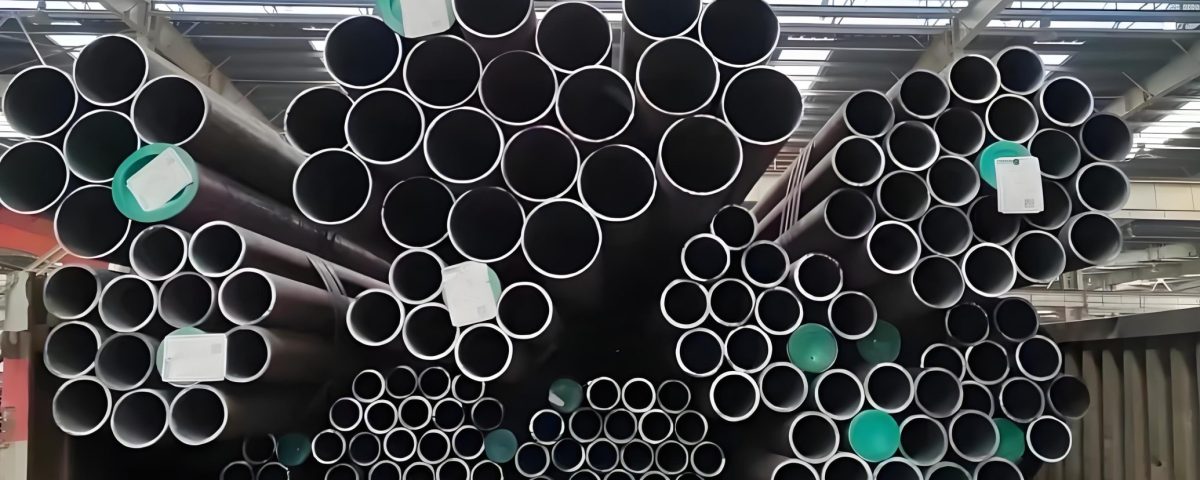
The European standard $\text{EN 10216}$ governs the technical delivery conditions for Seamless Steel Tubes for Pressure Purposes, an inherently critical domain that underpins the safety and operational reliability of vast global energy, chemical processing, and thermal power generation infrastructure. This standard is not merely a catalog of pipe dimensions; it is a meticulously constructed technical framework that codifies the essential metallurgical, mechanical, and quality assurance requirements necessary to ensure that a seamless pipe can reliably contain high-pressure fluids and gases, often at elevated temperatures, for decades of service life. To undertake a deep technical analysis of $\text{EN 10216}$ is to explore the intersection of advanced steel manufacturing processes, stringent safety regulations, and the fundamental principles of materials science, recognizing that the integrity of a seamless pressure pipe is a non-negotiable prerequisite for preventing catastrophic failures in high-hazard environments. The choice of the correct part of the standard—Parts 1 through 5, covering non-alloy and alloy steels for elevated, sub-zero, and specific high-temperature applications—is the first, most critical, and often most complex decision, profoundly influencing the entire procurement and fabrication chain.
The Foundational Structure of EN 10216: Defining Application and Metallurgy
The $\text{EN 10216}$ standard is logically segmented into five distinct parts, each addressing a unique combination of operating conditions and material requirements, demonstrating the standard’s comprehensive approach to the diversity of pressure applications:
-
Part 1: Non-alloy steel tubes with specified room temperature properties. This addresses the most common, basic pressure applications where high temperature or low temperature toughness is not the primary concern. It serves as the baseline for applications requiring moderate pressure resistance and general mechanical strength.
-
Part 2: Non-alloy and alloy steel tubes with specified elevated temperature properties. This is arguably the most critical section for the power and petrochemical industries, dealing with high-temperature service conditions where the long-term integrity of the pipe is dictated by its Creep Resistance and Oxidation Resistance. The steel grades here, often designated with ‘P’ (Pressure) and then a number indicating the minimum yield strength (e.g., $\text{P235GH}$, $\text{P265GH}$), are engineered with specific alloy additions (like Chromium and Molybdenum) to maintain strength under prolonged thermal stress.
-
Part 3: Alloy fine grain steel tubes. This addresses applications requiring superior Toughness and Weldability, often chosen for large-diameter pipelines and components in pressure systems where structural integrity under dynamic loading or in seismic areas is paramount. The fine-grain structure is achieved through specialized rolling and heat treatment processes, ensuring lower $\text{Ductile-to-Brittle Transition Temperature}$ ($\text{DBTT}$).
-
Part 4: Non-alloy and alloy steel tubes with specified low temperature properties. This is crucial for cryogenic applications, $\text{LNG}$ storage, and processing plants in extremely cold climates. The standard imposes strict requirements on $\text{Charpy V-Notch Impact Testing}$ at temperatures as low as $-50^\circ \text{C}$ or $-60^\circ \text{C}$, necessitating low $\text{Carbon}$ and controlled $\text{Nickel}$ content to suppress the $\text{DBTT}$.
-
Part 5: Stainless steel tubes. This covers applications where Corrosion Resistance is the overriding factor, often in aggressive chemical environments or where minimal contamination is required. This part introduces entirely different metallurgical considerations, primarily the control of $\text{Chromium}$ and $\text{Nickel}$ content to ensure the formation of a stable, passive oxide layer.
The initial selection must align the intended service environment—temperature, pressure, and corrosive media—with the appropriate Part of the standard. This choice dictates the foundational chemical composition, heat treatment, and mandatory testing protocols, setting the stage for the rigorous manufacturing constraints that follow.
The Manufacturing Imperative: Seamlessness and Metallurgical Purity
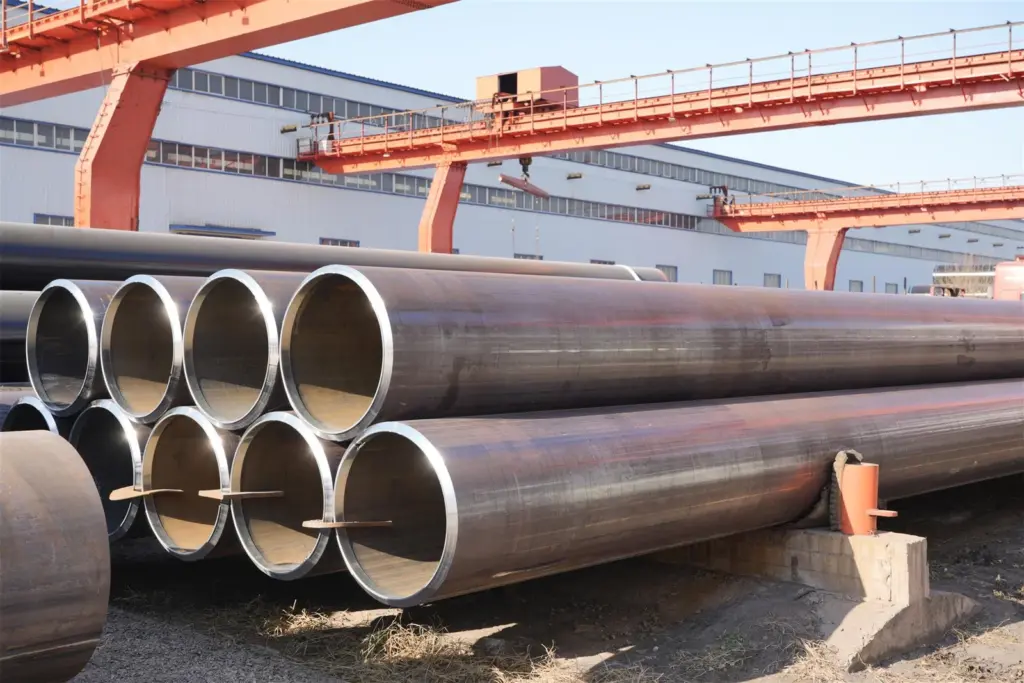
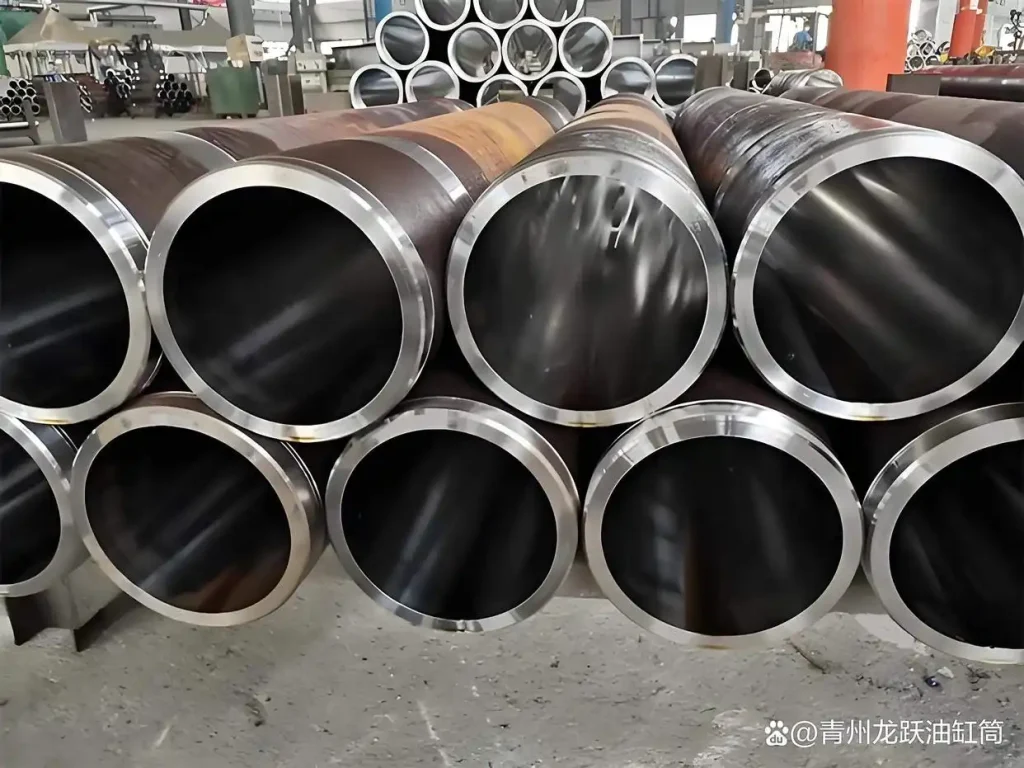
The very definition of $\text{EN 10216}$ steel implies the Seamless manufacturing process, a critical technical condition for pressure containment. Seamless pipes are produced by piercing a solid cylindrical billet of steel, typically using the Mannesmann Mandrel Mill Process or extrusion, to form the hollow tube. This process ensures that the finished pipe has no longitudinal weld seam, eliminating the inherent weakness and potential failure point associated with a welded joint. For high-pressure service, where the hoop stress on the pipe wall can be immense, the homogeneity and isotropy (uniformity of properties in all directions) of the seamless wall are paramount.
1. Chemical Composition and Traceability
The standard imposes strict limits on the chemical composition, particularly for elements that affect weldability, toughness, and long-term creep performance. For high-temperature grades (Part 2), the precise control of Chromium ($\text{Cr}$), Molybdenum ($\text{Mo}$), and sometimes Vanadium ($\text{V}$) is essential. $\text{Mo}$ is added to enhance strength and, crucially, to retard the coarsening of the microstructure at high temperatures, thereby improving creep resistance. $\text{Cr}$ provides oxidation and corrosion resistance. The standard specifies a maximum $\text{Carbon Equivalent}$ ($\text{C}_{\text{eq}}$) for all grades to ensure acceptable weldability, recognizing that even a seamless pipe will have circumferential welds when joined into a system.
Furthermore, $\text{EN 10216}$ places immense emphasis on Metallurgical Purity and Traceability. The maximum permissible levels for detrimental impurities like Phosphorus ($\text{P}$) and Sulfur ($\text{S}$) are extremely low. $\text{S}$ forms manganese sulfides, which can promote lamellar tearing or act as initiation sites for stress corrosion cracking. $\text{P}$ promotes temper embrittlement, particularly dangerous in alloy steels used at high temperatures. The standard mandates complete traceability from the finished pipe back to the original steel ladle, requiring Mill Certificates ($\text{EN 10204 3.1}$ or $\text{3.2}$ Certification) that document the exact chemical analysis, heat treatment, and mechanical test results for that specific batch, assuring the end-user that the specified purity has been maintained throughout the primary steelmaking process.
2. Heat Treatment and Microstructure Control
The final properties of $\text{EN 10216}$ pipes are not solely determined by chemistry but by the mandatory Heat Treatment applied. Depending on the grade, the pipe may be supplied in the Normalized ($\text{N}$), Quenched and Tempered ($\text{QT}$), or Sub-critically Annealed ($\text{A}$) condition. For the high-temperature grades (Part 2), normalizing (heating above the $\text{AC3}$ temperature and air cooling) is often required to refine the grain structure, enhancing both strength and toughness. For high-strength grades or those intended for low-temperature service (Part 4), quenching and tempering are applied to achieve a desirable balance of high strength and low $\text{DBTT}$. The standard specifies not only the type of heat treatment but often the minimum tempering temperature, which is crucial for preventing the precipitation of detrimental phases that can lead to embrittlement during service. Failure to adhere to the prescribed heat treatment temperature and duration fundamentally compromises the structural integrity and long-term reliability of the pipe, making the furnace records and pyrometry data a critical point of inspection under the standard.
Mechanical Testing and Non-Destructive Evaluation: The Assurance of Integrity
The core of the $\text{EN 10216}$ technical specification lies in its rigorous and often redundant testing regime, designed to prove the pipe’s fitness for service and detect any manufacturing flaws that could lead to failure under pressure or temperature stress.
1. Mandatory Mechanical Testing
All parts of the standard mandate a minimum set of destructive mechanical tests for each defined batch (often per heat or heat treatment lot):
-
Tensile Test: Measures the Yield Strength ($\text{R}_{\text{e}}$), Tensile Strength ($\text{R}_{\text{m}}$), and Percentage Elongation ($\text{A}$). These values must meet the minimum requirements specified in the relevant tables of the standard. For creep-resistant grades, the tensile properties at room temperature are considered a baseline, but the standard’s guarantee is implicitly linked to the material’s performance in long-term creep tests.
-
Flattening or Drift Expanding Test: These tests assess the Ductility and Soundness of the material and its resistance to cracking under deformation. The flattening test involves crushing a short section of pipe between parallel plates to a specified height without cracking, while the expanding test forces a cone into the pipe end. These are critical checks for internal defects that might not be detected by surface inspections.
-
Impact Test (Charpy V-Notch): As specified in Part 4, this test is critical for low-temperature applications. The standard dictates the test temperature and the minimum absorbed energy for a set of three samples, ensuring the material remains ductile and tough in cold environments. This requirement often necessitates specific $\text{Nickel}$ or $\text{Manganese}$ additions in the steel’s chemistry.
2. Non-Destructive Testing (NDT)
Beyond destructive tests on samples, $\text{EN 10216}$ mandates comprehensive Non-Destructive Testing ($\text{NDT}$) to inspect the entire length of every pipe. This is the primary mechanism for detecting cracks, laminations, and internal flaws before they leave the factory.
-
Hydrostatic Pressure Test: The pipe must withstand a specified internal pressure ($\text{P}$) for a minimum duration without showing any leakage or permanent deformation. The pressure is calculated based on the pipe’s wall thickness, diameter, and the steel’s yield strength, and is the ultimate, direct verification of the pipe’s pressure-containment capability.
-
Electromagnetic or Ultrasonic Testing: The standard requires that the entire length of the pipe wall be subjected to $\text{NDT}$ to detect longitudinal and transverse imperfections. This typically involves Ultrasonic Testing ($\text{UT}$), where high-frequency sound waves are used to map the internal structure and identify flaws, or Eddy Current Testing ($\text{ET}$) for surface and near-surface defects. The acceptance criteria for the size and type of permissible flaw are strictly defined, and the standard mandates that the $\text{NDT}$ equipment must be calibrated using reference standards containing artificial notches or holes of the maximum permissible size, ensuring the system can reliably detect critical flaws.
-
Visual and Dimensional Inspection: Comprehensive inspection of the surface for external defects and verification of the pipe’s dimensions (diameter, wall thickness, and straightness) against the specified tolerances. The standard allows for a negative tolerance on wall thickness (e.g., $\text{-12.5\%}$ or $\text{-10\%}$), which is a crucial parameter, as the actual minimum wall thickness is the basis for calculating the safe operating pressure and must be carefully checked.
The sheer volume and redundancy of this testing assure the end-user that the pipe delivered is defect-free and meets the mechanical properties required for safety-critical service.
High-Temperature Requirements and Creep Phenomenon (Part 2 Focus)
The $\text{EN 10216}$ Part 2, covering elevated temperature properties, is technically the most demanding because it must account for the time-dependent degradation mechanisms that occur in steel under thermal stress, primarily Creep. Creep is the slow, permanent deformation of a material subjected to stress below its yield strength, but at high temperatures (typically above $0.3$ to $0.4$ times the melting point, or around $400^\circ \text{C}$ for steel). In power plants and chemical reformers, creep failure is a major risk, leading to pipe rupture over years of service.
The material selection in Part 2 is specifically geared towards controlling this phenomenon. Grades like $\text{P235GH}$ and $\text{P265GH}$ are standardized, but for extremely high temperatures (e.g., $\text{550}^\circ \text{C}$ and above), the engineer often moves to low-alloy Chrome-Molybdenum ($\text{Cr-Mo}$) steels (not explicitly listed in Part 2, but falling under its application scope, often referencing $\text{EN 10216-2}$ or $\text{ASTM A335}$ equivalents), such as $\text{1.25 Cr-0.5 Mo}$ ($\text{P11}$) or $\text{2.25 Cr-1 Mo}$ ($\text{P22}$).
The standard addresses creep indirectly but fundamentally:
-
Specified Minimum Strengths: The tensile properties given in the standard are for room temperature, but the specified chemistry and heat treatment ensure that the material’s $\text{Creep Rupture Strength}$ (the stress that causes rupture after a fixed time, e.g., $100,000$ hours at temperature) is adequate. The standard implicitly relies on publicly available European data sheets that correlate these base metal properties with long-term creep performance.
-
Oxidation Resistance: High temperatures also accelerate oxidation and scaling. The alloy grades in Part 2 are designed to form stable surface oxides that protect the underlying steel from further degradation, a critical durability factor that is specified by the mandated chemistry.
-
Resistance to Embrittlement: Steels used at high temperatures must resist long-term thermal embrittlement, such as $\text{Graphitization}$ or $\text{Temper Embrittlement}$, which can reduce ductility and toughness over time. The careful limits on $\text{P}$, $\text{S}$, and the $\text{Mo}/\text{Cr}$ ratio in the standard are designed to prevent these insidious microstructural changes, ensuring the pipe remains ductile enough to withstand thermal transients even after years of high-temperature exposure.
Dimensional Tolerances, Certification, and End-User Responsibility
The final layer of the $\text{EN 10216}$ specification deals with the practical aspects of dimensional accuracy and regulatory compliance, which are essential for pipe fabrication and system safety.
1. Dimensional Tolerances
The standard specifies tight tolerances for the outer diameter ($\text{OD}$), wall thickness ($\text{WT}$), and length. The permissible deviations are critical for welding: poor fit-up due to excessive $\text{OD}$ or $\text{WT}$ variation introduces high residual stresses and makes welding difficult, potentially leading to unacceptable defects. For instance, the wall thickness tolerance is typically specified as $\text{T} \pm 10\%$ to $\text{T} \pm 12.5\%$. The negative tolerance is crucial because the minimum measured wall thickness is the absolute value used in the $\text{ASME B31.1}$ or $\text{EN 13480}$ pressure vessel codes for calculating the maximum allowable working pressure ($\text{MAWP}$). If the actual wall thickness is below the allowed minimum tolerance, the pipe is structurally non-compliant and cannot be used for the intended pressure rating.
2. Certification and Regulatory Compliance
$\text{EN 10216}$ is a harmonized standard under the European $\text{Pressure Equipment Directive}$ ($\text{PED}$ 2014/68/EU). This linkage is fundamental. Any pressure equipment sold within the $\text{EU}$ must comply with the $\text{PED}$, and using a pipe certified to $\text{EN 10216}$ grants a Presumption of Conformity to the $\text{PED}$‘s essential safety requirements. The certification level is vital, often requiring a $\text{3.1}$ Inspection Certificate (tested by the manufacturer’s authorized representative) or, for critical applications, a $\text{3.2}$ Inspection Certificate (witnessed and certified by an independent third-party inspection body like $\text{Lloyd’s Register}$ or $\text{TÜV}$). The choice of certification level is often mandated by the end-user’s quality manual or by the specific $\text{PED}$ category of the final vessel or piping system, directly influencing the procurement cost and lead time.
3. Surface Condition and Finishing
The standard also dictates the acceptable Surface Condition. While imperfections are inevitable, the standard defines the permissible depth and nature of defects (scratches, laps, pits) and the acceptable methods for their repair (grinding) before the pipe is rejected. It ensures that the pipe’s surface is free of flaws that could act as stress concentration points, initiating fatigue or stress corrosion cracking.
In summation, $\text{EN 10216}$ is a masterpiece of technical standardization, creating a multi-layered safety barrier. The seamless nature eliminates the weld risk; the chemistry ensures long-term metallurgical stability against creep and embrittlement; the NDT protocols guarantee the physical integrity of every pipe length; and the certification process ensures regulatory compliance. For any engineer involved in pressure system design, the selection and strict adherence to the appropriate part of $\text{EN 10216}$ is the single most important decision for ensuring the safety and operational lifespan of their plant. The complexity of the standard is simply a reflection of the high-stakes environment in which these products perform.
| EN 10216 Part | Service Condition Focus | Key Metallurgical Requirement | Mandatory Critical Test | Dominant Failure Mode Addressed |
| Part 1 (Non-Alloy) | Room Temperature, General Pressure | Standard Carbon and Manganese limits | Tensile, Flattening/Expanding | Yield/Bursting Failure |
| Part 2 (GH Grades) | Elevated Temperature (Creep/Oxidation) | Controlled $\text{Cr}$ and $\text{Mo}$ Additions, Low $\text{P}$/$\text{S}$ | Tensile (Room Temp), Chemical Analysis | Creep Rupture, Oxidation, Temper Embrittlement |
| Part 3 (Fine Grain) | Structural Toughness, High Weldability | Fine Grain Structure (Normalized/TMCP) | Tensile, $\text{DBTT}$ Testing (e.g., $-20^\circ \text{C}$) | Brittle Fracture, Weldability Issues |
| Part 4 (Low Temp) | Cryogenic and Low Temperature | Low $\text{C}$, Controlled $\text{Ni}$ (e.g., $\text{Ni}$ steel for $-50^\circ \text{C}$) | $\text{Charpy V-Notch Impact}$ at specified low $\text{T}$ | Brittle Fracture/Cold Failure |
| Part 5 (Stainless) | Corrosion Resistance, Cleanliness | High $\text{Cr}$ ($\ge 10.5\%$), $\text{Ni}$ (for Austenitic grades) | Intergranular Corrosion Test ($\text{ASTM A262}$), Tensile | Pitting, Intergranular Corrosion |
The sheer volume of detail required to thoroughly analyze this standard necessitates this level of deep dive, moving from the macro structure of the standard into the micro-level constraints imposed by chemistry, heat treatment, and $\text{NDT}$ methods, all essential to truly capture the technical depth of $\text{EN 10216}$.
Would you like a more focused elaboration on a specific aspect, such as the full calculation methodology for the hydrostatic test pressure or the detailed metallurgical reasons for specifying Nickel in Part 4 steels?