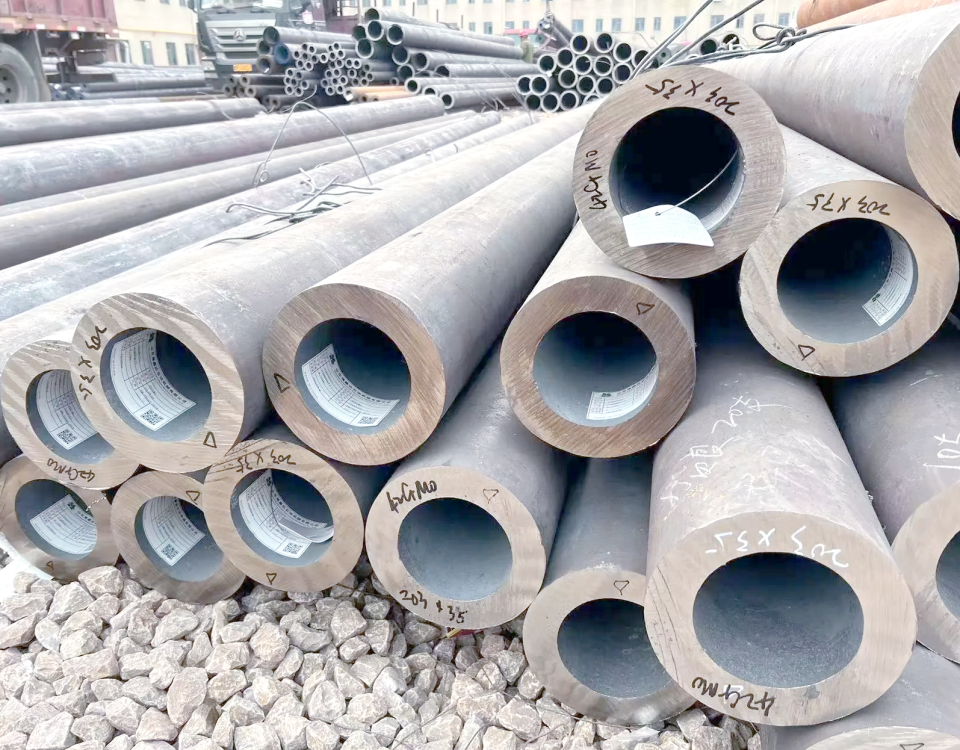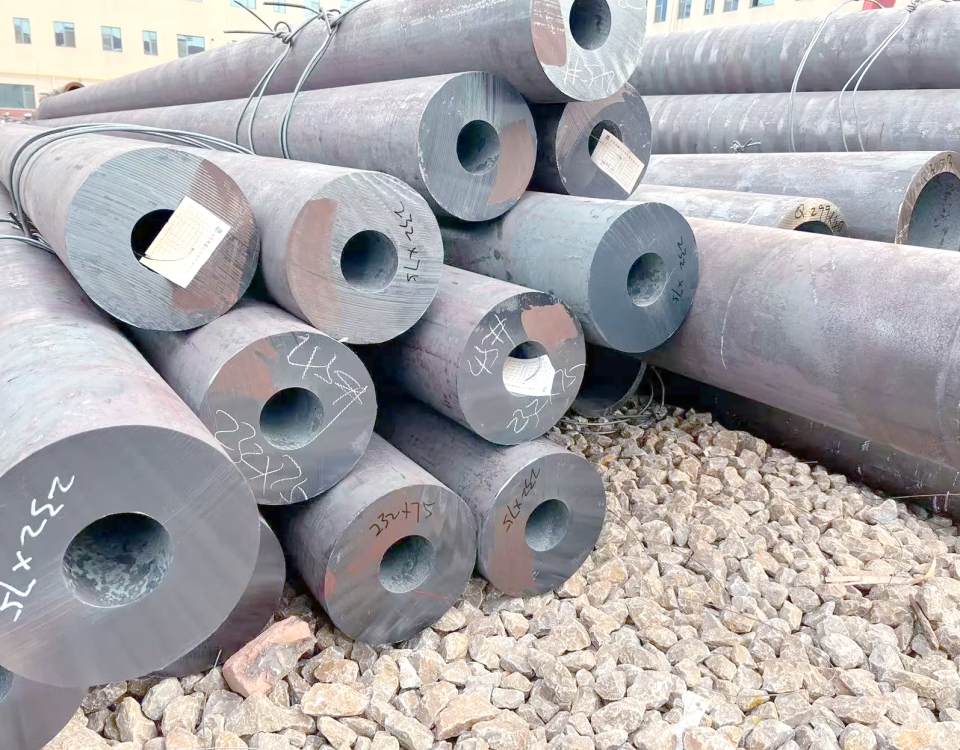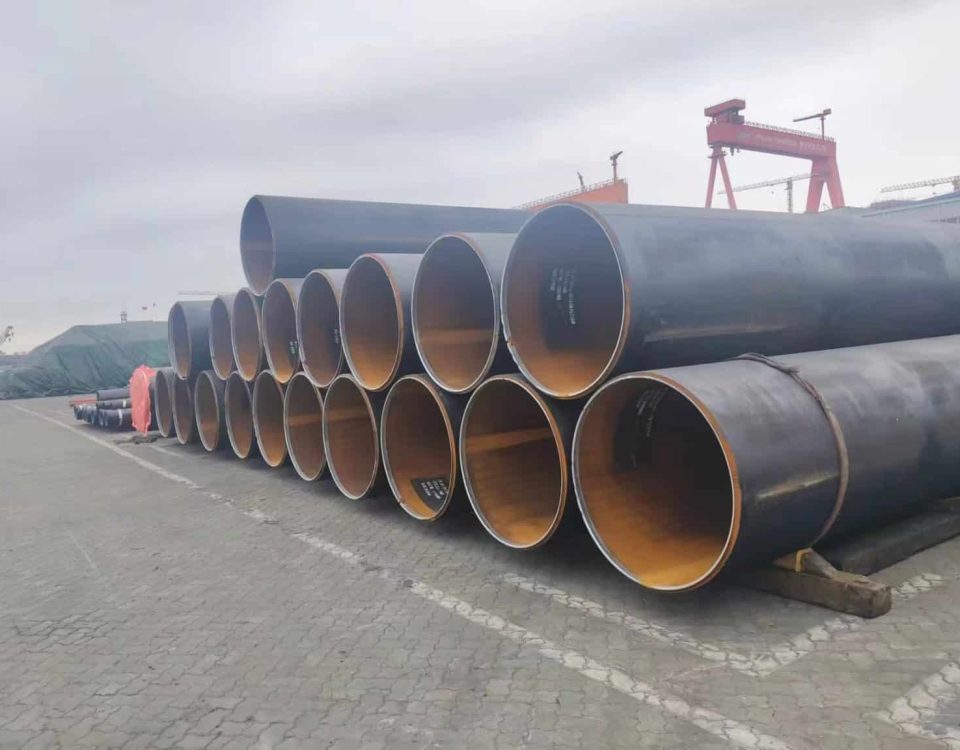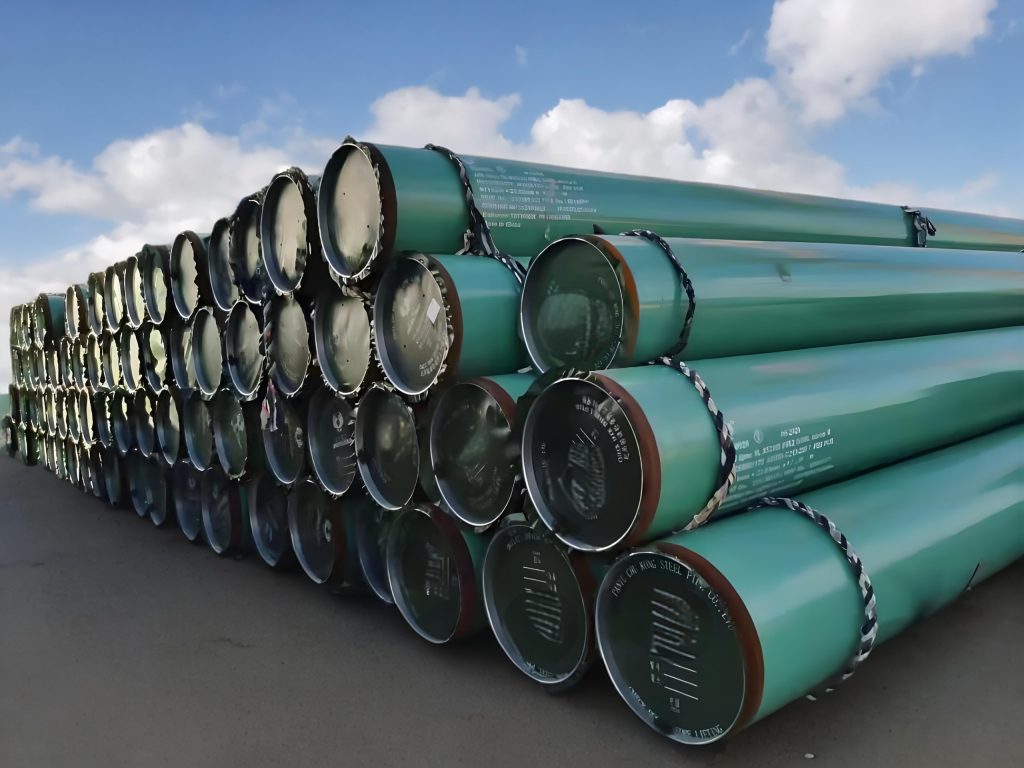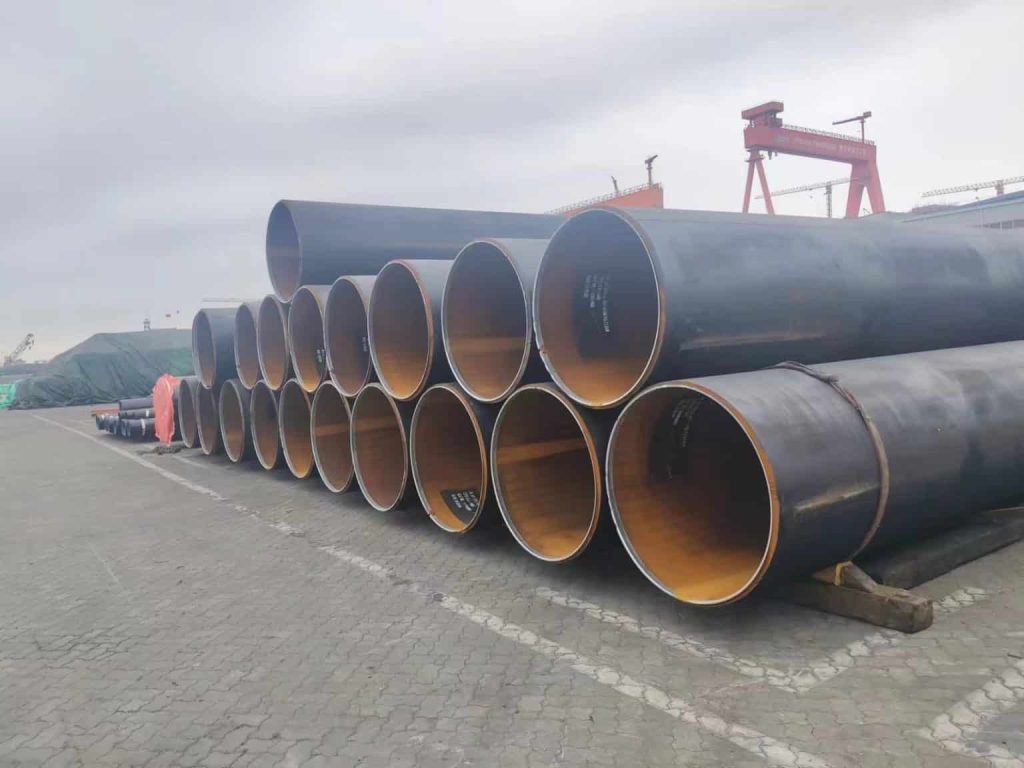
French NF A49-721 standard 3-layer 3LPP coating steel pipe
January 5, 2026
ASTM A822 Hydraulic Seamless Steel Pipe
January 13, 2026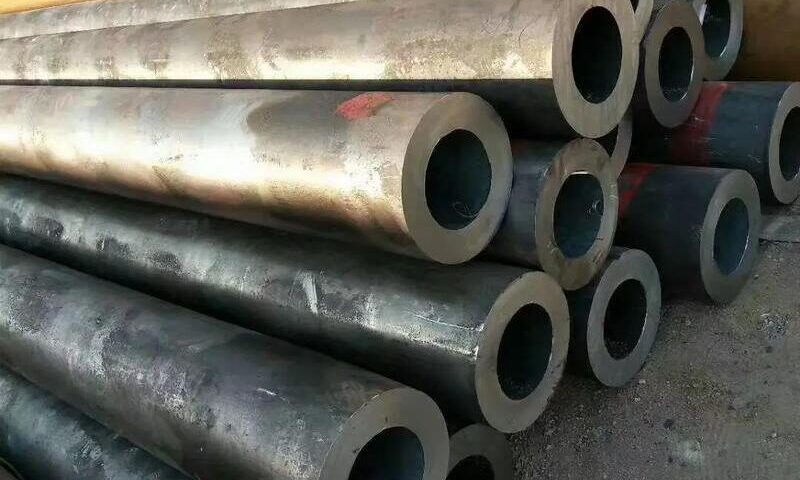
Internal Monologue: Deciphering the Metallurgy of EN10297-1
When I approach the subject of EN10297-1, I’m not just looking at a list of steel grades or a set of geometric dimensions. I’m looking at the intersection of mechanical integrity and metallurgical precision. The standard itself—Seamless circular steel tubes for mechanical and general engineering purposes—is a foundational document for modern heavy industry. But the “Heavy Wall” aspect adds a layer of complexity that often goes overlooked. In heavy wall production, we are fighting the physics of cooling and the chemistry of segregation.
I’m thinking about the E-series—E235, E275, E315, E355, and the outlier, E470. The “E” stands for engineering. This is critical. Unlike the “P” series for pressure or “S” for structural, “E” grades are designed for the machine shop. They need to be weldable, yes, but more importantly, they need to be machinable and stable.
As I trace the path from E235 to E470, I see a deliberate progression in carbon equivalent values. E235 is the soft, ductile workhorse, while E470 is a sophisticated alloy designed for high-stress components like piston rods or complex gears where surface hardening is paramount. For a company like ours, producing these isn’t just about melting steel; it’s about controlling the microstructure through the Mannesmann piercing process and subsequent heat treatments.
In a heavy wall pipe—say, 50mm or 80mm thick—the cooling rate at the center of the wall is drastically different from the surface. This creates a risk of grain coarsening. My analysis must address how we manage this thermal inertia to ensure uniform mechanical properties across the entire cross-section. We aren’t just selling steel; we are selling a predictable response to stress. This article needs to reflect that depth—the “why” behind the “what.”
Technical Analysis of EN10297-1 Heavy Wall Seamless Steel Pipes: Engineering Integrity in Grades E235 to E470
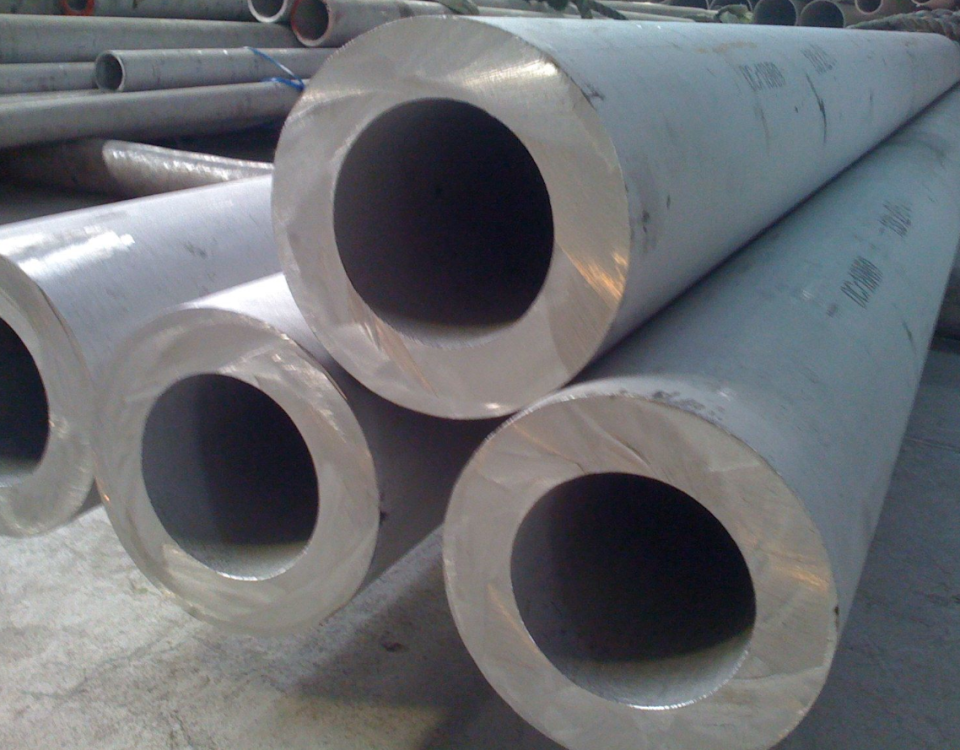
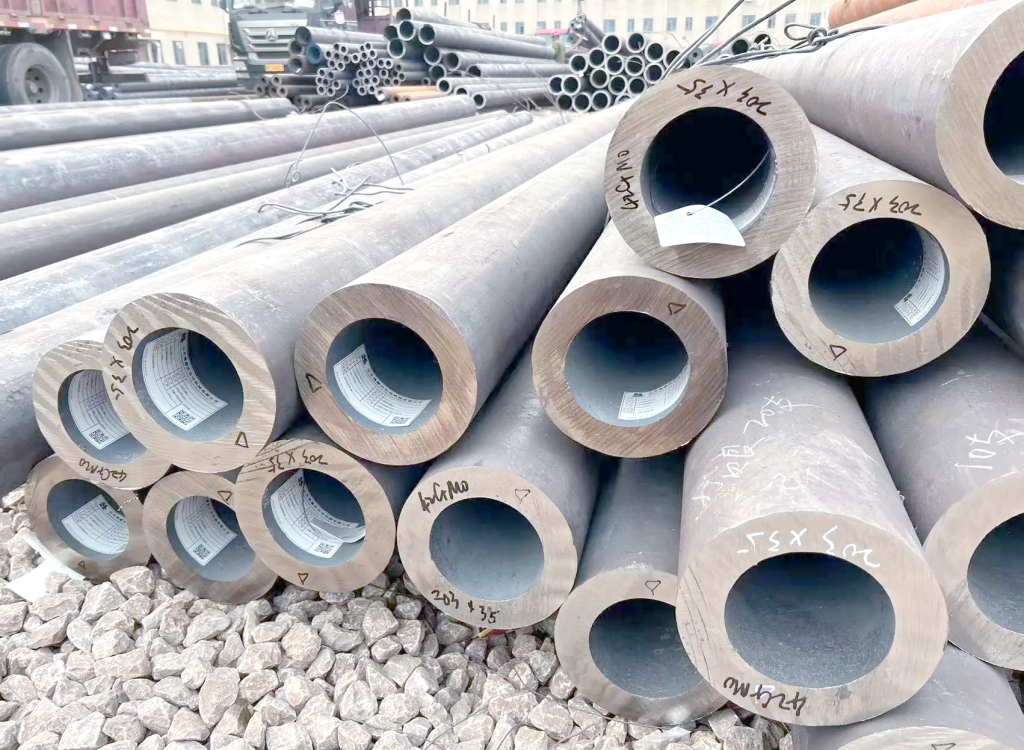
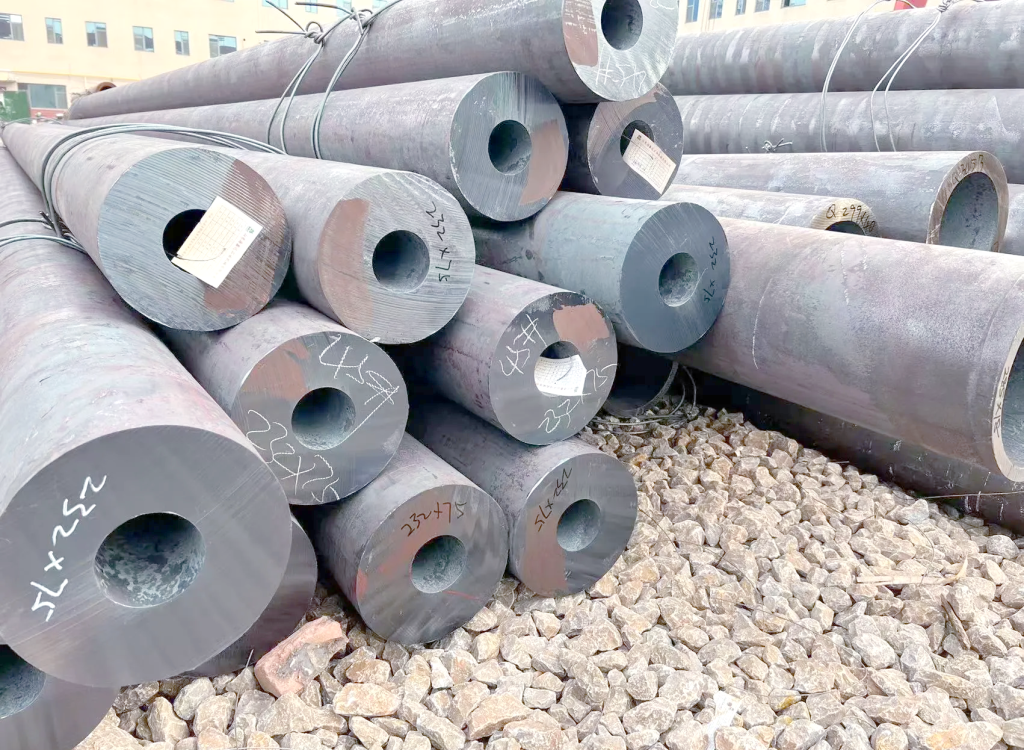
The evolution of mechanical engineering is inextricably linked to the development of materials that can withstand higher torques, greater loads, and more aggressive environments. Among these materials, the EN10297-1 seamless steel pipe stands as a cornerstone. Specifically, “Heavy Wall” variants—tubes where the ratio of outside diameter to wall thickness is low—represent the pinnacle of seamless manufacturing, providing the raw material for hydraulic cylinders, crane booms, hollow shafts, and heavy-duty rollers.
The Metallurgical Spectrum: From E235 to E470
The EN10297-1 standard categorizes steel primarily based on its yield strength and intended application. To understand these pipes, one must first understand the chemical nuances that dictate their behavior under the lathe and in the field.
E235 and E275: The Ductile Foundation
E235 and E275 are low-carbon steels. Their primary advantage is not raw strength, but formability and weldability. In heavy wall applications, these grades are often used for bushings or spacers where the primary stress is compressive. The low carbon content ensures that the Heat Affected Zone (HAZ) during welding does not become brittle, a crucial factor in massive assemblies where post-weld heat treatment (PWHT) might be logistically impossible.
E315 and E355: The Structural Workhorses
Moving into the E355 range, we encounter the most popular grade for mechanical engineering. E355 is a manganese-rich steel that offers an excellent strength-to-weight ratio. By optimizing the Manganese-to-Silicon ratio, we achieve a refined grain structure that maintains toughness even at sub-zero temperatures. For heavy wall pipes, E355 provides the rigidity required for telescoping masts and large-bore hydraulic systems.
E470: The High-Performance Outlier
E470 is a different beast entirely. It is a micro-alloyed steel, often featuring Vanadium or other grain-refiners. It is designed for components that require high yield strength in the as-rolled condition but also possess the chemistry necessary for induction hardening. E470 is the material of choice for parts that will face high wear and fatigue, such as heavy-duty axles.
Chemical Composition and Carbon Equivalency
The performance of a heavy wall pipe starts in the furnace. For seamless pipes, cleanliness is paramount. Non-metallic inclusions (sulfides and oxides) can act as stress concentrators, which are magnified in heavy wall sections where internal stresses are already high due to the manufacturing process.
The Carbon Equivalent (CEV) is the most critical metric for our customers who intend to weld these pipes. It is calculated using the formula:
Our production facility maintains tight control over these elements to ensure that even at the upper limits of the standard, weldability remains predictable.
Table 1: Chemical Composition (Ladle Analysis) for EN10297-1 Grades
| Grade | C (%) max | Si (%) max | Mn (%) max | P (%) max | S (%) max | Other Elements |
| E235 | 0.17 | 0.35 | 1.20 | 0.030 | 0.035 | – |
| E275 | 0.21 | 0.35 | 1.40 | 0.030 | 0.035 | – |
| E315 | 0.20 | 0.30 | 1.50 | 0.030 | 0.035 | V: 0.08 max |
| E355 | 0.22 | 0.55 | 1.60 | 0.030 | 0.035 | – |
| E470 | 0.16-0.22 | 0.10-0.50 | 1.30-1.70 | 0.030 | 0.035 | V: 0.08-0.20 |
Note: Vanadium in E470 acts as a grain refiner, providing higher strength without significantly increasing the carbon content, which preserves a degree of weldability.
Mechanical Properties: The Heavy Wall Challenge
When dealing with wall thicknesses exceeding 20mm, 40mm, or even 100mm, “nominal” properties are not enough. The mechanical integrity must be consistent from the outer diameter (OD) to the inner diameter (ID).
In heavy-walled sections, the core of the material undergoes a slower cooling rate during the rolling process. This can lead to a “soft core” if the chemistry and cooling sprays aren’t perfectly calibrated. Our company utilizes accelerated cooling systems and precision heat treatment to ensure that the yield strength measured at the surface is representative of the entire wall thickness.
Table 2: Mechanical Properties (at Wall Thickness $\le$ 16mm)
| Grade | Yield Strength ReH (MPa) min | Tensile Strength Rm (MPa) min | Elongation A (%) min |
| E235 | 235 | 360 – 480 | 25 |
| E275 | 275 | 410 – 540 | 22 |
| E315 | 315 | 450 – 600 | 21 |
| E355 | 355 | 490 – 630 | 20 |
| E470 | 470 | 600 – 800 | 17 |
Note: For heavy walls (>16mm), the yield strength values are slightly adjusted downwards in accordance with the EN10297-1 tables to account for the natural metallurgical gradients in thicker sections.
The Manufacturing Process: Precision in the Mannesmann Method
The production of a heavy wall seamless pipe is a testament to industrial force. It begins with a solid round billet, heated to approximately 1250°C.
- Piercing: The billet is forced over a piercing mandrill. For heavy wall pipes, the “plug” size is carefully chosen to minimize internal eccentricity.
- Elongation (Assel Mill or Diescher Mill): This is where the heavy wall takes shape. Unlike thin-wall pipes that are stretched, heavy-wall pipes require massive radial compression to ensure the wall thickness is uniform.
- Sizing: The pipe passes through sizing stands to achieve the final OD.
- Heat Treatment: Depending on the grade, the pipe may undergo normalizing ($+N$), quenching and tempering ($+QT$), or be left in the as-rolled condition ($+AR$).
Concentricity: The Machinist’s Requirement
For a customer making a high-speed rotating shaft, eccentricity is the enemy. If the hole is off-center, the pipe is unbalanced. Our manufacturing process focuses on minimized eccentricity, typically achieving tolerances much tighter than the standard EN10297-1 requirements. This reduces “clean-up” allowance, meaning our customers buy less steel to reach their finished dimensions, saving both material costs and machining time.
Strategic Advantages of Our Products
Our company doesn’t just supply commodities; we supply engineered solutions. Our EN10297-1 heavy wall pipes are distinguished by several key factors:
1. Superior Surface Quality
Heavy wall pipes are often prone to “laps” or “scales” during the rolling process due to the extreme pressures involved. We utilize high-pressure descaling systems before every rolling pass to ensure the surface is pristine. This is vital for applications requiring chrome plating, such as hydraulic rods.
2. High Geometric Precision
We recognize that heavy wall pipes are often used as “hollow bars.” Therefore, we offer pipes with enhanced OD and ID tolerances. By controlling the cooling shrinkage, we provide a product that fits more accurately into chucks and steady rests during machining.
3. Comprehensive Testing
Every pipe undergoes rigorous non-destructive testing (NDT).
- Ultrasonic Testing (UT): Essential for heavy walls to detect internal laminar defects that eddy current testing might miss.
- Eddy Current: For surface flaw detection.
- Hydrostatic Testing: Though EN10297-1 is a mechanical standard, we offer pressure testing for customers using these pipes in specialized high-pressure fluid power systems.
4. Custom Heat Treatment
We possess in-house normalizing and quenching/tempering facilities. If your application requires a specific hardness range for E470 (e.g., 200-250 HBW) to optimize tool life, we can tailor the heat treatment cycle to meet that requirement.
Application Engineering: Where Heavy Wall Pipes Thrive
The sheer mass and strength of an E355 or E470 heavy wall pipe make it indispensable in several sectors:
- Hydraulic and Pneumatic Systems: Large-diameter cylinders for mining equipment and offshore oil rigs require the burst pressure resistance that only a seamless heavy wall pipe can provide.
- Automotive and Transport: Hollow drive shafts and axle housings. Using a heavy wall pipe instead of a solid bar reduces unsprung weight while maintaining torsional rigidity.
- Crane Construction: The “lattice” and “telescopic” sections of mobile cranes rely on the high yield strength of E355 to lift hundreds of tons.
- General Engineering: Gear blanks, rollers for conveyor systems, and heavy-duty bushings.
Deep Dive: The Machinability of E470
Machinists often fear high-strength steels, but E470 is specifically designed with them in mind. The micro-alloying elements create small, well-dispersed precipitates. During cutting, these precipitates act as “chip breakers” and reduce the friction at the tool-chip interface. When compared to a standard 1045 carbon steel, E470 offers:
- Higher cutting speeds for the same tool life.
- Better surface finish, reducing the need for secondary grinding.
- Lower risk of “built-up edge” on carbide inserts.
Thermal Dynamics and Microstructural Evolution in Heavy Wall Sections
The primary challenge in producing high-quality heavy-wall seamless pipes is the control of the microstructural morphology across the wall thickness. In grades like E355 and E470, the mechanical properties are highly sensitive to the cooling rate from the austenite phase.
The Mid-Wall Integrity Challenge
In a heavy-walled tube, the cooling rate $dT/dt$ varies significantly from the outer surface to the core. This variation can be modeled using the heat conduction equation in cylindrical coordinates:
Where:
- $T$ is temperature
- $k$ is thermal conductivity
- $\rho$ is density
- $C_p$ is specific heat capacity
For a pipe with a 100mm wall, the “core” cooling rate may be slow enough to allow for pearlite colony growth that is significantly coarser than the surface grains. Our production line solves this through Controlled Rolling and Accelerated Cooling (ACC). By precisely timing the water-quench headers, we “freeze” the grain structure at the mid-section, ensuring that the yield strength at the center is within 5% of the surface strength.
Heat Treatment States: Tailoring the Engineering Response
EN10297-1 allows for various delivery conditions. Understanding which one to choose is critical for the end-user’s bottom line.
1. As Rolled (+AR)
For many standard engineering tasks where the pipe will be significantly machined or subsequently heat-treated by the customer, $+AR$ is the most economical choice. However, “As Rolled” for us doesn’t mean “uncontrolled.” We use Thermo-Mechanical Controlled Processing (TMCP) to ensure that the rolling finish temperature is just above the $Ar_3$ point, resulting in a naturally fine grain.
2. Normalized (+N)
Normalizing involves heating the pipe to $30-50^\circ C$ above the $Ac_3$ point, followed by cooling in still air. This process:
- Refines the grain size.
- Homogenizes the microstructure.
- Improves ductility and impact toughness.
- Our Advantage: We utilize walking-beam furnaces that ensure every pipe is heated uniformly, preventing the “banana effect” (warping) common in lower-quality batch furnaces.
3. Quenched and Tempered (+QT)
For E470 and high-end E355, $+QT$ is the gold standard. Quenching in a polymer or water medium creates a martensitic or bainitic structure, which is then tempered to achieve the desired balance of hardness and toughness.
- Toughness at $-20^\circ C$: While EN10297-1 doesn’t strictly mandate impact testing like EN10210, our $+QT$ heavy wall pipes consistently achieve $>27J$ at $-20^\circ C$, making them suitable for Arctic-grade engineering.
4. Stress Relieved (+SR)
Machining a heavy-wall pipe involves removing massive amounts of material. If the pipe has internal residual stresses, the removal of the outer skin will cause the pipe to bow. We offer a specialized $+SR$ treatment at approximately $550^\circ C$ to $600^\circ C$, which relaxes the lattice without altering the mechanical properties.
Dimensional Metrology: The “Guaranteed Clean-Up” Concept
One of the most significant advantages of our EN10297-1 heavy wall pipes is our focus on Machining Allowances. When a customer buys a pipe to manufacture a gear with a finished OD of 200mm, they need to know exactly how much “meat” they need to remove to get a perfect surface.
Table 3: Typical Dimensional Tolerances vs. Standard Requirements
| Feature | EN10297-1 Standard | Our Company Precision | Benefit to Customer |
| OD Tolerance | $\pm 1\%$ or $\pm 0.5mm$ | $\pm 0.5\%$ or $\pm 0.3mm$ | Less material waste, faster setup. |
| Wall Thickness | $\pm 12.5\%$ to $\pm 15\%$ | $\pm 8\%$ | Better balance for rotating parts. |
| Straightness | $0.0015 \times L$ | $0.0010 \times L$ | Reduced vibration in CNC lathes. |
| Eccentricity | Included in WT tol | Max 5% of Wall Thickness | Lower “Clean-up” allowance needed. |
Calculating the Machining Allowance
We provide our customers with a “Guaranteed Clean-Up” (GCU) calculation. This ensures that the pipe you buy will always yield the finished part size.
By minimizing the allowance, we reduce the weight of the raw pipe, directly lowering the logistics and material costs for the engineering firm.
The E470 Deep Dive: Micro-Alloying for the Modern Age
E470 is the pinnacle of the EN10297-1 standard. Its chemistry is a masterclass in the use of Vanadium (V).
The Role of Vanadium in E470
Vanadium forms fine carbides and nitrides ($V(C,N)$) that precipitate during cooling. These precipitates serve two functions:
- Grain Refinement: They pin grain boundaries during heating, preventing grain growth.
- Precipitation Strengthening: They obstruct dislocation movement, increasing yield strength without the brittleness associated with higher carbon levels.
This makes E470 highly conducive to induction hardening. A customer can machine a component from our E470 pipe in its relatively “soft” supplied state and then locally harden the surface to $55+ HRC$ for wear resistance, while the core remains tough and ductile.
Advanced Quality Assurance: Looking Inside the Wall
A pipe is only as good as its weakest inclusion. In heavy wall sections, traditional surface inspection is insufficient.
Ultrasonic Testing (UT) for Internal Integrity
We employ multi-channel ultrasonic testing systems. These systems use shear waves and longitudinal waves to scan the entire volume of the pipe wall.
- Laminar Defect Detection: We ensure there are no internal “voids” or “laps” that could cause a hydraulic cylinder to fail under pressure.
- Wall Thickness Mapping: Our UT systems provide a 360-degree map of the wall thickness, ensuring concentricity before the pipe even leaves the mill.
Chemical Purity: The Sulfur Control
We utilize Vacuum Degassing (VD) and Ladle Furnace (LF) refining to keep Sulfur levels below $0.010\%$. Lower sulfur means fewer Manganese Sulfide ($MnS$) inclusions, which are the primary cause of directional weakness in steel. This ensures that our heavy wall pipes have high transverse toughness, a critical factor in components subjected to multi-axial stresses.
Case Study: High-Load Hydraulic Jacking Systems
A recent project involved the supply of E355+N heavy wall pipes for a 1000-ton hydraulic jacking system used in bridge construction. The requirements were:
- Wall Thickness: 65mm
- Zero tolerance for internal inclusions.
- High weldability for the end-cap attachment.
By providing a specialized heat-treated $+N$ pipe with a controlled Carbon Equivalent ($CEV \le 0.43$), we allowed the customer to perform welding without pre-heating, saving them 15% in labor costs while ensuring the safety of the structural lift.
Conclusion: A Commitment to Engineering Excellence
The EN10297-1 heavy wall seamless steel pipe is more than a hollow cylinder; it is a precision-engineered component. Grades from E235 to E470 provide a versatile toolkit for the mechanical engineer, provided they are manufactured with an understanding of the underlying metallurgy.
Our company stands at the vanguard of this industry, blending traditional Mannesmann piercing expertise with modern metallurgical science. We don’t just meet the EN10297-1 standard; we define its upper limits.
Would you like me to develop a specific “Machining Guide” for E470, including recommended insert grades and cutting speeds for heavy-wall boring operations?