

Galvanized Steel Scaffolding Pipes – Schedule 40 vs. Schedule 80
January 2, 2026
EN10297-1 Heavy Wall Seamless Steel Pipe
January 10, 2026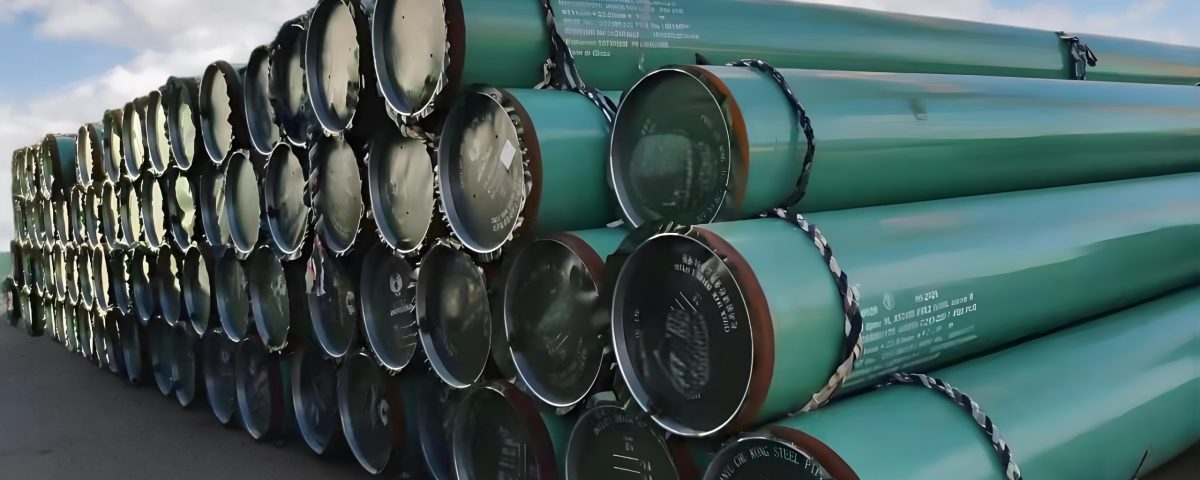
The Inner Monologue: Deciphering the Tri-Layer Shield
I am looking at the NF A49-721 standard, a French technical benchmark that feels inherently more rigorous than some of the broader ISO equivalents. It describes a 3-layer Polypropylene (3LPP) coating system. My mind immediately goes to the interface—the “bond.” Why three layers? Why not just thick PP? Because PP doesn’t stick to steel. I’m thinking about the FBE (Fusion Bonded Epoxy) primer as the chemical anchor. It’s the thin, green line that prevents cathodic disbonding. Then there is the adhesive—the copolymer bridge. It has to be compatible with both the thermoset epoxy and the thermoplastic PP. That’s a molecular handshake. And finally, the PP outer shield. Polypropylene isn’t just polyethylene’s tougher cousin; it’s a high-temperature specialist. While 3LPE (Polyethylene) starts to soften and lose its mechanical edge at $80^\circ\text{C}$, 3LPP stays rigid up to $110^\circ\text{C}$ or even $140^\circ\text{C}$ in specific grades. This is critical for offshore pipelines carrying hot crude or for buried lines in high-ambient desert soils. I’m also weighing the mechanical risks. PP is brittle at low temperatures. If you handle this pipe in a Siberian winter, it cracks like glass. But in the submerged or buried environments described by NF A49-721, it’s about indentation resistance. A rock pressing against a buried pipe. PP resists that creep. I need to explore the specific test metrics of the French standard—the elongation, the peel strength, and the holiday detection. This isn’t just a coating; it’s a multi-generational vault for a steel asset.
Technical Synthesis: The NF A49-721 3-Layer Polypropylene (3LPP) Pipeline System
The protection of buried or submerged steel pipelines is a battle against the fundamental laws of thermodynamics. Steel wants to return to its natural state—iron oxide. The NF A49-721 standard defines a sophisticated barrier system designed to arrest this transition through a tripartite metallurgical and polymer architecture. This 3LPP system is the “heavy armor” of the pipeline world, specifically engineered for environments where mechanical stress and elevated operating temperatures render standard coatings obsolete.
The Anatomy of the 3-Layer Architecture
To understand the 3LPP system, one must view it not as a coating, but as a composite laminate. Each layer addresses a specific failure mode of the pipeline lifecycle.
Layer 1: The Fusion Bonded Epoxy (FBE) Primer
The foundation is a high-performance FBE, typically applied to a thickness of $150–300\text{ }\mu\text{m}$. This is the “active” layer. While the outer layers are passive barriers, the FBE interacts with the steel surface on a molecular level. Through polar bonding, it provides the primary resistance to Cathodic Disbonding (CD). If the coating is punctured, the FBE prevents the corrosion from “creeping” under the rest of the coating.
Layer 2: The Copolymer Adhesive
Polypropylene is chemically inert and non-polar, meaning it will not naturally bond to epoxy. The second layer is a grafted copolymer adhesive. This material acts as a chemical bridge, featuring functional groups that react with the epoxy and a backbone that fuses with the PP topcoat. This layer ensures that the system behaves as a single monolithic unit rather than three separate skins.
Layer 3: The Polypropylene (PP) Topcoat
The outermost layer provides the mechanical muscle. PP is characterized by high crystallinity, which translates to superior hardness and thermal stability. In the context of NF A49-721, this layer is designed to withstand the “rock shield” effect—the localized pressure of backfill material—and the high-velocity impact of particles during offshore “S-lay” or “J-lay” installations.
Comparative Performance Metrics: 3LPP vs. 3LPE
A critical question in pipeline engineering is the choice between Polyethylene (PE) and Polypropylene (PP). The NF A49-721 standard pushes the performance envelope beyond what is typical for PE-coated lines.
| Physical Property | 3LPE (Polyethylene) | 3LPP (Polypropylene) |
| Max Operating Temp | $80^\circ\text{C}$ | $110^\circ\text{C} – 140^\circ\text{C}$ |
| Vicat Softening Point | $\sim 110^\circ\text{C} – 125^\circ\text{C}$ | $\sim 150^\circ\text{C} – 165^\circ\text{C}$ |
| Indentation Resistance | Moderate | Very High |
| Elongation at Break | $> 600\%$ | $> 400\%$ |
| Low Temp. Handling | Excellent (to $-40^\circ\text{C}$) | Poor (Becomes brittle $< 0^\circ\text{C}$) |
| Hardness (Shore D) | $50 – 60$ | $65 – 75$ |
The higher Vicat softening point of PP is the primary driver for its use in “hot” lines. In deep-sea oil extraction, the crude oil often exits the wellhead at temperatures exceeding $100^\circ\text{C}$. A PE coating would simply melt or turn into a viscous gel, losing its protective properties. 3LPP remains structurally sound.
Indentation and Creep: The Hidden Advantage
One of the most overlooked aspects of the NF A49-721 specification is the Indentation Resistance. When a pipeline is buried, it is subjected to the weight of the soil and any stones or debris within the backfill. Over decades, these point loads can “creep” through the coating.
Because PP has a higher modulus of elasticity than PE, its resistance to this slow deformation is significantly higher.
-
3LPE Indentation: At $70^\circ\text{C}$, PE may allow a 1mm probe to penetrate 50% of the coating thickness under specific loads.
-
3LPP Indentation: Under the same conditions, PP penetration is often less than 10%.
This mechanical stiffness allows for the use of more aggressive (and often cheaper) backfill materials without the need for additional protective “padding” or rock shields, potentially saving millions in logistics costs for long-distance onshore projects.
The Chemical and Permeability Barrier
Buried pipelines in coastal or submerged areas are constantly exposed to saline water. The NF A49-721 standard mandates rigorous testing for water vapor permeability.
Polypropylene has a lower moisture vapor transmission rate (MVTR) than many other polymers. This is vital because if water molecules reach the FBE layer, they can facilitate the migration of ions, fueling the cathodic disbonding process. The high-density crystalline structure of PP acts as a labyrinth, making it extremely difficult for $H_2O$ or $Cl^-$ ions to migrate through the thickness of the coating.
Quality Control and Adhesion Testing: The French Standard Rigor
The NF A49-721 standard is particularly famous for its stringent Peel Strength requirements. Unlike some standards that only require testing at room temperature, the French standard often demands testing at the maximum rated service temperature ($110^\circ\text{C}+$).
Adhesion Strength Benchmarks:
-
At $20^\circ\text{C}$: $> 150\text{ N/cm}$
-
At $110^\circ\text{C}$: $> 30\text{ N/cm}$ (Note: Most PE coatings have zero effective peel strength at this temperature).
To achieve these values, the surface preparation of the steel is paramount. The steel must be grit-blasted to a Sa 2½ finish with a surface profile of $60–100\text{ }\mu\text{m}$. Any residual salt on the surface (measured via the Bresle method) must be below $20\text{ mg/m}^2$. This level of cleanliness ensures that the FBE can form a true chemical bond with the iron lattice.
Environmental and Application Constraints
While 3LPP is technically superior in hot and harsh environments, it is not a “universal” solution. The inner monologue touched on its “Achilles heel”: low-temperature brittleness.
PP undergoes a Glass Transition ($T_g$) at temperatures near or just below freezing. In this state, the polymer loses its ability to absorb impact energy. If a 3LPP-coated pipe is dropped or struck during winter installation, the coating can shatter, leading to “disbondment stars” or micro-cracks that are invisible to the naked eye but will fail a high-voltage holiday test ($25\text{ kV}$).
Application Parameters for NF A49-721:
-
Steel Pre-heating: Induction heating to $220^\circ\text{C} – 240^\circ\text{C}$.
-
Extrusion: Side-wrap extrusion for both the adhesive and the PP topcoat to ensure uniform thickness.
-
Quenching: Controlled water cooling to manage the crystallization rate of the PP. If it cools too fast, the internal stresses can cause the coating to delaminate.
Final Engineering Assessment
The NF A49-721 3LPP coating is a specialized instrument for high-value energy infrastructure. It is the preferred choice for:
-
High-Temperature Gathering Lines: Where the fluid temperature exceeds $80^\circ\text{C}$.
-
Directional Drilling (HDD): Where the pipe is pulled through abrasive soil, requiring the high Shore D hardness of PP.
-
Offshore Submerged Lines: Where the hydrostatic pressure and installation stresses require maximum mechanical integrity.
By balancing the chemical adhesion of epoxy with the thermal and mechanical resilience of polypropylene, the 3LPP system provides a 50-year design life in environments that would destroy a standard coating in less than a decade. It is a testament to the philosophy that the best way to prevent corrosion is not to fight it, but to isolate the steel entirely from the thermodynamic environment that demands it.
The Inner Monologue: The Interfacial Tension
I’m looking at the cooling curve of the polypropylene now. This is where most 3LPP applications fail. If the quenching is too aggressive, the PP develops internal “hoop stresses” because the outer skin solidifies faster than the inner layers. This can literally pull the adhesive away from the FBE. Under the NF A49-721 standard, we aren’t just looking for a thick coat; we are looking for “stress-free” crystallinity. I’m thinking about the J-lay process on a deep-water pipelay vessel. The pipe sits in the tensioners, and the coating has to bear the entire weight of the suspended pipeline string. If the 3LPP has poor shear resistance at the FBE interface, the steel pipe will literally slide through the coating like a hand sliding out of a glove. This “pipe slippage” is the nightmare of offshore engineers. I need to delve into the Hot Wet Soak test—submerging the coated sample in $70^\circ\text{C}$ to $95^\circ\text{C}$ water for 28 days and then checking for adhesion. It’s the ultimate test of the copolymer adhesive’s longevity. Does the bond degrade when water molecules eventually reach the interface? And then there’s the Field Joint—the 12 meters of pipe are protected, but what about the 40 centimeters at the weld? The system is only as strong as its weakest link.
Part II: Advanced Material Performance and Field Application
The technical excellence of the NF A49-721 3LPP system is defined by its behavior under combined mechanical and thermal loads. Unlike onshore water pipes, energy pipelines are dynamic assets that expand, contract, and shift.
The Shear Strength and Pipelay Integrity
In offshore environments, the 3LPP coating must act as a load-bearing element. During installation, the pipeline is held by “tensioner pads” that use friction to control the descent of the pipe into the ocean.
The Shear Strength between the FBE and the steel, and between the FBE and the PP, must exceed the gripping force of the tensioners. NF A49-721 provides a framework for testing this “Lap Shear” strength. If the adhesive layer is too soft, or if the FBE hasn’t fully cured before the adhesive is applied, the layers will delaminate under the thousands of tons of tension.
The Chemistry of High-Temperature Stability
Why does Polypropylene survive where Polyethylene fails? It comes down to the Methyl Group ($CH_3$) in the polymer chain. This additional group restricts the rotation of the polymer backbone, leading to a higher melting point and greater stiffness.
However, this makes PP susceptible to Thermo-Oxidative Degradation. If exposed to high temperatures for years, the polymer can become brittle and “chalky.” The NF A49-721 specification requires the addition of specialized heat stabilizers and antioxidants. These chemical sacrificial agents neutralize the free radicals formed by heat and oxygen, ensuring the 3LPP remains flexible for a 30 to 50-year service life.
| Property | Standard Method | NF A49-721 Requirement (Typical) |
| Elongation at Break (PP) | ISO 527-2 | $\geq 400\%$ |
| Impact Strength | NF A49-721 | $\geq 10\text{ J/mm}$ of thickness |
| Cathodic Disbonding (28 days) | ISO 21809-1 | $< 7\text{ mm}$ radius @ $95^\circ\text{C}$ |
| Hot Wet Adhesion | CSA Z245.20 | Rating 1-2 (No stripping) |
| Carbon Black Content | ASTM D1603 | $2.0\% – 3.0\%$ (for UV protection) |
The Field Joint Challenge: Bridging the Gap
A pipeline is a chain of thousands of 12-meter segments. The 3LPP coating is applied in a factory, but the girth welds are made in the field (on a ship or in a trench). The “Field Joint Coating” (FJC) must match the performance of the factory-applied 3LPP.
There are three primary methods used under the NF A49-721 umbrella:
-
Flame-Sprayed Polypropylene (FSPP): This is the “gold standard.” PP powder is melted in a high-velocity flame and sprayed onto the heated weld area. This creates a fused, monolithic bond with the factory coating.
-
Injection Molded Polypropylene (IMPP): A mold is clamped around the weld, and molten PP is injected. This is used for very thick insulation (up to $100\text{ mm}$) in ultra-deepwater.
-
Heat Shrink Sleeves (HSS): Multi-layer sleeves with a PP backing and an adhesive. While faster to apply, they generally lack the high-temperature shear resistance of FSPP.
Thermal Conductivity and Insulation
In subsea applications, 3LPP often serves a secondary purpose: Thermal Insulation. If the crude oil cools down too much (below the “Cloud Point”), paraffin wax or gas hydrates will form, plugging the pipeline.
Standard 3LPP has a thermal conductivity ($k$-value) of approximately $0.22\text{ W/m}\cdot\text{K}$. To increase insulation, engineers sometimes use “Syntactic PP”—polypropylene embedded with hollow glass microspheres. This reduces the $k$-value significantly, allowing the oil to stay hot over long distances. NF A49-721 ensures that even with these additives, the core requirements of adhesion and water impermeability are maintained.
Environmental Cracking and Stress (ESCR)
Polypropylene is generally more resistant to Environmental Stress Cracking (ESC) than Polyethylene. ESC occurs when a polymer is under stress and exposed to a “sensitizing” agent (like certain detergents or soil chemicals).
In 3LPP systems, the high crystallinity of the PP provides a dense barrier that prevents these agents from penetrating the polymer matrix. This makes 3LPP particularly suited for “swampy” or industrial soils where the groundwater might contain traces of hydrocarbons or surfactants that would crack a lower-grade PE coating.
Quality Assurance: The Holiday Test
The final barrier against failure is the High-Voltage Holiday Detection. Because both the PP and the adhesive are excellent electrical insulators, we can use a “spark tester.” A brass brush or rolling coil electrode is passed over the pipe at $25,000\text{ volts}$. If there is even a microscopic pinhole (a “holiday”) that reaches the steel, a spark will jump, and an alarm will sound. NF A49-721 mandates 100% inspection of the pipe surface.
Conclusion: The Strategic Value of NF A49-721 3LPP
The selection of a 3LPP coating system is a statement of “long-termism.” For a developer, the higher upfront cost of polypropylene is an insurance policy.
-
Thermally: It survives the high-heat outputs of modern high-pressure/high-temperature (HPHT) wells.
-
Mechanically: It resists the crushing and shearing forces of deep-water installation and rocky backfills.
-
Chemically: It provides a near-perfect barrier against the ionic transport required for corrosion.
In the complex calculus of pipeline integrity, the 3-layer system according to NF A49-721 remains the most robust solution for ensuring that the vital energy infrastructure of the 21st century remains secure for its entire intended lifecycle.

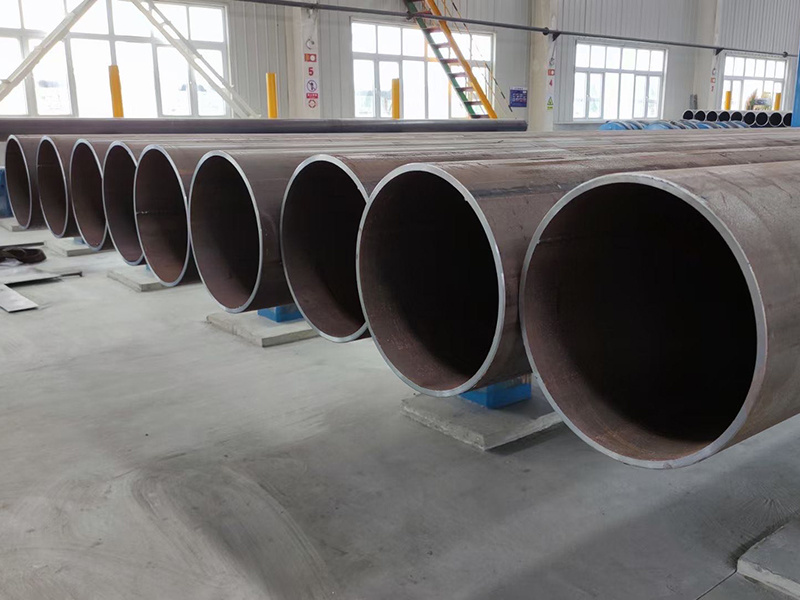
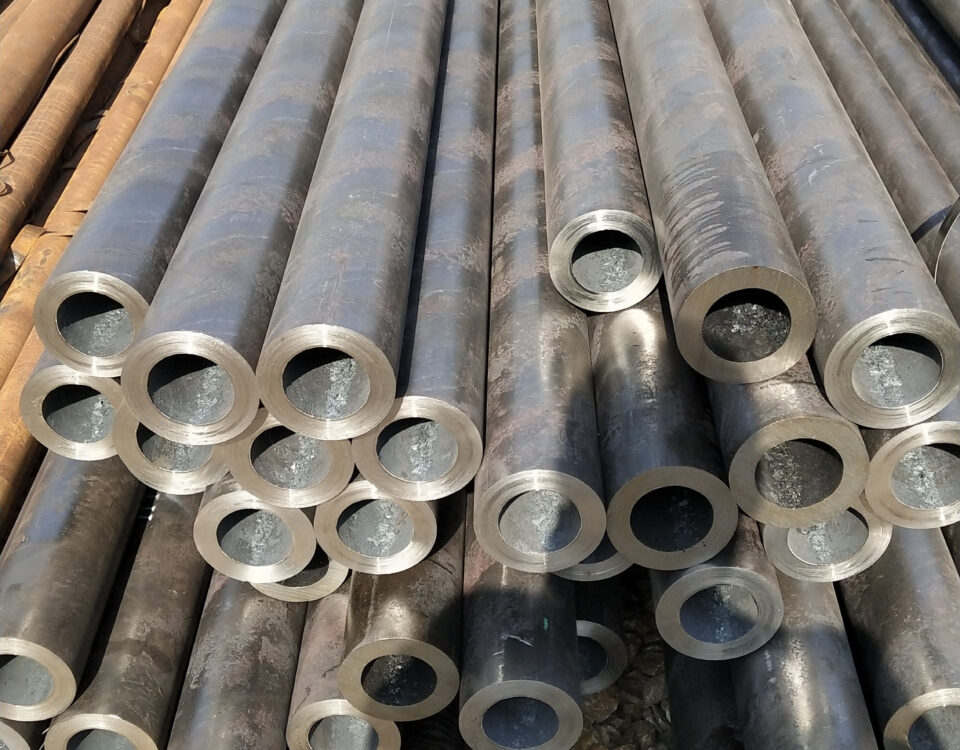
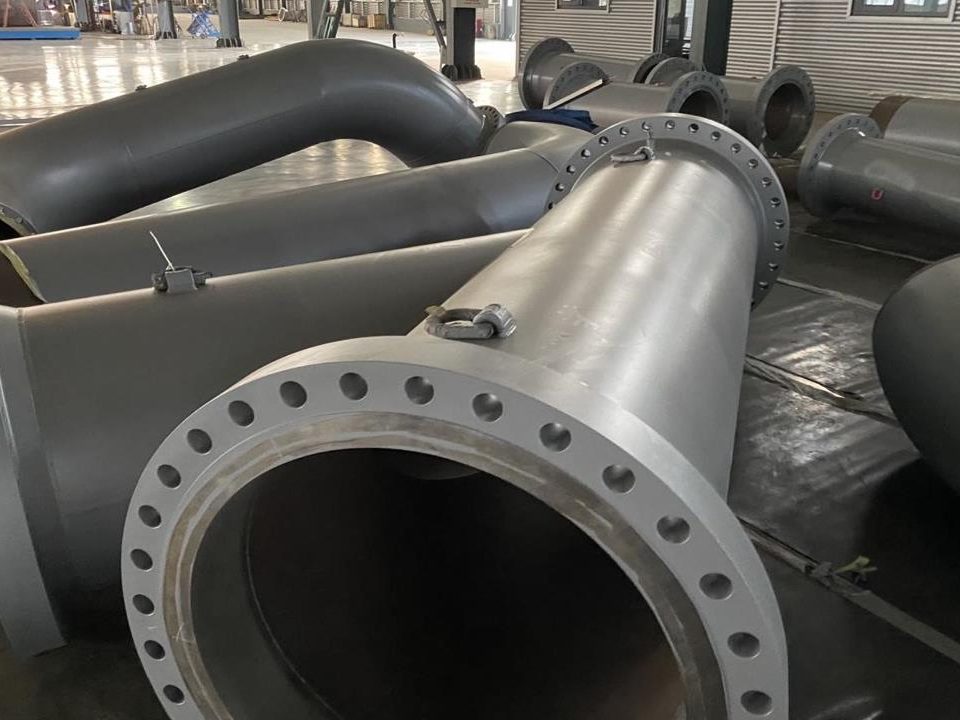
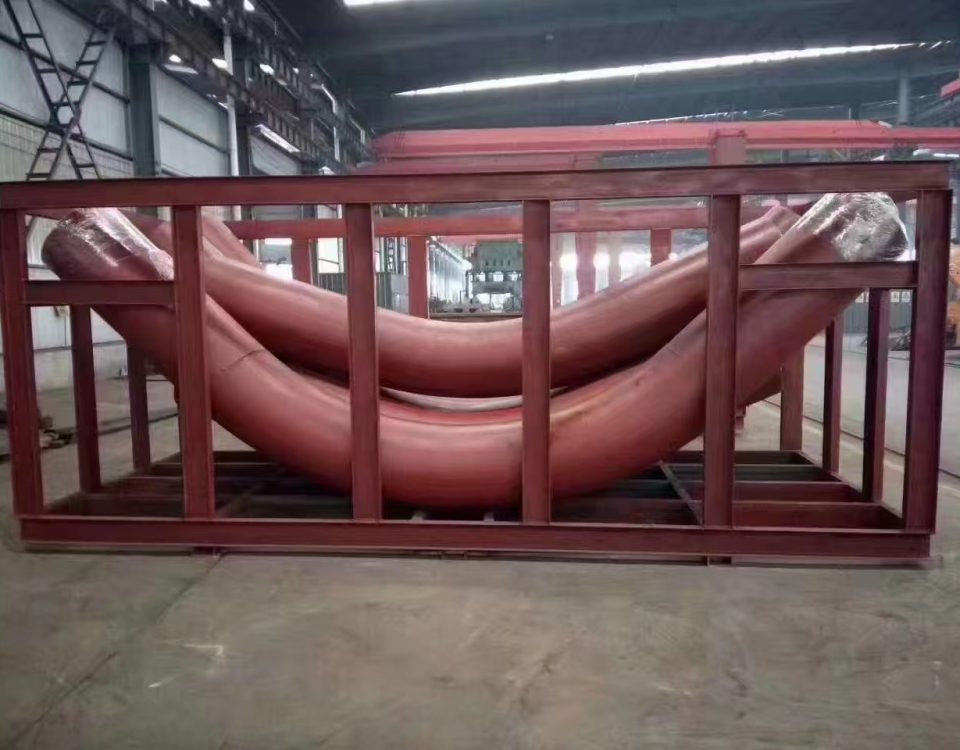
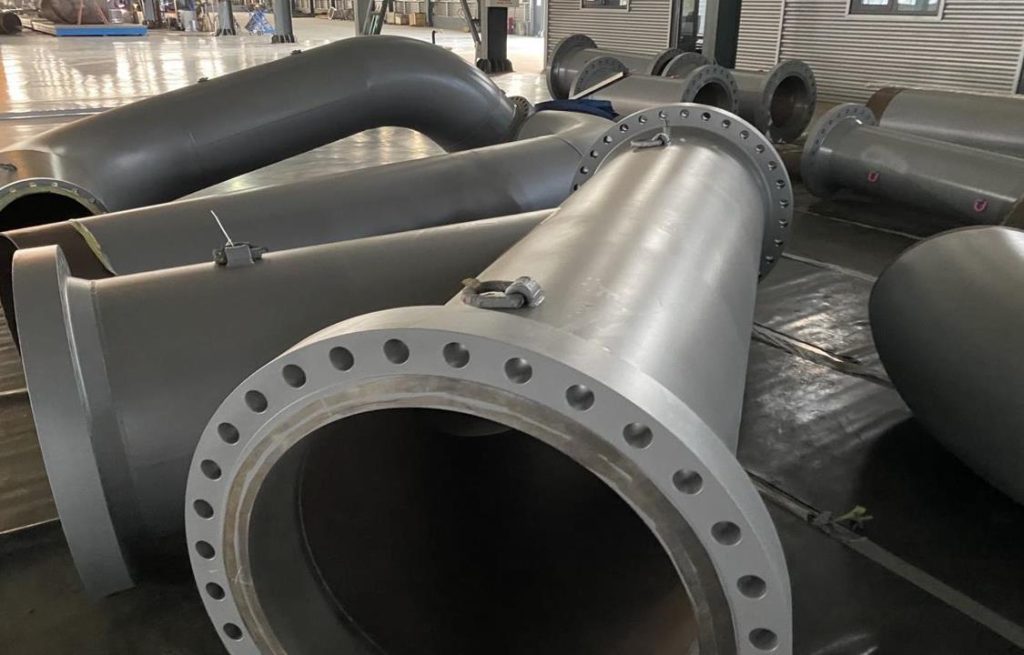
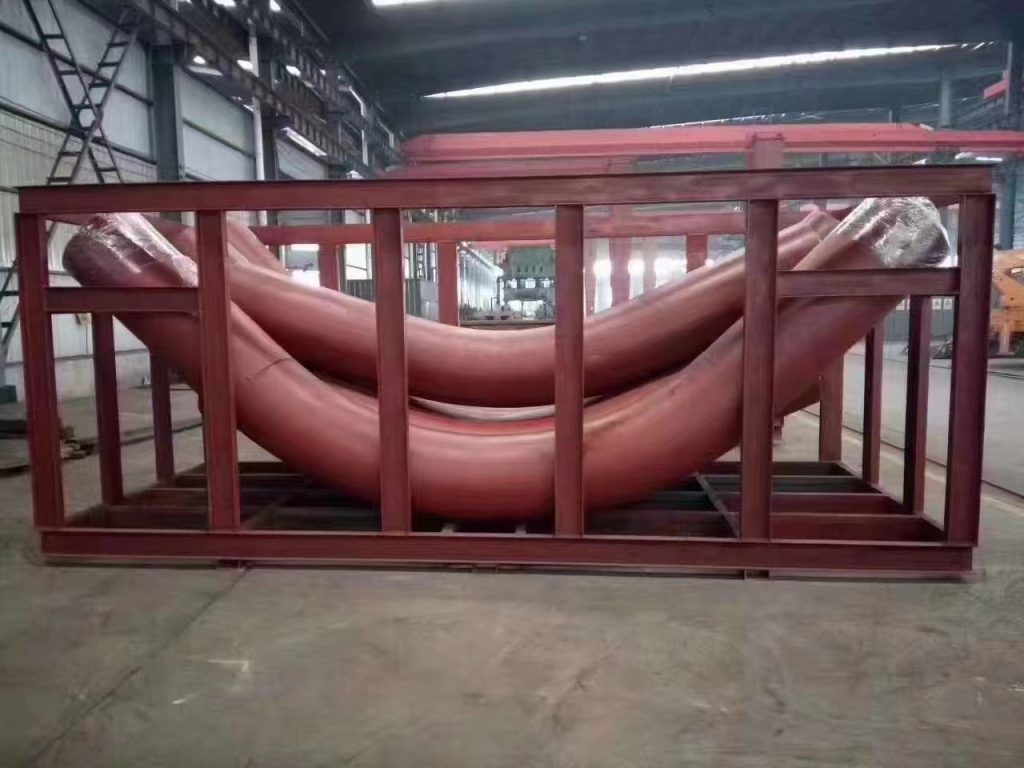
Induction bends come in standard bend angles (e.g. 45°, 90°, etc.) or can be custom made to specific bend angles. Compound bends (out-of-plane) bends in a single joint of pipe can also be produced. The bend radius is specified as a function of the diameter. For example, common bend radii for induction bends are 3D, 5D and 7D, where D is the nominal pipe diameter.