ASTM A234 WP5 Alloy Steel Pipe Fittings
January 31, 2026
High Frequency Heat-Expanded Seamless Steel Pipes
February 11, 2026
ASTM A519 SAE 1020 Seamless Tubes: Standards, Properties, Manufacturing and Applications
1. Introduction to ASTM A519 SAE 1020 Seamless Tubes
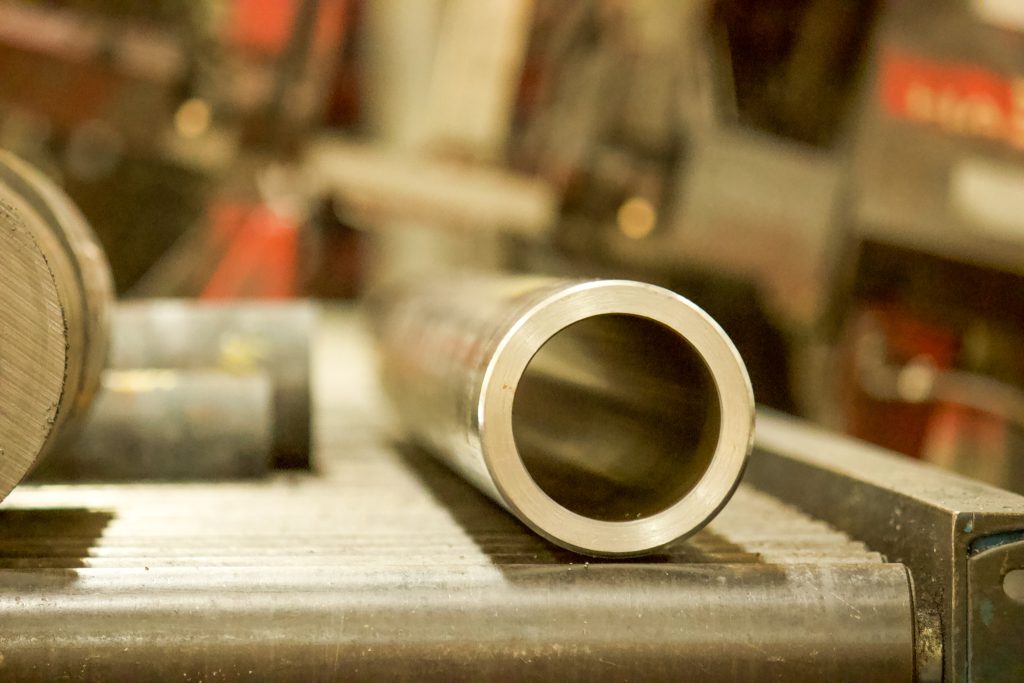
ASTM A519 SAE 1020 seamless tubes are widely used low-carbon plain carbon steel seamless tubes, which are manufactured in accordance with the ASTM A519 standard formulated by the American Society for Testing and Materials (ASTM). SAE 1020 refers to the material grade, which belongs to low-carbon steel with a carbon content of 0.18-0.23%, featuring excellent weldability, formability, machinability and cost-effectiveness. These seamless tubes are hollow cylindrical parts made of SAE 1020 steel through piercing, rolling, heat treatment and other processes without any welding seams, which have the advantages of uniform wall thickness, high dimensional accuracy, and good mechanical properties compared with welded tubes.
ASTM A519 SAE 1020 seamless tubes are widely used in various industrial fields, such as piping systems, machinery manufacturing, automotive industry, construction engineering, and agricultural machinery. They are mainly used to transport low-pressure and medium-pressure fluids (such as water, oil, air), and to manufacture mechanical structural parts, automotive components, and other products. Due to their low cost and good comprehensive performance, they have become one of the most commonly used seamless tube types in the industrial field.
This document will systematically elaborate on the relevant knowledge of ASTM A519 SAE 1020 seamless tubes, including the ASTM A519 standard overview, chemical composition and mechanical properties, manufacturing process, technical characteristics, industrial applications, quality inspection and control, and market prospects, providing a comprehensive reference for engineering and technical personnel, procurement personnel and relevant practitioners.
2. Overview of ASTM A519 Standard
The ASTM A519 standard is a key standard formulated by ASTM for carbon steel and alloy steel seamless tubes, which specifies the technical requirements, test methods, inspection rules, packaging, marking and transportation of seamless tubes for mechanical and pressure applications. This standard covers a variety of material grades, including SAE 1010, SAE 1020, SAE 1045, SAE 4130, etc., among which SAE 1020 is the most widely used low-carbon steel grade in the standard.
The ASTM A519 standard was first issued in 1937 and has been revised many times since then to adapt to the development of industrial technology and the needs of practical applications. The latest version of the standard (as of 2024) is ASTM A519/A519M-24, which adopts the dual-unit system (metric system and imperial system) to specify the technical parameters, making it applicable to both domestic and international markets. The core purpose of this standard is to ensure that the manufactured seamless tubes have stable quality and reliable performance, and can meet the requirements of various mechanical and pressure applications.
2.1 Scope of Application
The ASTM A519 standard applies to hot-finished and cold-finished seamless tubes made of carbon steel and alloy steel, with outer diameters ranging from 12.7 mm (0.5 in.) to 273.05 mm (10.75 in.) and wall thicknesses ranging from 1.24 mm (0.049 in.) to 25.4 mm (1.0 in.). These seamless tubes are mainly used for mechanical structures, pressure piping, automotive components, and other applications, but do not include seamless tubes for boiler and pressure vessel applications (which are covered by the ASTM A106, ASTM A213 and other standards).
ASTM A519 SAE 1020 seamless tubes, as a part of the ASTM A519 standard, fully comply with the scope of application of the standard. They are available in both hot-finished and cold-finished types: hot-finished seamless tubes are suitable for general-purpose applications requiring good ductility, while cold-finished seamless tubes are suitable for applications requiring high dimensional accuracy and surface finish, such as precision mechanical parts and automotive hydraulic pipelines.
2.2 Core Technical Requirements of the Standard
The ASTM A519 standard has strict requirements on the technical parameters of seamless tubes, including dimensional accuracy, chemical composition, mechanical properties, surface quality, and internal quality, which are the key basis for ensuring the quality of ASTM A519 SAE 1020 seamless tubes.
2.2.1 Dimensional Accuracy Requirements
The dimensional accuracy of ASTM A519 SAE 1020 seamless tubes mainly includes outer diameter deviation, wall thickness deviation, length deviation, and straightness, which are divided into hot-finished and cold-finished types with different requirements:
-
Outer Diameter Deviation: For hot-finished seamless tubes, the outer diameter deviation is ±0.5% of the nominal outer diameter (minimum deviation not less than ±0.13 mm); for cold-finished seamless tubes, the outer diameter deviation is stricter, ranging from ±0.05 mm to ±0.10 mm, depending on the nominal outer diameter.
-
Wall Thickness Deviation: The wall thickness deviation of hot-finished seamless tubes is ±10% of the nominal wall thickness (minimum deviation not less than ±0.13 mm); the wall thickness deviation of cold-finished seamless tubes is ±5% of the nominal wall thickness, ensuring more uniform wall thickness.
-
Length Deviation: The length of seamless tubes can be fixed length or random length. The random length is usually 4-7 meters; the fixed length deviation is ±10 mm, and the maximum deviation shall not exceed ±20 mm for tubes with a length of more than 6 meters.
-
Straightness: The straightness deviation of hot-finished seamless tubes shall not exceed 1.5 mm per meter; the straightness deviation of cold-finished seamless tubes shall not exceed 1.0 mm per meter, ensuring that the tubes are not easily bent during installation and use.
2.2.2 Surface Quality Requirements
The surface quality of ASTM A519 SAE 1020 seamless tubes is strictly regulated by the ASTM A519 standard, which requires that the inner and outer surfaces of the tubes shall be smooth, free of cracks, inclusions, scratches, pits, folds and other defects that affect the performance. The surface roughness of hot-finished seamless tubes shall not exceed 6.3 μm (Ra), and the surface roughness of cold-finished seamless tubes shall not exceed 1.6 μm (Ra), which can be achieved by polishing, pickling and other processes if necessary.
In addition, the surface of the tube shall not have excessive oxide scale and rust. For seamless tubes that need to be stored and transported for a long time, surface anti-rust treatment (such as galvanizing, painting) shall be carried out to avoid corrosion.
2.2.3 Internal Quality Requirements
The internal quality of ASTM A519 SAE 1020 seamless tubes mainly refers to the internal structure and defects, which are required to be free of internal cracks, shrinkage holes, porosity, segregation and other defects that affect the mechanical properties. The standard requires that the grain size of the tube shall be 6-8 grades (according to ASTM E112 standard), ensuring uniform microstructure and stable mechanical properties.
For thick-walled seamless tubes (wall thickness greater than 15 mm), non-destructive testing (such as ultrasonic testing, radiographic testing) shall be carried out to check the internal defects, and the testing results shall comply with the requirements of the ASTM A519 standard. If internal defects are found, the tube shall be repaired or scrapped according to the severity of the defects.
2.3 Relationship with Other Relevant Standards
ASTM A519 SAE 1020 seamless tubes are closely related to other relevant standards, which are complementary and differentiated in scope of application and technical requirements, mainly including the following:
-
ASTM A106 Standard: This standard applies to carbon steel seamless tubes for high-temperature and high-pressure piping, which are mainly used in boiler, pressure vessel and other high-temperature and high-pressure applications. Compared with ASTM A519 SAE 1020 seamless tubes, ASTM A106 seamless tubes have higher requirements on high-temperature performance and pressure-bearing capacity, and the material grade is mainly A, B, C (carbon content increases in turn).
-
ASTM A213 Standard: This standard applies to alloy steel and stainless steel seamless tubes for boiler and heat exchanger, which are mainly used in high-temperature, high-pressure and corrosive environments. The material grades include TP304, TP316 (stainless steel), T11, T22 (alloy steel), etc., which have better high-temperature resistance and corrosion resistance than ASTM A519 SAE 1020 seamless tubes.
-
SAE J524 Standard: This standard is formulated by the Society of Automotive Engineers (SAE), which specifies the technical requirements of seamless steel tubes for automotive applications. ASTM A519 SAE 1020 seamless tubes can be used in automotive applications if they meet the requirements of SAE J524 standard, such as automotive fuel pipes, hydraulic pipes, etc.
-
GB/T 8162 Standard: This is a Chinese national standard for structural seamless steel tubes, which is equivalent to the ASTM A519 standard in scope of application and technical requirements. The 20# steel seamless tube in GB/T 8162 is similar to ASTM A519 SAE 1020 seamless tube in chemical composition and mechanical properties, and can be used interchangeably in some general-purpose applications.
It should be noted that when ASTM A519 SAE 1020 seamless tubes are used in specific fields (such as pressure piping, automotive industry), they must not only comply with the ASTM A519 standard, but also meet the requirements of the corresponding industry standards to ensure the safety and reliability of the application.
3. Chemical Composition and Mechanical Properties of ASTM A519 SAE 1020 Seamless Tubes
The chemical composition and mechanical properties are the core indicators determining the performance and application scope of ASTM A519 SAE 1020 seamless tubes. The chemical composition of SAE 1020 steel is strictly controlled in accordance with the ASTM A519 standard to ensure the stability of its mechanical properties and processing performance. The mechanical properties, including tensile strength, yield strength, elongation, and hardness, are determined by the chemical composition and heat treatment state, and directly affect the load-bearing capacity and processing performance of the seamless tubes.
3.1 Chemical Composition
ASTM A519 SAE 1020 is a plain carbon steel with a low carbon content, and its chemical composition mainly includes carbon (C), manganese (Mn), silicon (Si), phosphorus (P), sulfur (S), and other trace elements. The content of each element is strictly limited by the ASTM A519 standard to avoid the adverse effects of harmful elements (such as P and S) on the material’s performance and to ensure the balance of the material’s strength and ductility. The detailed chemical composition requirements of ASTM A519 SAE 1020 seamless tubes are shown in Table 2.
|
Element
|
Minimum (min)
|
Maximum (max)
|
Typical Value
|
Function and Influence
|
|
Carbon (C)
|
0.18
|
0.23
|
0.20
|
The most important strengthening element; controls the strength and hardness of the steel. A carbon content of 0.18-0.23% balances strength and ductility, ensuring good weldability and formability.
|
|
Manganese (Mn)
|
0.30
|
0.60
|
0.45
|
Improves the strength and toughness of the steel; enhances the hardenability and reduces the brittleness caused by sulfur. It also acts as a deoxidizer during steelmaking to remove impurities.
|
|
Silicon (Si)
|
0.10
|
0.35
|
0.20
|
Acts as a deoxidizer and strengthens the ferrite matrix, improving the strength and hardness of the steel. Excessive silicon will reduce the weldability and ductility of the steel.
|
|
Phosphorus (P)
|
–
|
0.040
|
0.025
|
Harmful impurity; causes cold brittleness of the steel, reducing its toughness at low temperatures. Strictly controlled to a low level to ensure the material’s low-temperature performance.
|
|
Sulfur (S)
|
–
|
0.050
|
0.030
|
Harmful impurity; causes hot brittleness of the steel, reducing its ductility and toughness during hot processing (such as piercing and rolling). Controlled to avoid adverse effects on processing performance.
|
|
Copper (Cu)
|
–
|
0.20
|
0.10
|
Trace element; slightly improves the corrosion resistance of the steel, but excessive copper will reduce the hot workability.
|
|
Iron (Fe)
|
Bal.
|
Bal.
|
98.7-99.2
|
Matrix element; forms the basic structure of the steel (ferrite and pearlite).
|
The chemical composition of ASTM A519 SAE 1020 is designed to balance the material’s processing performance and mechanical properties. The low carbon content (0.18-0.23%) ensures good weldability and formability, making the seamless tubes suitable for various welding methods (such as arc welding, gas welding, and resistance welding) and forming processes (such as bending, flanging, and expanding). Manganese and silicon are added as alloying elements to improve the strength and toughness of the steel without significantly reducing its ductility. Phosphorus and sulfur are strictly controlled as harmful impurities to avoid cold brittleness and hot brittleness, ensuring the reliability of the material during processing and service.
It should be noted that the chemical composition of ASTM A519 SAE 1020 may have slight deviations in different production batches, but it must be within the range specified by the ASTM A519 standard. The manufacturer must provide a Material Test Report (MTR) for each batch of seamless tubes, detailing the actual chemical composition test results to ensure traceability and quality control.
3.2 Mechanical Properties
The mechanical properties of ASTM A519 SAE 1020 seamless tubes are closely related to their heat treatment state and processing method (hot-finished or cold-finished). The ASTM A519 standard specifies the minimum requirements for mechanical properties such as tensile strength, yield strength (0.2% offset), elongation, and reduction of area. The mechanical properties of hot-finished and cold-finished ASTM A519 SAE 1020 seamless tubes are different: cold-finished seamless tubes have higher tensile strength and yield strength due to work hardening during cold processing, but lower elongation; hot-finished seamless tubes have better ductility and toughness due to the elimination of work hardening during hot processing. The detailed mechanical property requirements of ASTM A519 SAE 1020 seamless tubes are shown in Table 3.
|
Mechanical Property
|
Test Standard
|
Hot-Finished (Annealed) State
|
Cold-Finished State
|
Unit
|
|
Tensile Strength (TS), min
|
ASTM E8/E8M
|
415
|
450
|
MPa (ksi)
|
|
Yield Strength (YS, 0.2% offset), min
|
ASTM E8/E8M
|
240 (35)
|
310 (45)
|
MPa (ksi)
|
|
Elongation in 50 mm (2 in.) Gauge Length, min
|
ASTM E8/E8M
|
25
|
15
|
%
|
|
Reduction of Area, min
|
ASTM E8/E8M
|
50
|
40
|
%
|
|
Brinell Hardness (HB), max
|
ASTM E10
|
137
|
179
|
HB
|
|
Impact Toughness (Izod, 23℃), min
|
ASTM E23
|
60
|
40
|
J
|
The mechanical properties of ASTM A519 SAE 1020 seamless tubes can be adjusted by heat treatment. For example, annealing treatment (heating to 815-870℃, holding for a certain time, and slow cooling) can reduce the hardness of the steel, improve ductility and toughness, and eliminate residual stresses generated during processing. Normalizing treatment (heating to 890-950℃, holding for a certain time, and air cooling) can refine the grain structure, improve the strength and toughness of the steel, and is suitable for seamless tubes requiring higher strength. Quenching and tempering treatment (quenching at 850-900℃, tempering at 550-650℃) can further improve the strength and hardness of the steel, but it will reduce the ductility, so it is rarely used for ASTM A519 SAE 1020 seamless tubes, which are mainly used for general-purpose applications requiring good ductility.
To better understand the performance characteristics of ASTM A519 SAE 1020 seamless tubes, Table 4 compares their mechanical properties with other common carbon steel and alloy steel seamless tube grades covered by the ASTM A519 standard. It can be seen from the table that ASTM A519 SAE 1020 has lower tensile strength and yield strength than high-carbon steel (SAE 1045) and alloy steel (SAE 4130), but higher elongation and better ductility, which reflects its advantages in processing performance. Compared with low-carbon steel with lower carbon content (SAE 1010), ASTM A519 SAE 1020 has higher strength, which makes it more suitable for applications requiring a certain load-bearing capacity.
|
Grade
|
Tensile Strength (MPa), min
|
Yield Strength (MPa), min
|
Elongation (%), min
|
Brinell Hardness (HB), max
|
Material Type
|
|
ASTM A519 SAE 1010
|
330
|
180
|
30
|
111
|
Low-carbon plain carbon steel
|
|
ASTM A519 SAE 1020
|
415
|
240
|
25
|
137
|
Low-carbon plain carbon steel
|
|
ASTM A519 SAE 1045
|
620
|
330
|
16
|
217
|
Medium-carbon plain carbon steel
|
|
ASTM A519 SAE 4130
|
860
|
690
|
18
|
255
|
Alloy steel (Cr-Mo steel)
|
|
ASTM A519 SAE 4340
|
1030
|
860
|
12
|
302
|
Alloy steel (Ni-Cr-Mo steel)
|
The mechanical property test of ASTM A519 SAE 1020 seamless tubes must be carried out in accordance with the relevant standards specified in Table 3, and the test samples must be taken in strict accordance with the requirements of ASTM A519. The tensile test and yield strength test are carried out using a universal testing machine, and the test sample is a standard round bar sample cut from the seamless tube. The gauge length of the sample is 50 mm (2 in.), and the test speed is controlled at 2-5 mm/min to ensure the accuracy of the test results. The Brinell hardness test is carried out using a Brinell hardness tester, with a test load of 3000 kgf and a steel ball diameter of 10 mm. The test point is selected on the cross-section of the tube, and at least three test points are taken for each sample to calculate the average value, which is taken as the hardness value of the tube.
It is worth noting that the mechanical properties listed in Table 3 and Table 4 are the minimum requirements specified by the ASTM A519 standard. In actual production, due to the differences in production processes (such as billet quality, rolling parameters, and heat treatment control), the actual mechanical properties of ASTM A519 SAE 1020 seamless tubes may be slightly higher than the standard requirements. For example, the actual tensile strength of hot-finished ASTM A519 SAE 1020 seamless tubes is usually between 420-480 MPa, and the yield strength is between 245-290 MPa, which is slightly higher than the minimum standard value, ensuring a certain safety margin for practical applications. However, the actual performance must not be lower than the standard requirements; otherwise, the product will be deemed unqualified and cannot be put into use.
In addition, the mechanical properties of ASTM A519 SAE 1020 seamless tubes are also affected by the wall thickness of the tube. For seamless tubes with a larger wall thickness (more than 20 mm), due to the difficulty in heat treatment (such as uneven heating and cooling), there may be slight differences in mechanical properties between the surface and the core. Therefore, when producing thick-walled ASTM A519 SAE 1020 seamless tubes, manufacturers need to optimize the heat treatment process, such as extending the holding time and controlling the cooling rate, to ensure the uniformity of mechanical properties of the entire tube wall.
4. Manufacturing Process of ASTM A519 SAE 1020 Seamless Tubes
The manufacturing process of ASTM A519 SAE 1020 seamless tubes is a complex systematic project, which mainly includes billet preparation, piercing, rolling, heat treatment, and finishing. Each process link has strict technical requirements and process control standards, which directly affect the quality, performance, and dimensional accuracy of the final product. As a low-carbon plain carbon steel, ASTM A519 SAE 1020 has good hot workability and cold workability, which makes it suitable for both hot-finished and cold-finished manufacturing processes. This section will systematically elaborate on the manufacturing process of ASTM A519 SAE 1020 seamless tubes, focusing on the key technical points and process control requirements of each stage.
4.1 Billet Preparation
Billet preparation is the first and most basic link in the manufacturing process of seamless tubes, and the quality of the billet directly determines the quality of the final seamless tube. ASTM A519 SAE 1020 seamless tube billets are mainly made of continuous cast billets or forged billets, among which continuous cast billets are widely used in large-scale production due to their high production efficiency and low cost. The raw material for billet preparation is SAE 1020 steel ingot or continuous casting slab, which must comply with the chemical composition requirements specified in Table 2 to ensure the subsequent performance of the seamless tube.
The specific steps of billet preparation include raw material inspection, billet heating, and billet cutting. First, the raw material (steel ingot or continuous casting slab) must undergo strict chemical composition analysis and surface quality inspection. The chemical composition is tested by optical emission spectroscopy (OES) or X-ray fluorescence (XRF) to confirm that it meets the requirements of ASTM A519 SAE 1020; the surface quality is inspected by visual inspection (VT) to check for defects such as cracks, inclusions, scratches, and pits. Any raw material that fails the inspection must be rejected and cannot be used for billet preparation.
After passing the raw material inspection, the steel ingot or continuous casting slab is heated to a suitable temperature for billet rolling or forging. The heating temperature is usually controlled at 1100-1250℃, which is the optimal hot working temperature range for SAE 1020 steel. At this temperature, the steel has good plasticity and toughness, and the resistance to deformation is low, which is conducive to subsequent rolling or forging. During the heating process, it is necessary to control the heating rate and holding time to avoid overheating, burning, or uneven heating of the billet. Overheating will cause the grain of the steel to grow excessively, reducing the strength and toughness of the billet; burning will cause oxidation and decarburization of the billet surface, affecting the surface quality and performance of the final seamless tube.
After heating, the steel ingot or continuous casting slab is rolled or forged into billets with a certain diameter and length. The diameter of the billet is determined according to the outer diameter and wall thickness of the final seamless tube, usually 50-200 mm, and the length is 1-3 meters. For continuous cast billets, they can be directly used after cutting to the required length without additional rolling or forging; for steel ingots, they need to be forged into billets first to refine the grain structure and eliminate internal defects such as porosity and segregation.
Finally, the rolled or forged billets are cut into fixed-length billets using a flame cutting machine or a sawing machine, and the cut surface is trimmed to ensure that the cut surface is flat and free of burrs. The trimmed billets are then sent to the next process (piercing) for further processing. It should be noted that the billets after cutting must be cooled to room temperature slowly to avoid cracks caused by rapid cooling.
4.2 Piercing Process
The piercing process is the core link in the manufacturing of seamless tubes, whose main purpose is to punch a hole in the center of the solid billet to form a hollow tube blank (also known as a hollow billet). The quality of the piercing process directly affects the wall thickness uniformity, inner surface quality, and dimensional accuracy of the final seamless tube. For ASTM A519 SAE 1020 seamless tubes, the commonly used piercing methods include two-roll piercing (Mannesmann piercing) and three-roll piercing, among which two-roll piercing is the most widely used in industrial production due to its high production efficiency and good product quality.
Two-roll piercing is mainly completed by a piercing mill, which consists of two inclined rolls, a plug, and a guide plate. The working principle is as follows: the billet is fed into the piercing mill, and under the drive of the two inclined rolls, the billet rotates and moves forward at the same time; the plug installed at the center of the rolls presses the center of the billet, and under the combined action of the rolls and the plug, the billet is gradually pierced to form a hollow tube blank. During the piercing process, the key technical parameters that need to be strictly controlled include the roll angle, roll speed, plug position, and billet temperature.
The roll angle is the angle between the roll axis and the horizontal plane, which usually ranges from 8° to 15° for ASTM A519 SAE 1020 seamless tubes. A reasonable roll angle can ensure that the billet is pierced smoothly, and the wall thickness of the hollow tube blank is uniform. If the roll angle is too small, the piercing resistance will increase, and the billet may not be pierced; if the roll angle is too large, the wall thickness of the hollow tube blank will be uneven, and defects such as wrinkles and cracks may occur on the inner and outer surfaces.
The roll speed directly affects the piercing efficiency and the quality of the hollow tube blank. For ASTM A519 SAE 1020 seamless tubes, the roll speed is usually controlled at 30-60 r/min. A moderate roll speed can ensure that the billet is fully deformed, and the inner and outer surfaces of the hollow tube blank are smooth. If the roll speed is too high, the billet may be overheated due to excessive friction, resulting in surface defects; if the roll speed is too low, the production efficiency will be reduced, and the wall thickness uniformity of the hollow tube blank will be affected.
The plug position is the distance between the plug and the roll, which directly affects the inner diameter and wall thickness of the hollow tube blank. During the piercing process, the plug position needs to be adjusted according to the size of the billet and the required inner diameter of the hollow tube blank to ensure that the inner diameter and wall thickness of the hollow tube blank meet the process requirements. If the plug is too far forward, the inner diameter of the hollow tube blank will be too small, and the wall thickness will be too large; if the plug is too far backward, the inner diameter of the hollow tube blank will be too large, and the wall thickness will be too small.
The billet temperature during piercing is also a key control parameter. The optimal piercing temperature for ASTM A519 SAE 1020 billets is 1050-1200℃, which is slightly lower than the billet heating temperature. During the piercing process, the billet temperature will decrease due to heat dissipation and deformation work, so it is necessary to preheat the plug and the guide plate to reduce heat loss. If the billet temperature during piercing is too low, the piercing resistance will increase, and defects such as cracks may occur on the hollow tube blank; if the temperature is too high, the hollow tube blank may be oxidized and decarburized, affecting the surface quality.
After the piercing process, the hollow tube blank needs to be inspected for surface quality and dimensional accuracy. The surface quality is inspected by visual inspection to check for defects such as cracks, wrinkles, scratches, and inclusions; the dimensional accuracy is inspected by calipers and micrometers to check the inner diameter, outer diameter, and wall thickness of the hollow tube blank. Any hollow tube blank with unqualified surface quality or dimensional accuracy must be repaired or scrapped to avoid affecting the quality of the final product.
4.3 Rolling Process
The rolling process is the process of reducing the outer diameter and wall thickness of the hollow tube blank to the required size of the finished seamless tube, while improving the dimensional accuracy, surface quality, and mechanical properties of the tube. For ASTM A519 SAE 1020 seamless tubes, the rolling process is usually divided into hot rolling and cold rolling, corresponding to hot-finished and cold-finished seamless tubes respectively. The choice of rolling method depends on the application requirements of the seamless tube: hot-finished seamless tubes are suitable for general-purpose applications requiring good ductility, while cold-finished seamless tubes are suitable for applications requiring high dimensional accuracy and surface finish.
4.3.1 Hot Rolling Process
Hot rolling is the most commonly used rolling method for ASTM A519 SAE 1020 seamless tubes, which is completed by a hot rolling mill (such as a continuous rolling mill, a pilger mill, or a planetary rolling mill). The hot rolling process is carried out at a high temperature, usually 900-1100℃, which can eliminate the work hardening generated during the piercing process, improve the ductility and toughness of the tube, and reduce the rolling resistance.
The continuous rolling mill is the most widely used hot rolling equipment in industrial production, which consists of multiple pairs of rolls arranged in sequence. The working principle is as follows: the hollow tube blank after piercing is fed into the continuous rolling mill, and under the drive of the rolls, the tube blank is rolled step by step. Each pair of rolls reduces the outer diameter and wall thickness of the tube blank by a certain amount, and finally rolls it into a seamless tube with the required size. During the hot rolling process, the key technical parameters that need to be controlled include the rolling temperature, rolling speed, roll pass size, and tension between rolls.
The rolling temperature is the core parameter of the hot rolling process, which is usually controlled at 900-1100℃ for ASTM A519 SAE 1020 seamless tubes. A reasonable rolling temperature can ensure that the tube blank has good plasticity and toughness, and the rolling process is smooth. If the rolling temperature is too high, the tube may be overheated, resulting in grain growth and reduced strength; if the temperature is too low, the rolling resistance will increase, and defects such as cracks and scratches may occur on the tube surface.
The rolling speed is determined according to the rolling temperature, tube size, and production efficiency. For ASTM A519 SAE 1020 seamless tubes, the rolling speed is usually controlled at 1-5 m/s. A moderate rolling speed can ensure that the tube is fully deformed, and the dimensional accuracy and surface quality are stable. If the rolling speed is too high, the tube may be pulled or broken due to excessive tension; if the speed is too low, the production efficiency will be reduced, and the tube may be oxidized due to prolonged high-temperature exposure.
The roll pass size is designed according to the required size of the finished tube. Each pair of rolls has a specific pass shape (such as circular, oval, or square), which gradually reduces the outer diameter and wall thickness of the tube blank. The roll pass size must be strictly controlled to ensure that the dimensional accuracy of the rolled tube meets the requirements of the ASTM A519 standard. If the roll pass size is too large, the outer diameter and wall thickness of the tube will be too large; if the size is too small, the tube may be over-rolled, resulting in thin walls or cracks.
The tension between rolls is also an important control parameter. A certain tension can ensure that the tube moves forward stably during the rolling process, and the wall thickness is uniform. However, excessive tension will cause the tube to be stretched, resulting in reduced wall thickness and uneven dimensional accuracy; insufficient tension will cause the tube to slip between the rolls, resulting in surface defects and uneven wall thickness.
4.3.2 Cold Rolling Process
Cold rolling is mainly used to produce cold-finished ASTM A519 SAE 1020 seamless tubes, which is completed by a cold rolling mill (such as a two-roll cold rolling mill or a multi-roll cold rolling mill). The cold rolling process is carried out at room temperature (or slightly higher than room temperature), without heating the tube blank. Compared with hot rolling, cold rolling has the advantages of high dimensional accuracy, good surface finish, and high tensile strength and yield strength, but it also has the disadvantages of high rolling resistance and low production efficiency. Therefore, cold rolling is mainly used for producing small-diameter, thin-walled seamless tubes with high precision requirements, such as precision mechanical parts, automotive hydraulic pipelines, and instrument pipelines.
Before cold rolling, the hollow tube blank after piercing and hot rolling (or directly after piercing) needs to undergo pre-treatment, including pickling, rinsing, and lubrication. Pickling is to remove the oxide scale and rust on the surface of the tube blank, usually using hydrochloric acid or sulfuric acid solution; rinsing is to wash off the residual acid solution on the surface of the tube blank to avoid corrosion; lubrication is to apply a layer of lubricant (such as mineral oil, graphite) on the surface of the tube blank to reduce the friction between the tube blank and the rolls during cold rolling, prevent surface scratches, and improve the surface finish of the finished tube. The pre-treatment quality directly affects the cold rolling effect and the surface quality of the finished tube; if the pre-treatment is not in place, defects such as scratches, pits, and rust spots may occur on the surface of the cold-rolled tube.
The working principle of cold rolling is similar to that of hot rolling, but it is carried out at room temperature. The tube blank is fed into the cold rolling mill, and under the pressure of the rolls, the tube blank is gradually reduced in outer diameter and wall thickness to the required size of the finished tube. During the cold rolling process, the tube blank undergoes plastic deformation, and work hardening occurs, which makes the tensile strength and yield strength of the tube increase significantly, while the elongation decreases. The key technical parameters that need to be strictly controlled during cold rolling include rolling pressure, rolling speed, roll pass size, and lubrication condition.
Rolling pressure is the core parameter of the cold rolling process, which is determined according to the material properties of the tube blank, the size of the tube blank, and the required size of the finished tube. For ASTM A519 SAE 1020 seamless tubes, the rolling pressure is usually controlled at 100-300 MPa. A reasonable rolling pressure can ensure that the tube blank is fully deformed, and the dimensional accuracy and surface quality of the finished tube meet the requirements. If the rolling pressure is too high, the tube may be broken or cracked due to excessive stress; if the rolling pressure is too low, the deformation of the tube blank is insufficient, and the outer diameter and wall thickness of the finished tube cannot meet the requirements.
Rolling speed directly affects the production efficiency and the quality of the finished tube. For ASTM A519 SAE 1020 seamless tubes, the rolling speed is usually controlled at 0.5-2 m/s. A moderate rolling speed can ensure that the tube moves forward stably during the rolling process, and the lubrication condition is good, avoiding surface defects. If the rolling speed is too high, the friction between the tube blank and the rolls increases, which may cause surface scratches and reduce the surface finish; if the rolling speed is too low, the production efficiency is reduced, and the production cost is increased.
Roll pass size for cold rolling is more precise than that for hot rolling, which is designed according to the required dimensional accuracy of the finished tube. The roll pass size must be strictly controlled to ensure that the outer diameter deviation, wall thickness deviation, and roundness of the cold-rolled tube meet the strict requirements of the ASTM A519 standard for cold-finished seamless tubes. In addition, the rolls need to be regularly inspected and ground to ensure that the roll pass size is stable and free of wear.
Lubrication condition is very important for the cold rolling process. Good lubrication can reduce the friction between the tube blank and the rolls, prevent surface scratches, and improve the surface finish of the finished tube. During cold rolling, the lubricant needs to be continuously supplied to the contact surface between the tube blank and the rolls, and the type and dosage of the lubricant need to be selected according to the rolling pressure, rolling speed, and other parameters. After cold rolling, the residual lubricant on the surface of the tube needs to be cleaned to avoid affecting the subsequent heat treatment and surface treatment processes.
After cold rolling, the seamless tube is in a work-hardened state, with high hardness and low ductility, which cannot meet the requirements of some applications. Therefore, cold-finished ASTM A519 SAE 1020 seamless tubes usually need to undergo heat treatment (such as annealing) to eliminate work hardening, reduce hardness, improve ductility and toughness, and restore the mechanical properties of the tube to the required range. The annealing temperature for cold-finished ASTM A519 SAE 1020 seamless tubes is usually 700-750℃, and the holding time is 1-2 hours, followed by slow cooling to room temperature.
4.4 Heat Treatment Process
Heat treatment is an important link in the manufacturing process of ASTM A519 SAE 1020 seamless tubes, whose main purpose is to adjust the microstructure of the tube, eliminate residual stresses generated during processing, improve mechanical properties, and meet the performance requirements of different applications. The heat treatment process of ASTM A519 SAE 1020 seamless tubes is mainly determined by the processing method (hot-finished or cold-finished) and the application requirements of the tube, and the commonly used heat treatment methods include annealing, normalizing, and stress relief annealing.
4.4.1 Annealing Treatment
Annealing treatment is the most commonly used heat treatment method for ASTM A519 SAE 1020 seamless tubes, which is mainly used to eliminate work hardening, reduce hardness, improve ductility and toughness, and uniformize the microstructure. Annealing treatment is applicable to both hot-finished and cold-finished seamless tubes: for hot-finished seamless tubes, annealing treatment can eliminate residual stresses generated during hot rolling and piercing, and uniformize the microstructure; for cold-finished seamless tubes, annealing treatment is mainly used to eliminate work hardening generated during cold rolling, restore the ductility and toughness of the tube.
The annealing process for ASTM A519 SAE 1020 seamless tubes is as follows: first, the seamless tube is heated to 815-870℃ (the annealing temperature), and the holding time is determined according to the wall thickness of the tube, usually 1-3 hours (the thicker the wall thickness, the longer the holding time); then, the tube is cooled to room temperature slowly, with a cooling rate of 50-100℃ per hour. Slow cooling can ensure that the microstructure of the tube is fully transformed into ferrite and pearlite, and the residual stresses are fully eliminated. After annealing treatment, the Brinell hardness of ASTM A519 SAE 1020 seamless tubes is reduced to ≤137 HB (for hot-finished) or ≤150 HB (for cold-finished after annealing), the elongation is increased, and the mechanical properties are more stable.
4.4.2 Normalizing Treatment
Normalizing treatment is mainly used for ASTM A519 SAE 1020 seamless tubes that require higher strength and toughness, such as seamless tubes used for mechanical structural parts with certain load-bearing capacity. The purpose of normalizing treatment is to refine the grain structure, eliminate residual stresses, improve the strength and toughness of the tube, and make the microstructure more uniform.
The normalizing process for ASTM A519 SAE 1020 seamless tubes is as follows: the seamless tube is heated to 890-950℃ (the normalizing temperature), which is 30-50℃ higher than the annealing temperature, and the holding time is 0.5-1 hour; then, the tube is cooled to room temperature in air. Air cooling is faster than slow cooling in annealing, which can make the grain structure of the tube refine, and the strength and toughness are improved compared with annealing. After normalizing treatment, the tensile strength of ASTM A519 SAE 1020 seamless tubes can reach 450-500 MPa, the yield strength can reach 260-300 MPa, and the Brinell hardness is 140-160 HB, which is suitable for applications requiring higher strength.
4.4.3 Stress Relief Annealing
Stress relief annealing is mainly used for ASTM A519 SAE 1020 seamless tubes that have undergone welding, bending, flanging and other processing after rolling, whose main purpose is to eliminate the residual stresses generated during these processing processes, prevent the tube from deforming or cracking during use, and improve the dimensional stability of the tube.
The stress relief annealing process for ASTM A519 SAE 1020 seamless tubes is as follows: the seamless tube is heated to 550-650℃ (the stress relief annealing temperature), and the holding time is 1-2 hours; then, the tube is cooled to room temperature slowly. The stress relief annealing temperature is lower than the annealing and normalizing temperatures, which will not change the microstructure of the tube, but only eliminate the residual stresses. After stress relief annealing, the mechanical properties of the tube remain basically unchanged, but the dimensional stability is significantly improved, which is suitable for seamless tubes used in precision instruments and equipment.
It should be noted that the heat treatment process of ASTM A519 SAE 1020 seamless tubes must be strictly controlled according to the process requirements, including heating temperature, holding time, and cooling rate. Any deviation in these parameters will affect the microstructure and mechanical properties of the tube, resulting in unqualified products. In addition, after heat treatment, the seamless tube needs to be inspected for mechanical properties and microstructure to ensure that it meets the requirements of the ASTM A519 standard.
4.5 Finishing Process
Finishing is the final link in the manufacturing process of ASTM A519 SAE 1020 seamless tubes, whose main purpose is to improve the dimensional accuracy, surface quality, and appearance of the tube, and make the tube meet the final application requirements. The finishing process mainly includes cutting, straightening, surface treatment, inspection, packaging, and marking, each of which has strict technical requirements.
4.5.1 Cutting
After rolling and heat treatment, the seamless tube is usually in a long length (4-7 meters for random length), which needs to be cut into fixed-length tubes according to the customer’s requirements. The cutting method for ASTM A519 SAE 1020 seamless tubes mainly includes sawing, flame cutting, and plasma cutting. Sawing is mainly used for small-diameter and thin-walled seamless tubes, which has the advantages of high cutting accuracy and smooth cut surface; flame cutting is mainly used for large-diameter and thick-walled seamless tubes, which has the advantages of high cutting efficiency and low cost; plasma cutting is suitable for various diameters and wall thicknesses of seamless tubes, which has the advantages of fast cutting speed and good cutting quality.
During the cutting process, it is necessary to control the cutting speed and cutting temperature to avoid defects such as burrs, cracks, and deformation on the cut surface. After cutting, the cut surface needs to be trimmed to ensure that the cut surface is flat, perpendicular to the axis of the tube, and free of burrs. The length deviation of the fixed-length tube must comply with the requirements of the ASTM A519 standard, which is ±10 mm for general fixed-length tubes, and the maximum deviation shall not exceed ±20 mm for tubes with a length of more than 6 meters.
4.5.2 Straightening
During the rolling, heat treatment, and cutting processes, the seamless tube may produce slight bending, which affects the installation and use of the tube. Therefore, the seamless tube needs to be straightened to ensure that the straightness meets the requirements of the ASTM A519 standard. The straightening method for ASTM A519 SAE 1020 seamless tubes mainly includes roller straightening and press straightening.
Roller straightening is the most widely used straightening method in industrial production, which is completed by a straightening machine with multiple pairs of rollers. The seamless tube is fed into the straightening machine, and under the pressure of the rollers, the bent part of the tube is gradually straightened. The key technical parameters that need to be controlled during roller straightening include the roller pressure, roller speed, and number of straightening passes. A reasonable roller pressure and number of straightening passes can ensure that the straightness of the tube meets the requirements, while avoiding excessive stress and deformation of the tube.
Press straightening is mainly used for seamless tubes with slight bending or large-diameter seamless tubes, which is completed by a press. The bent part of the tube is pressed by the press to make it straight. During press straightening, it is necessary to control the pressing force and pressing time to avoid cracks and deformation of the tube. After straightening, the straightness deviation of the seamless tube shall not exceed 1.5 mm per meter for hot-finished seamless tubes and 1.0 mm per meter for cold-finished seamless tubes.
4.5.3 Surface Treatment
The surface treatment of ASTM A519 SAE 1020 seamless tubes is mainly used to improve the corrosion resistance of the tube and enhance the appearance quality. The commonly used surface treatment methods include pickling, passivation, galvanizing, painting, and polishing, which are selected according to the application environment of the tube.
Pickling and passivation are mainly used to remove the oxide scale and rust on the surface of the tube, and form a passive film on the surface of the tube to improve the corrosion resistance. Pickling is usually carried out using hydrochloric acid or sulfuric acid solution, and passivation is carried out using chromic acid or phosphoric acid solution. After pickling and passivation, the surface of the tube is smooth and clean, and the corrosion resistance is significantly improved.
Galvanizing is divided into hot-dip galvanizing and electrogalvanizing. Hot-dip galvanizing is to immerse the seamless tube in molten zinc liquid to form a zinc layer on the surface of the tube, which has good corrosion resistance and is suitable for seamless tubes used in outdoor or corrosive environments; electrogalvanizing is to form a zinc layer on the surface of the tube through electrolysis, which has the advantages of uniform zinc layer and beautiful appearance, and is suitable for seamless tubes used in indoor or mild corrosive environments.
Painting is to apply a layer of paint on the surface of the tube to isolate the tube from the external environment and prevent corrosion. The type of paint is selected according to the application environment of the tube, such as anti-rust paint, anti-corrosion paint, and decorative paint. Polishing is mainly used for cold-finished seamless tubes requiring high surface finish, which is to polish the surface of the tube through polishing equipment to reduce the surface roughness and improve the surface finish, making the surface of the tube smooth and bright.
4.5.4 Inspection, Packaging, and Marking
After finishing, the ASTM A519 SAE 1020 seamless tubes need to undergo strict final inspection to ensure that the quality, performance, and dimensional accuracy of the tubes meet the requirements of the ASTM A519 standard and customer requirements. The final inspection mainly includes dimensional inspection, surface quality inspection, mechanical property inspection, and internal quality inspection.
Dimensional inspection is to check the outer diameter, wall thickness, length, straightness, and roundness of the tube using calipers, micrometers, straightedges, and other tools to ensure that the dimensional deviation meets the standard requirements. Surface quality inspection is to check the inner and outer surfaces of the tube by visual inspection or ultrasonic flaw detection to ensure that there are no cracks, inclusions, scratches, pits, folds, and other defects. Mechanical property inspection is to randomly sample the tubes and test their tensile strength, yield strength, elongation, and hardness to ensure that the mechanical properties meet the standard requirements. Internal quality inspection is to check the internal defects of the tubes by ultrasonic testing or radiographic testing, especially for thick-walled seamless tubes, to ensure that there are no internal cracks, shrinkage holes, porosity, and other defects.
After passing the inspection, the seamless tubes are packaged to prevent damage, corrosion, and contamination during storage and transportation. The packaging method is selected according to the diameter, length, and quantity of the tubes, such as bundle packaging, wooden box packaging, and plastic film packaging. For seamless tubes requiring long-term storage and transportation, moisture-proof and anti-rust treatment is carried out inside the package, such as placing desiccants and wrapping anti-rust paper.
Marking is carried out on the packaged seamless tubes to ensure traceability. The marking content mainly includes the manufacturer’s name, product name, material grade (ASTM A519 SAE 1020), outer diameter, wall thickness, length, standard number (ASTM A519/A519M-24), batch number, and production date. The marking is clear, firm, and easy to identify, which is convenient for customers to check and use.
5. Technical Characteristics of ASTM A519 SAE 1020 Seamless Tubes
ASTM A519 SAE 1020 seamless tubes have unique technical characteristics due to their reasonable chemical composition, strict manufacturing process, and standardized quality control, which make them widely used in various industrial fields. The main technical characteristics of ASTM A519 SAE 1020 seamless tubes are as follows:
5.1 Excellent Processing Performance
ASTM A519 SAE 1020 is a low-carbon plain carbon steel with a carbon content of 0.18-0.23%, which has excellent weldability, formability, and machinability. In terms of weldability, the low carbon content ensures that the tube has no obvious hardening zone after welding, and the weld seam has good strength and toughness, which is suitable for various welding methods such as arc welding, gas welding, resistance welding, and laser welding. The welded joint can meet the mechanical property requirements of the base metal without heat treatment after welding (except for special applications).
In terms of formability, ASTM A519 SAE 1020 seamless tubes have good plasticity and toughness, which can be easily processed by bending, flanging, expanding, stamping, and other forming processes without cracking or deformation. For example, the tube can be bent into various angles according to the installation requirements, and the flanging and expanding processing can be carried out to meet the connection requirements of the pipeline system. The formability of cold-finished seamless tubes is slightly worse than that of hot-finished seamless tubes due to work hardening, but it can be improved by annealing treatment.
In terms of machinability, ASTM A519 SAE 1020 seamless tubes have low hardness and good cutting performance, which can be easily processed by turning, milling, drilling, tapping, and other machining methods. The cutting tool wear is small, the cutting efficiency is high, and the surface finish of the machined parts is good. This makes the tube suitable for manufacturing various mechanical structural parts that require machining, such as shafts, sleeves, and connectors.
5.2 Stable Mechanical Properties
The chemical composition of ASTM A519 SAE 1020 seamless tubes is strictly controlled in accordance with the ASTM A519 standard, and the manufacturing process (piercing, rolling, heat treatment) is standardized, which ensures that the mechanical properties of the tubes are stable and reliable. The hot-finished ASTM A519 SAE 1020 seamless tubes have good ductility and toughness, with a tensile strength of not less than 415 MPa, a yield strength of not less than 240 MPa, and an elongation of not less than 25%, which is suitable for general-purpose applications requiring good ductility.
The cold-finished ASTM A519 SAE 1020 seamless tubes have high tensile strength and yield strength due to work hardening, with a tensile strength of not less than 450 MPa, a yield strength of not less than 310 MPa, and an elongation of not less than 15%, which is suitable for applications requiring high strength and high dimensional accuracy. In addition, the mechanical properties of the tubes can be adjusted by heat treatment (annealing, normalizing) to meet the performance requirements of different applications, which enhances the versatility of the tubes.
5.3 High Dimensional Accuracy and Good Surface Quality
ASTM A519 SAE 1020 seamless tubes have strict dimensional accuracy requirements in accordance with the ASTM A519 standard. The hot-finished seamless tubes have an outer diameter deviation of ±0.5% of the nominal outer diameter, a wall thickness deviation of ±10% of the nominal wall thickness, and a straightness deviation of not more than 1.5 mm per meter; the cold-finished seamless tubes have higher dimensional accuracy, with an outer diameter deviation of ±0.05-±0.10 mm, a wall thickness deviation of ±5% of the nominal wall thickness, and a straightness deviation of not more than 1.0 mm per meter. The high dimensional accuracy ensures that the tubes have good interchangeability and can be easily installed and connected.
The surface quality of ASTM A519 SAE 1020 seamless tubes is also strictly controlled. The hot-finished seamless tubes have a surface roughness of not more than 6.3 μm (Ra), and the cold-finished seamless tubes have a surface roughness of not more than 1.6 μm (Ra). The inner and outer surfaces of the tubes are smooth, free of cracks, inclusions, scratches, pits, and other defects, which not only improves the appearance quality of the tubes but also reduces the resistance when transporting fluids and avoids the accumulation of impurities in the pipeline.
5.4 Cost-Effectiveness and Wide Versatility
ASTM A519 SAE 1020 seamless tubes are made of low-carbon plain carbon steel, which has abundant raw material sources and low production costs compared with alloy steel and stainless steel seamless tubes. In addition, the manufacturing process of the tubes is mature and simple, with high production efficiency, which further reduces the production cost. Therefore, ASTM A519 SAE 1020 seamless tubes have high cost-effectiveness, which is suitable for large-scale use in industrial fields.
At the same time, ASTM A519 SAE 1020 seamless tubes have wide versatility, which can be used in various industrial fields such as piping systems, machinery manufacturing, automotive industry, construction engineering, and agricultural machinery. They can be used to transport low-pressure and medium-pressure fluids (water, oil, air), manufacture mechanical structural parts (shafts, sleeves, connectors), automotive components (fuel pipes, hydraulic pipes), and construction components (scaffolding, support pipes). The wide versatility makes the tubes have a large market demand and broad application prospects.
5.5 Good Corrosion Resistance (After Surface Treatment)
The base metal of ASTM A519 SAE 1020 seamless tubes has general corrosion resistance, which is prone to rust and corrosion in humid, corrosive environments. However, after surface treatment (such as galvanizing, painting, pickling, and passivation), the corrosion resistance of the tubes can be significantly improved. For example, hot-dip galvanized ASTM A519 SAE 1020 seamless tubes can be used in outdoor, coastal, and other corrosive environments for a long time without rust; painted seamless tubes can be used in industrial workshops with corrosive gases to prevent corrosion. This expands the application range of the tubes and makes them suitable for more complex application environments.
6. Industrial Applications of ASTM A519 SAE 1020 Seamless Tubes
Due to their excellent processing performance, stable mechanical properties, high dimensional accuracy, good cost-effectiveness, and wide versatility, ASTM A519 SAE 1020 seamless tubes are widely used in various industrial fields. The main industrial applications are detailed as follows, including piping systems, machinery manufacturing, automotive industry, construction engineering, agricultural machinery, and other fields. The specific application scenarios and requirements of each field are elaborated to provide reference for practical application.
6.1 Piping Systems
Piping systems are the most important application field of ASTM A519 SAE 1020 seamless tubes, which are mainly used to transport low-pressure and medium-pressure fluids such as water, oil, air, gas, and chemical reagents. The seamless tubes have the advantages of uniform wall thickness, high pressure-bearing capacity, smooth inner surface, and low fluid resistance, which are suitable for various piping systems in industrial and civil fields.
In industrial piping systems, ASTM A519 SAE 1020 seamless tubes are widely used in water supply and drainage systems, oil pipelines, air pipelines, gas pipelines, and chemical reagent pipelines of factories, power plants, chemical plants, and mining enterprises. For example, in a power plant, the tubes are used as circulating water pipelines to transport cooling water for power generation equipment; in a chemical plant, the tubes are used as low-pressure chemical reagent pipelines to transport non-corrosive or slightly corrosive chemical reagents (after surface treatment). The hot-finished seamless tubes are usually used in general industrial piping systems due to their good ductility and low cost; the cold-finished seamless tubes are used in precision piping systems requiring high dimensional accuracy and surface finish, such as instrument pipelines and hydraulic pipelines.
In civil piping systems, ASTM A519 SAE 1020 seamless tubes are used in water supply pipelines, heating pipelines, and gas pipelines of residential buildings, commercial buildings, and public facilities. For example, the tubes are used as heating pipelines to transport hot water or steam for indoor heating; the tubes are used as gas pipelines to transport natural gas or liquefied petroleum gas (after anti-corrosion treatment). The civil piping systems have relatively low requirements on the pressure-bearing capacity and dimensional accuracy of the tubes, so hot-finished ASTM A519 SAE 1020 seamless tubes are mainly used, which have the advantages of low cost and easy installation.
6.2 Machinery Manufacturing Industry
The machinery manufacturing industry is another important application field of ASTM A519 SAE 1020 seamless tubes, which are mainly used to manufacture mechanical structural parts and transmission parts. The tubes have excellent machinability and formability, and stable mechanical properties, which can be easily processed into various structural parts that meet the requirements of mechanical equipment.
Common application scenarios in the machinery manufacturing industry include: manufacturing shafts, sleeves, bushings, connectors, brackets, and other structural parts for machine tools, pumps, valves, compressors, and other mechanical equipment. For example, the tubes are processed into sleeves through turning and milling, which are used to support the rotating shaft of the machine tool; the tubes are processed into connectors through drilling and tapping, which are used to connect various components of the mechanical equipment; the tubes are processed into brackets through bending and welding, which are used to fix the mechanical equipment.
In addition, ASTM A519 SAE 1020 seamless tubes are also used to manufacture hydraulic cylinders and pneumatic cylinders of hydraulic and pneumatic systems. The cold-finished seamless tubes are mainly used for this application due to their high dimensional accuracy and good surface finish, which can ensure the sealing performance and movement accuracy of the hydraulic cylinder and pneumatic cylinder. The mechanical properties of the tubes can be adjusted by heat treatment to meet the load-bearing requirements of the hydraulic and pneumatic systems.
6.3 Automotive Industry
In the automotive industry, ASTM A519 SAE 1020 seamless tubes are widely used to manufacture various automotive components due to their good processing performance, high strength, and low cost. The main application scenarios include automotive fuel pipes, hydraulic pipes, brake pipes, exhaust pipes, and structural components.
Automotive fuel pipes are used to transport fuel from the fuel tank to the engine, which requires good sealing performance, corrosion resistance, and pressure-bearing capacity. ASTM A519 SAE 1020 seamless tubes after galvanizing or painting treatment are used as fuel pipes, which can meet the corrosion resistance requirements of the fuel system and ensure the safe transportation of fuel. Automotive hydraulic pipes are used to transport hydraulic oil for the automotive hydraulic system (such as power steering system, brake system), which requires high dimensional accuracy and surface finish. Cold-finished ASTM A519 SAE 1020 seamless tubes are used as hydraulic pipes, which can ensure the sealing performance and pressure-bearing capacity of the hydraulic system.
Automotive brake pipes are used to transport brake fluid for the automotive brake system, which requires high strength, good ductility, and corrosion resistance. ASTM A519 SAE 1020 seamless tubes after anti-corrosion treatment are used as brake pipes, which can ensure the reliability of the brake system and avoid brake failure caused by pipe corrosion or cracking. In addition, the tubes are also used to manufacture automotive structural components such as frame supports and suspension brackets, which require good strength and toughness to ensure the safety and stability of the vehicle.
6.4 Construction Engineering Industry
In the construction engineering industry, ASTM A519 SAE 1020 seamless tubes are mainly used to manufacture construction structural parts, scaffolding, support pipes, and decorative components. The tubes have good strength, ductility, and weldability, which are suitable for various construction scenarios.
Scaffolding and support pipes are the most common application of ASTM A519 SAE 1020 seamless tubes in the construction industry. The tubes are used to build scaffolding for construction workers to operate at heights, and support pipes to support the formwork of concrete structures (such as beams, columns, and slabs). The hot-finished ASTM A519 SAE 1020 seamless tubes are mainly used for this application due to their good ductility, high load-bearing capacity, and low cost. The tubes are connected by welding or fasteners to form a stable scaffolding and support system, which can ensure the safety of the construction process.
In addition, ASTM A519 SAE 1020 seamless tubes are also used to manufacture construction structural components such as steel frames, railings, and handrails. For example, the tubes are processed into railings and handrails through bending and welding, which are used in staircases, balconies, and corridors of residential buildings and commercial buildings; the tubes are used as steel frame components to build lightweight steel structures, which have the advantages of light weight, high strength, and easy installation. The cold-finished seamless tubes are used for decorative components requiring high surface finish, such as decorative railings and handrails, which can improve the appearance quality of the building.
6.5 Agricultural Machinery Industry
In the agricultural machinery industry, ASTM A519 SAE 1020 seamless tubes are widely used to manufacture various agricultural machinery components due to their low cost, good processing performance, and durability. The main application scenarios include agricultural machinery frames, transmission shafts, hydraulic pipes, and fluid transport pipes.
Agricultural machinery frames are used to support various components of agricultural machinery (such as tractors, harvesters, and planters), which require good strength and toughness to withstand the impact and vibration during operation. ASTM A519 SAE 1020 seamless tubes are used to manufacture frames through welding and bending, which can meet the strength requirements of agricultural machinery and reduce the weight of the machinery. Transmission shafts are used to transmit power between various components of agricultural machinery, which require high strength and good wear resistance. ASTM A519 SAE 1020 seamless tubes after quenching and tempering treatment are used as transmission shafts, which can improve the strength and wear resistance of the shafts.
Hydraulic pipes and fluid transport pipes are used in the hydraulic system and fluid transport system of agricultural machinery, such as transporting hydraulic oil for the hydraulic lifting system of tractors and transporting water and fertilizer for agricultural irrigation machinery. The hot-finished or cold-finished ASTM A519 SAE 1020 seamless tubes are selected according to the accuracy requirements of the system, which can ensure the normal operation of the hydraulic system and fluid transport system.
6.6 Other Application Fields
In addition to the above fields, ASTM A519 SAE 1020 seamless tubes are also used in other industrial fields such as aerospace, marine engineering, and medical equipment, but the application volume is relatively small, and the requirements are more strict.
In the aerospace field, the tubes are used to manufacture auxiliary components of aircraft (such as air pipelines and hydraulic pipelines), which require high dimensional accuracy, good mechanical properties, and light weight. Cold-finished ASTM A519 SAE 1020 seamless tubes after strict heat treatment and inspection are used for this application, which can meet the strict requirements of the aerospace industry. In the marine engineering field, the tubes are used as low-pressure fluid transport pipelines on ships, which require good corrosion resistance (after hot-dip galvanizing or anti-corrosion painting) to withstand the corrosive environment of seawater. In the medical equipment field, the tubes are used to manufacture auxiliary components of medical equipment (such as instrument pipelines), which require high dimensional accuracy and surface finish, and strict hygiene requirements. Cold-finished ASTM A519 SAE 1020 seamless tubes after polishing and disinfection treatment are used for this application.