ASTM A276 Type 304 and 304L Stainless Steel Pipes
December 19, 2025
Galvanized Steel Schedule 40 Pipe for Scaffolding
December 30, 2025
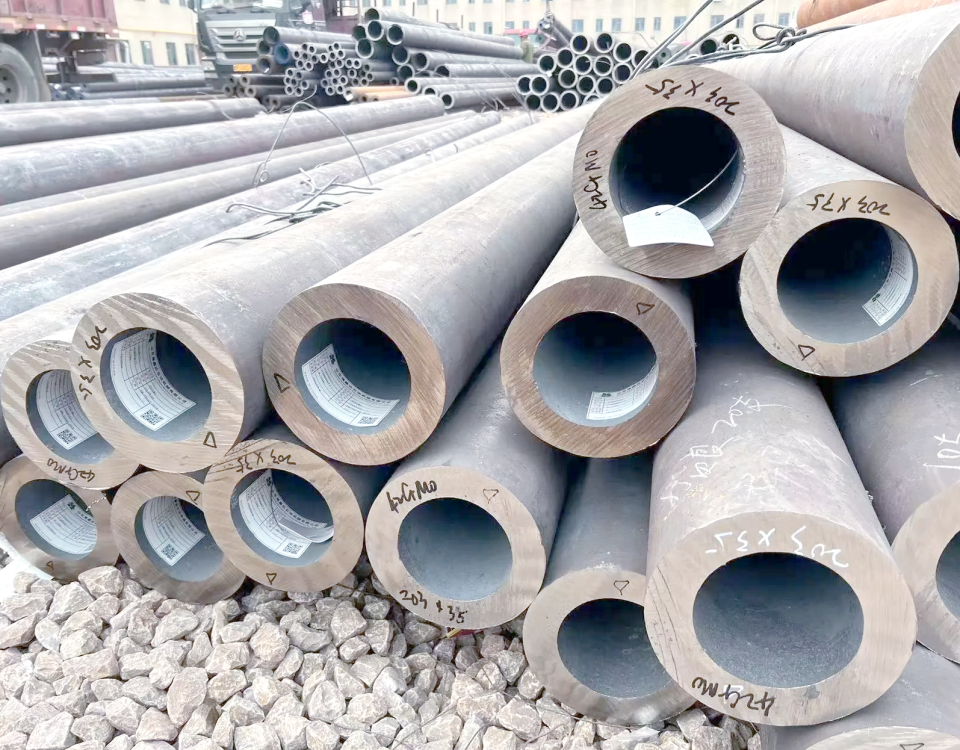
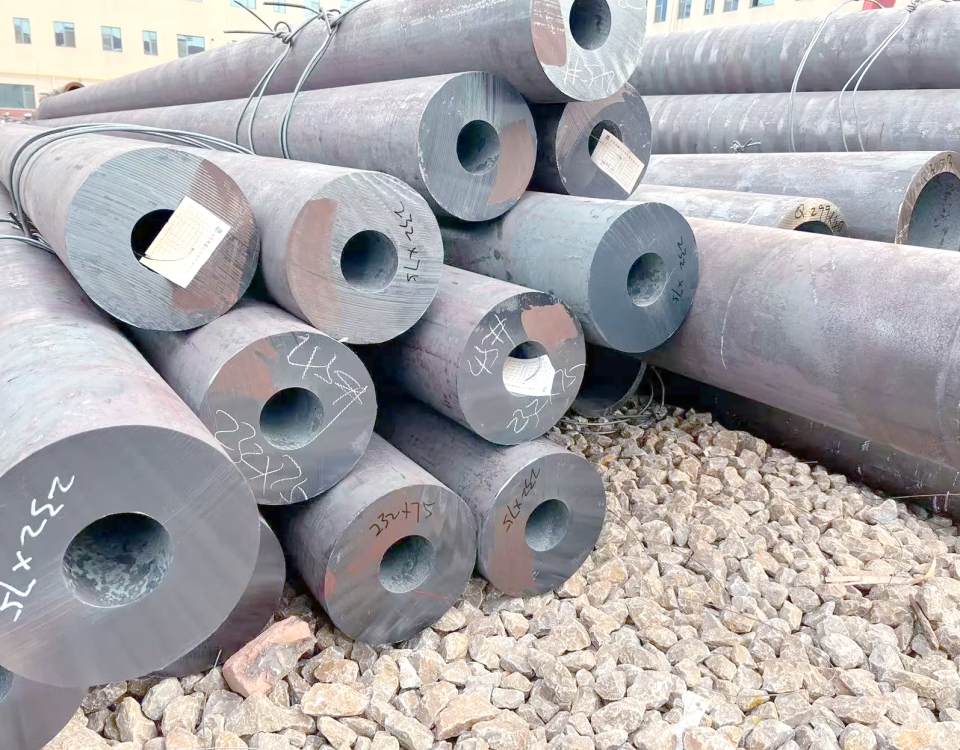
In the shifting landscape of industrial design and structural engineering, there is a rare category of materials that does not fight against time but rather embraces it, and our ASTM A242 Corten Steel Pipe stands at the very pinnacle of this metallurgical philosophy. When you choose our A242 piping, you are not just selecting a hollow section for fluid or structural conveyance; you are investing in a “living” alloy that possesses the unique biological-like ability to grow its own protective skin, a dense and tenacious patina that matures from a bright orange-gold into a deep, regal umber over the years. This isn’t just a matter of aesthetics, though the architectural allure of weathering steel is undeniable; it is a profound engineering victory where the chemical synergy of copper, chromium, and phosphorus creates an electrochemical barrier so stable that it renders traditional maintenance cycles—the endless scraping, priming, and painting that plague standard carbon steel—completely obsolete. We often think of oxidation as the enemy of steel, the “cancer” of the industry, but in our A242 pipes, we have harnessed that very force to create a self-healing shield that thrives in the wind, the rain, and the industrial sulfur of the modern world, making it the most ecologically responsible and economically brilliant choice for infrastructures meant to last a century.
From a technical standpoint, the superiority of our A242 product lies in its “original Corten” DNA, specifically its higher phosphorus content compared to later weathering grades, which acts as a powerful catalyst for the formation of the $\alpha-FeOOH$ (goethite) layer that is so critical for atmospheric resistance. This is a material built for the rigors of high-stress environments, offering a yield strength of 345 MPa that allows engineers to design leaner, more efficient structures without sacrificing the safety margins required for bridge pilings, exhaust stacks, or heavy-duty architectural supports. Because it requires no VOC-heavy coatings, our pipe is a champion of the “Green Building” movement, significantly reducing the environmental footprint of a project while offering a Total Cost of Ownership (TCO) that is vastly superior to galvanized or painted alternatives. Every length of pipe we produce is a testament to the fact that strength and beauty are not mutually exclusive; rather, in the presence of the right alloying elements and a precisely controlled rolling process, they become the same thing.
Our commitment to the ASTM A242 standard ensures that every pipe leaving our facility has the metallurgical integrity to handle the wet-dry cycles of the natural world, maintaining its structural thickness even as it develops its characteristic protective rust. We understand that in the world of high-stakes infrastructure—whether you are building a bridge across a river or a sculptural installation in a city center—there is no room for the “unpredictable.” Our pipes provide a predictable, scientifically documented corrosion rate that allows for precise service-life calculations, giving designers the confidence that their vision will remain unshakeable and maintenance-free for generations. Choosing our Corten steel is a statement of intent: it is a rejection of the “disposable” culture of modern construction in favor of a timeless, resilient, and inherently beautiful engineering solution that only gets better with age.
When we approach the technical essence of ASTM A242, specifically in the form of Corten steel piping, we are not merely discussing a structural commodity but a sophisticated metallurgical response to the entropic forces of the environment; it is a material that effectively “negotiates” with its surroundings by utilizing the very process of oxidation—usually the nemesis of ferrous metals—as a mechanism for self-preservation. The beauty of A242, the original weathering steel often referred to as Corten A, lies in its delicate chemical architecture where the inclusion of specific alloying elements like copper, chromium, and phosphorus facilitates the development of a dense, amorphous, and highly adherent patina that serves as a barrier against further atmospheric ingress. I find it fascinating to consider how the electrochemical potential of the steel surface changes over time as it undergoes wet and dry cycles; unlike standard carbon steels where the rust layer (lepidocrocite) is porous and tends to flake away, exposing fresh metal to oxygen, the A242 alloy promotes the formation of a nano-crystalline layer of goethite () that is enriched with chromium and copper, effectively “clogging” the diffusion paths that oxygen and moisture would otherwise exploit. This is a living material, one whose performance is dictated by the geography of its installation—thriving in industrial and rural environments where the sulfur dioxide and moisture levels allow for a controlled corrosion rate, yet requiring careful engineering in marine environments where chloride ions might threaten the stability of that protective skin.
To truly understand why a pipe made of ASTM A242 is superior for specific industrial applications, one must look at the synergy of its chemical composition, which is a masterclass in low-alloy optimization. The carbon content is kept relatively low to ensure weldability and ductility, which is critical when we consider the stress-state of a pipe under internal pressure or structural load, but it is the phosphorus content that truly distinguishes A242 from its younger sibling, A588; phosphorus acts as a powerful catalyst for the formation of the protective oxide layer, though it requires a nuanced balance to avoid temper embrittlement at the grain boundaries. Manganese and silicon provide the necessary solid-solution strengthening and deoxidation, but the copper—typically present in concentrations between 0.20% and 0.50%—is the primary driver behind the characteristic orange-brown aesthetic and the electrochemical stability of the rust. We must also acknowledge the role of nickel and chromium in enhancing the overall corrosion resistance and providing the requisite tensile properties without the need for the heavy, expensive alloying found in full stainless steels. This makes A242 an incredibly cost-effective “middle ground” for large-scale infrastructure, exhaust stacks, and architectural piping where both aesthetics and longevity are paramount.
The manufacturing of A242 pipe involves either seamless or welded processes, each bringing its own set of metallurgical considerations regarding the heat-affected zone and the preservation of the weathering characteristics. When we look at the heat treatment requirements, A242 is typically supplied in the “as-rolled” or “normalized” condition; however, for pipe applications involving high-stress weldments, a post-weld heat treatment or stress relief may be considered to ensure that the residual stresses do not provide a path for stress-corrosion cracking, although it is vital to remember that A242’s primary strength comes from its micro-alloyed ferrite-pearlite structure rather than complex precipitation hardening. The normalizing process—heating to roughly followed by air cooling—refines the grain size, which in turn improves the impact toughness, a crucial factor if the pipe is to be used in cold-weather structural foundations or as a conveyance for materials in high-vibration environments.
From a mechanical standpoint, the tensile requirements of ASTM A242 are designed to provide a high strength-to-weight ratio, which is why it is so frequently chosen for bridges and large-diameter chimney stacks. The yield strength of 345 MPa (for thinner sections) allows for significant material savings compared to traditional A36 carbon steel, but as the wall thickness of the pipe increases, one must be cognizant of the slight reduction in yield strength that occurs due to the slower cooling rates in the center of the thicker sections during the rolling process. This phenomenon is a direct result of the alloy’s hardenability profile; we must account for the TTT (Time-Temperature-Transformation) behavior of the micro-alloyed austenite, ensuring that we achieve a uniform pearlite distribution. The elongation properties, generally around 18% to 21%, signify a material that is sufficiently “forgiving”—capable of absorbing energy and undergoing plastic deformation before failure, which is a key safety metric for structural pipe piles or support columns in seismic zones.
In the real-world “working condition” of an A242 pipe, the interaction between the steel and the atmosphere is a dynamic equilibrium. Imagine a pipe used as an exhaust stack in a power plant; it is subjected to high-temperature flue gases internally and ambient weather externally. The internal environment may require additional cladding or refractory lining if the temperatures exceed the oxidative threshold of Corten (roughly for continuous service), but externally, the pipe will develop its signature dark purple-brown patina over a period of 18 to 36 months. We often observe that the initial “runoff” of iron oxide can stain adjacent concrete structures, a technical detail that requires integrated design solutions like drip pans or specific drainage paths. Furthermore, the thickness of the patina is generally only about 50 to 100 microns, yet it is so robust that the corrosion rate drops to nearly zero after the first few years of exposure. This “passive-active” transition is the holy grail of low-maintenance engineering, eliminating the need for VOC-heavy paints or the energy-intensive process of galvanizing, thus making A242 a champion of sustainable industrial design.
Thinking deeper into the metallurgy, the role of silicon and manganese in A242 also supports the “flowability” of the steel during casting, ensuring that the seamless pipes are free from the internal laminations that can sometimes plague lesser HSLA steels. If the pipe is produced via welding, the filler metal must be “weathering-grade” as well—typically containing 1% nickel and 0.5% copper—to ensure that the weld seam does not become a bright orange stripe of standard rust against the dark backdrop of the weathered base metal. This attention to detail at the atomic and process levels is what makes our Corten Steel ASTM A242 pipe a masterpiece of functional science. It is a material that accepts the inevitability of decay and transforms it into a shield, proving that in the right hands, chemistry can turn a vulnerability into a lifelong strength.