

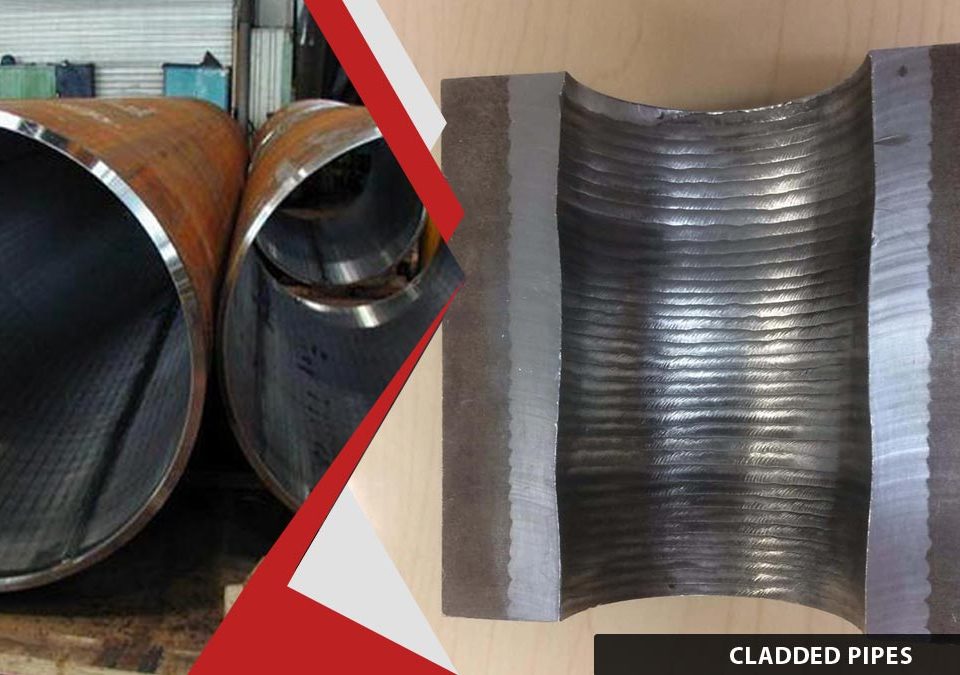
Bimetallic Corrosion-Resistant Alloy Lined Composite Steel Pipe
December 5, 2025
EN 10216 Seamless steel pipe for pressure purposes
December 10, 2025
Bimetallic Alloy Lined Composite Steel Pipe: Inner and Outer Pipe Material Analysis : Analyzing the Outer Pipe Grades from Q195 to API X80
9. Structural and Pipeline Integrity: Integrating High-Strength Base Steels and the API-5LD Imperative
The engineering viability of Abtersteel’s bimetallic composite pipe system is fundamentally dependent on the seamless synergy between the corrosion-resistant inner alloy and the structural integrity of the outer base steel. The specification of the base pipe grades, encompassing a range from generic structural steels like Q195 and Q235 up to the highly specialized, high-yield pipeline steels defined by the API-5LD standard (L245 through X80), speaks directly to the versatility and the escalating application demands that this composite technology is designed to meet.
Scaling Structural Integrity: From Vessel to Pipeline
For simple static structures or moderate-pressure vessels, the use of Q195 and Q235 (Chinese GB standard equivalents of general carbon steel) provides sufficient strength at the lowest possible cost. These grades fulfill the role of the pressure vessel wall, offering a robust, weldable platform onto which the corrosion-resistant liner is metallurgically bonded. However, the true technical triumph lies in the successful integration of the bimetallic lining process with the stringent specifications of the API-5LD family of steels, which range from the lower yield strength L245 (API 5L Grade B) up to the ultra-high-strength X80.
The utilization of these high-grade pipeline steels immediately opens the application portfolio to long-distance, high-pressure fluid transfer within the oil and gas sector—a domain characterized by immense mechanical stress and highly corrosive process fluids (sour gas, high-chloride brines). These pipelines, often spanning hundreds of kilometers, are subjected not only to high hoop stress from internal pressure but also to significant external bending stresses, geological movement, and seismic loading. The high yield strength of grades like $\text{X}60$ or $\text{X}70$ is crucial for minimizing wall thickness, thereby reducing total steel tonnage and overall construction cost, while maintaining absolute pressure containment safety. The composite pipe, by pairing the $\text{X}70$ strength with an internal corrosion barrier (such as Duplex 2205 or Alloy 625), achieves a level of performance that no single material can economically replicate. A solid alloy pipe capable of X70 strength would be prohibitively expensive and often metallurgically challenging to manufacture in long runs, while a non-alloyed X70 pipe would fail rapidly in sour service environments. Abtersteel’s innovation ensures that the high-strength, high-pressure capability is decoupled from the internal corrosion resistance, allowing engineers to design according to the most efficient structural standards without compromising chemical integrity.
The Crucial Role of the Base Pipe in Welding and Heat Treatment
The choice of the outer base steel profoundly influences the subsequent manufacturing and installation process. High-strength API-5LD steels often have stricter limitations on carbon equivalent ($\text{CE}$) to maintain weldability and avoid hydrogen-assisted cracking, particularly during field welding where complex thermal gradients are unavoidable. While the outer pipe welding procedures require meticulous preheat and $\text{PWHT}$ to optimize its strength and microstructure, the entire bimetallic process must be calibrated so that these essential thermal cycles—necessary for the API-5LD base metal—do not compromise the specific corrosion-resistant state of the inner liner. This demanding requirement necessitates a highly refined manufacturing protocol that simultaneously satisfies the structural needs of the $\text{X}80$ base steel and the sensitization prevention needs of the $\text{L}$-grade stainless steel or the precipitation hardening requirements of the nickel alloy liner, a subtle but essential mastery of materials engineering.
10. The Next Generation of Corrosion Defense: Duplex Stainless Steel 2205 and Nickel Alloys 825/625
The specification of the liner materials reveals Abtersteel’s strategy to provide a tailored defense against specific and complex failure mechanisms, moving far beyond the general resistance offered by standard $304$. The inclusion of Duplex 2205, Alloy 825, and Alloy 625 targets the three most challenging corrosion environments encountered in high-value industries: Stress Corrosion Cracking ($\text{SCC}$), Pitting/Crevice Corrosion, and high-temperature polythionic acid attack.
Duplex 2205: The Answer to Stress Corrosion Cracking (SCC)
The inclusion of Duplex Stainless Steel 2205 is a direct response to the perennial threat of Chloride Stress Corrosion Cracking (SCC), a catastrophic failure mode prevalent in high-chloride environments (like seawater cooling systems, desalination, and oilfield brines) at moderate, slightly elevated temperatures ($60^{\circ}\text{C}$ to $150^{\circ}\text{C}$). Standard austenitic stainless steels like $304\text{L}$ and $316\text{L}$ are susceptible to $\text{SCC}$, where the combined action of tensile stress and a specific corrosive agent leads to crack propagation along grain boundaries.
Duplex 2205, with its highly engineered two-phase microstructure (roughly $50\%$ ferrite and $50\%$ austenite), offers significantly superior $\text{SCC}$ resistance compared to fully austenitic grades. The ferritic phase provides exceptional resistance to $\text{SCC}$, while the high content of chromium, molybdenum, and nitrogen elevates its Pitting Resistance Equivalent Number (PREN), making it highly resistant to localized pitting and crevice corrosion—often the initiation sites for $\text{SCC}$. By lining the composite pipe with a thin layer of 2205 (in the range of $0.25 \text{ mm}$ to $4 \text{ mm}$), the structural integrity of the base $\text{X}70$ steel is protected by a liner that is intrinsically resistant to the combination of stress and chloride attack, a necessity in offshore and deepwater oil and gas transport where environmental conditions are unforgiving and maintenance is logistically crippling.
Nickel Alloys 825 and 625: Mastering Extreme Chemistry
For environments that overwhelm even the capabilities of Duplex 2205, the specification moves to the premium Nickel-Based Superalloys, specifically Alloy 825 and Alloy 625.
-
Alloy 825 ($\text{NiFeCrMoCu}$): This alloy is known for its excellent resistance to both reducing and oxidizing acids, particularly sulfuric and phosphoric acids—hallmarks of fertilizer and certain chemical processing plants. The inclusion of Copper ($\text{Cu}$) is the defining metallurgical feature, providing enhanced resistance to reducing conditions. Alloy 825 is a more cost-effective entry point into the superalloy category than Alloy 625, making it the ideal choice where strong acid corrosion is the primary concern but the temperature and chloride levels do not demand the absolute peak performance of its more expensive cousin.
-
Alloy 625 ($\text{NiCrMoNb}$): This is the flagship corrosion-resistant alloy, often specified for the most hostile environments encountered, such as deep, high-pressure sour gas wells (high $\text{H}_{2}\text{S}$ and $\text{CO}_{2}$), high-chloride incinerator systems, and specialized chemical reactors. Its exceptional performance derives from the high Molybdenum content (imparting extreme resistance to pitting and crevice corrosion, resulting in a very high PREN value) and the addition of Niobium ($\text{Nb}$), which provides stability and mechanical strengthening. Alloy 625 offers near-immunity to $\text{SCC}$ in chloride environments and maintains its structural integrity and corrosion resistance at extremely high temperatures. The ability to bond a thin layer of Alloy 625 onto a carbon steel pipe allows engineers to deploy this otherwise prohibitively expensive material in massive pipeline configurations, achieving the ultimate corrosion barrier at a cost reduction of up to $1/6$ the price of a solid Alloy 625 pipe.
The variable liner wall thickness, ranging from a minimal $0.25 \text{ mm}$ for specific low-abrasion, low-pressure applications, up to a robust $4 \text{ mm}$ for high-abrasion or high-temperature systems, provides the final layer of economic optimization. This engineering flexibility ensures that the client pays only for the precise amount and type of corrosion resistance required, maximizing both the performance assurance and the economic benefit of Abtersteel’s bimetallic composite pipeline system.
11. The Synthesis of Structure and Chemistry: Metallurgical Bonding Techniques and Verification
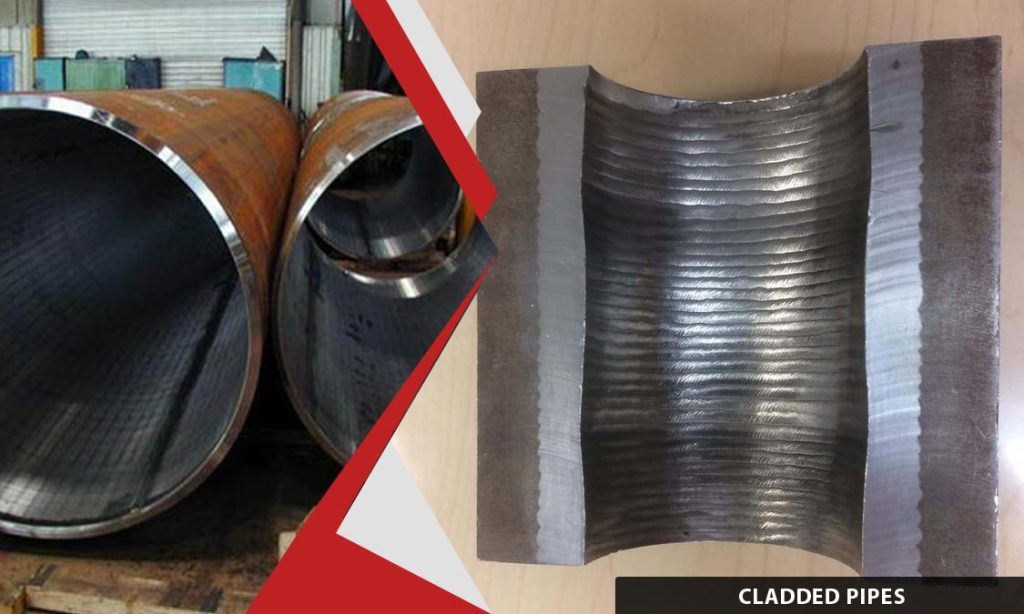
The successful integration of the chosen base steels, ranging from the high-strength API X80 pipeline grades to the structural Q235, with the superior corrosion resistance of the liners, be they $316\text{L}$ or Alloy 625, hinges entirely upon the sophisticated techniques employed to achieve a continuous, high-integrity metallurgical bond. This bond, an area of permanent atomic interface where the two distinct materials share electrons and form an interlocking structure, is the linchpin of the entire bimetallic composite pipe technology, distinguishing it fundamentally from mechanically fitted or adhesively bonded liners which are prone to thermal cycling failure and structural collapse under vacuum conditions. The choice of bonding technique is often tailored to the specific dimensions and metallurgical compatibility of the materials involved, and its efficacy must be verified with non-destructive certainty.
Primary Bonding Methods: Tailoring the Interface
Abtersteel leverages advanced technologies to achieve this essential metallurgical fusion, each method optimized for different material pairs and production volumes:
-
Explosion Bonding (Explosive Welding): This method is perhaps the most dramatic and effective for creating a bond with maximum shear strength, particularly suitable for challenging pairs like nickel alloys ($\text{Ni}$) or titanium with carbon steel. It involves precisely setting charges around the inner liner and the outer shell. The controlled detonation drives the two metal surfaces together at an extremely high velocity and at an angle, resulting in a plasma jet that cleans the interfaces and a wave front that induces an atomic-level bond. This technique results in unparalleled bond strength and is crucial when integrating the higher-alloyed liners like Alloy 625, whose metallurgical structure benefits from this rapid, high-energy process.
-
Hydraulic Expansion or Drawing/Sizing (for less aggressive pairs): For certain stainless steel liners, particularly when the thickness is on the higher end of the specified $0.25 \text{ mm}$ to $4 \text{ mm}$ range, the bond can be achieved through sophisticated cold drawing or hydraulic expansion processes. After insertion, the inner liner is subjected to immense internal pressure, plastically deforming it against the inner wall of the outer steel pipe. This force, coupled with minor pre-treatment of the surfaces, achieves an intimate, high-friction contact sufficient to initiate a diffusion bond after subsequent heat treatment cycles. While structurally less aggressive than explosion bonding, this method is highly controllable and cost-effective for large-volume production of the more common $304\text{L}$ and $316\text{L}$ lined pipes, especially when paired with structural outer grades like Q235.
-
Roll Cladding or Extrusion (for seamless continuous product): In some specialized, high-volume manufacturing lines, the bimetallic billet itself is created and subsequently processed through hot extrusion or rolling. This technique ensures a perfectly continuous bond from the very beginning of the forming process. While requiring significant capital investment, this provides the highest assurance of bond continuity and is often the preferred method when producing long lengths of high-grade composite pipe utilizing the API-5LD $\text{X}$ grades.
Quality Verification: The Unbreakable Assurance of the Bond
Regardless of the technique employed, the structural integrity of the bond must be verified with absolute certainty before the pipe is released for critical service. This involves two mandatory forms of testing:
-
Non-Destructive Testing (NDT) via Ultrasonic Testing (UT): This is the industry-standard method for verifying bond continuity. A specialized ultrasonic probe scans the entire surface area of the composite pipe. Sound waves are introduced, and any lack of bond, delamination, or un-fused area causes a distinct echo signature at the interface. Abtersteel’s protocols ensure that the permissible percentage of non-bonded area is minimized to levels far below regulatory limits, providing an essential layer of safety assurance, especially critical when dealing with thinner liners like the $0.25 \text{ mm}$ specification.
-
Destructive Testing via Shear Strength and Bend Testing: Periodically, test coupons cut from the production run are subjected to destructive analysis. The shear strength test directly measures the force required to separate the liner from the base metal, confirming that the bond strength exceeds the yield strength of the weaker material, thereby guaranteeing that the failure under stress will occur in the pipe body, not at the interface. Bend testing confirms the ductility of the bimetallic material, ensuring that the interface can withstand the severe plastic deformation required during field installation or during operational flexing of the pipeline without cracking or delaminating. This dual verification process guarantees the long-term structural reliability of the bimetallic joint.
12. Long-Term Integrity: Resistance to Fatigue, Thermal Cycling, and Pitting Failure
The true measure of the composite pipe’s success is its performance over decades of operational service, facing the relentless, cyclical assaults of internal pressure, thermal transients, and the insidious attack of localized corrosion. The bimetallic structure, far from being a simple combination of materials, possesses unique failure mitigation characteristics that enhance its lifespan beyond that of its monolithic counterparts.
Fatigue Resistance and Thermal Stability
Industrial piping systems are rarely subjected to constant load; they experience continuous pressure cycling (start-up/shutdown) and thermal cycling (temperature swings). These cyclical stresses induce fatigue in the material. In the composite pipe, the fatigue life is largely governed by the outer carbon steel shell, optimized for strength. However, the inner liner, particularly those made from nickel alloys like Alloy 625 (known for its excellent high-temperature fatigue resistance) and the thermally compatible Alloy 825, plays a crucial role in maintaining the overall integrity. The close thermal expansion coefficient match between the nickel alloys and the carbon steel minimizes the development of severe thermal fatigue stresses at the interface during rapid temperature changes. If the coefficient mismatch were significant (as it is with some other liners), the differential expansion would cause micro-cracks or delamination, leading to rapid failure. The meticulous material selection, paired with the structural benefits of the metallurgical bond, ensures that the bimetallic pipe resists both pressure-induced and thermally-induced fatigue far more effectively than mechanically lined or non-metallic systems.
Defense Against Localized Corrosion Failure
Localized corrosion, such as pitting and crevice corrosion, is often the primary cause of premature failure in standard stainless steel pipes, particularly in stagnant zones or under deposits. The performance of the composite pipe relies heavily on the PREN (Pitting Resistance Equivalent Number) of the liner materials.
-
The $304$ liner offers basic resistance, sufficient for non-chloride environments.
-
The $316\text{L}$ liner significantly improves pitting resistance due to Molybdenum.
-
The Duplex 2205 liner, with its high $\text{Cr}$, $\text{Mo}$, and $\text{N}$ content, offers a PREN value of over 35, providing exceptional resistance in high-chloride, sour environments typical of oil and gas.
-
The Alloy 625 liner, with a $\text{PREN}$ value often exceeding 50, provides near-absolute immunity to pitting and crevice corrosion, ensuring the longest possible service life in the most aggressive chemical media.
By using the thin, high-performance liners, Abtersteel guarantees that the critical failure mechanism—the initiation of pitting penetration through the wall—is delayed by decades, effectively guaranteeing a service life that aligns with the structural fatigue life of the outer API X80 pipe, fulfilling the ultimate engineering mandate: a reliable, predictable service life without premature corrosion failure.
13. Conclusion: The Unifying Economic and Engineering Mandate of Bimetallic Piping
Abtersteel’s bimetallic alloy lined composite steel pipe is the realized solution to the industrial dilemma of balancing capital expenditure with life-cycle integrity. This technology is a testament to the synergistic power of materials science, utilizing the specific strengths of disparate metal families to create a unified, high-performance system. The foundation of this system is the economic and structural versatility offered by the outer base pipes, from the commodity Q195 to the pressure-intensive API X80 pipeline grades. The protective layer is the precisely specified, thin (down to $0.25 \text{ mm}$) alloy liner, chosen specifically to combat targeted failure modes—from the $\text{IGC}$-resistant $316\text{L}$ to the $\text{SCC}$-resistant Duplex 2205 and the chemically immune Alloy 625.
The unifying economic mandate is clear: the high initial material cost of superalloys is strategically confined to the thin layer where it performs its essential task, resulting in verifiable cost savings of up to $1/6$ compared to solid alloy construction. Furthermore, the mandatory metallurgical bonding, validated by rigorous $\text{UT}$ and shear testing, ensures structural and chemical continuity, mitigating the risks of thermal fatigue and delamination inherent in less sophisticated lining technologies.
The future of high-value piping lies unequivocally in these composite solutions. As industries push operating temperatures and pressures higher and seek to safely utilize increasingly corrosive or sour feedstocks, the bimetallic composite pipe moves from a specialized option to an essential engineering standard. The final imperative for the global industry is the formalized adoption of unified international codes that fully recognize and standardize the superior safety, performance, and life-cycle economics of these metallurgically bonded systems, paving the way for the composite pipe to become the undisputed backbone of future chemical, oil, and power infrastructure worldwide.

Related posts
S31803 is the Unified Numbering System (UNS) designation for the original duplex stainless steel. The UNS system was created by a number of trade groups working together in the 1970’s, to reduce confusion from the same alloy being called different things or vice-versa. Each metal is indicated by a letter followed by five numbers, where the letter indicates the family of metals i.e. S for stainless steels.