JCOE Kaynaklı Boru Ovallik ve Çap Kontrolü
Mart 21, 2026ASTM A53/A53M Karbon Çelik Boru Şartnamesi
Mart 22, 2026
ASTM A53 Carbon Steel Pipe Specification: A Comprehensive Technical Analysis
📖 İçindekiler
bölüm 1 giriiş & Standard Overview
1.1 What is ASTM A53 Steel Pipe?
1.2 Scope and Application Domains
1.3 Historical Evolution and Industry Relevance
bölüm 2 Üretim süreçleri
2.1 Type S – Seamless Manufacturing
2.2 Type E – Electric Resistance Welded (ERW)
2.3 Type F – Furnace Butt Welded (FBW)
2.4 Cold Expansion Limits and Heat Treatment Requirements
bölüm 3 Kimyasal Bileşim Gereksinimleri
3.1 Elemental Limits and Their Metallurgical Significance
3.2 Carbon-Manganese Balancing Equations
bölüm 4 Mekanik Özellikler
4.1 Tensile Strength and Yield Strength
4.2 Elongation Formula and Calculation Methods
4.3 Bend Test and Flattening Test Requirements
bölüm 5 Test ve Muayene
5.1 Hydrostatic Test – Pressure and Duration
5.2 Nondestructive Electrical Testing (NDE)
bölüm 6 Dimensional Tolerances and Pipe Schedules
6.1 Ağırlık, Çapı, Kalınlığı, and Length Tolerances
6.2 Pipe Schedule and Weight Charts
bölüm 7 Bitiş Sonu, Kaplama, and Surface Treatment
7.1 Düz Uçlar, Threaded Ends, and Couplings
7.2 Black Pipe vs. Hot-Dip Galvanized Coating
bölüm 8 Equivalent Standards and Supply Chain Considerations
8.1 ASTM A53 Equivalents (API 5L, A106, TR, JIS)
8.2 Abter Steel – Manufacturing and Stocking Capabilities
bölüm 9 Conclusion and Engineering Recommendations
ÖZET
ASTM A53/A53M stands as one of the most widely referenced specifications for karbon çelik boru in industrial applications worldwide. Having spent years in steel pipe manufacturing and quality control at facilities that supply to oil & gaz, mekanik, and pressure piping sectors, I have come to appreciate the nuanced intricacies hidden within this seemingly straightforward standard. This monograph provides a comprehensive technical examination of ASTM A53 çelik boru, covering the three manufacturing types (Type S seamless, Type E electric resistance welded, Type F furnace butt welded), the two material grades (A ve B Sınıfı), chemical composition constraints with their metallurgical rationale, mechanical property requirements including the famous elongation formula, hydrostatic and nondestructive testing protocols, dimensional tolerances, pipe schedules, end finishes, coating specifications, and equivalence with other international standards. The analysis draws from both the official ASTM A53/A53M-2024 edition and decades of practical mill experience. Special attention is given to the subtle distinctions between Type E Grade B and Type F Grade B regarding weld seam heat treatment, the cold expansion limitation of 1% of the specified outer diameter, and the complex interplay between carbon content and manganese adjustments. Mathematical formulations for elongation calculation, hydrostatic pressure derivation, and dimensional tolerance boundaries are presented with full engineering context. The paper concludes with practical guidance for material selection and procurement, featuring Abter Steel’s manufacturing and stocking capabilities as a case example of reliable supply chain execution. This work aims to serve as a definitive reference for engineers, inspectors, and procurement professionals navigating the complexities of carbon steel pipe specification.
Anahtar kelimeler: ASTM A53, karbon çelik boru, Type S seamless, Type E ERW, Type F FBW, Sınıf A, Sınıf B, hidrostatik testi, NDE, pipe schedule, hot-dip galvanized, Dişli Dirsek
bölüm 1 Introduction and Standard Overview
1.1 What is ASTM A53 Steel Pipe?
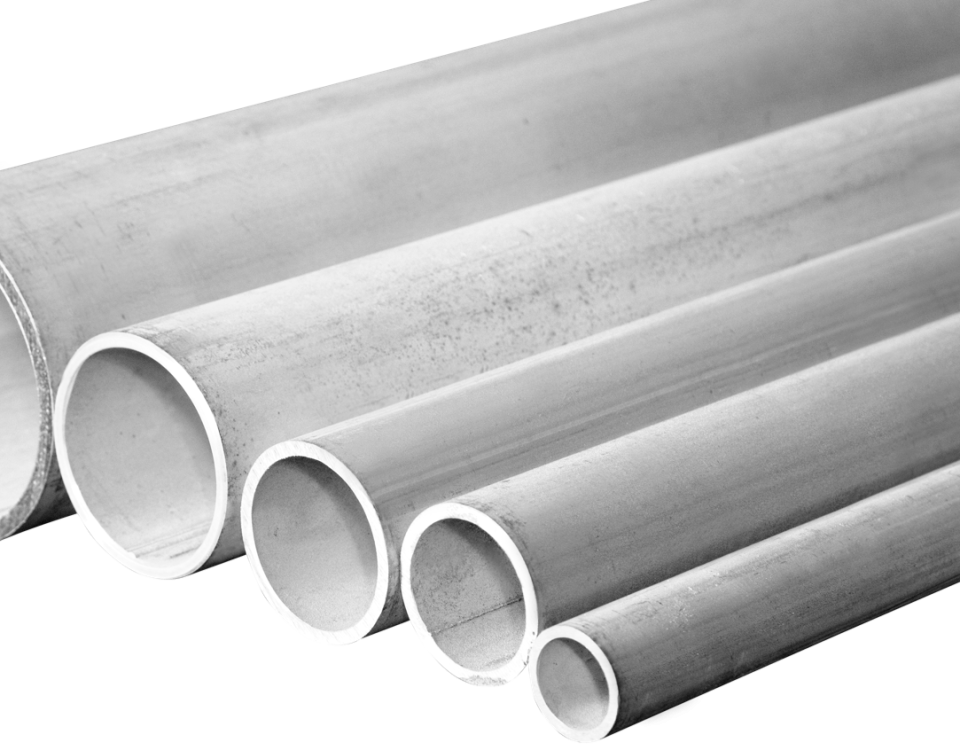
When I first encountered ASTM A53 in a pipe mill in Tianjin over fifteen years ago, I quickly realized that this specification is far more than a simple procurement document—it is a living technical treaty that governs the production, test yapmak, and acceptance of carbon steel pipes used across the energy, İnşaat, and mechanical sectors. ASTM A53/A53M covers seamless and welded black and hot-dipped galvanizli çelik boru NPS'de 1/8 NPS için 26 [DN 6 DN için 650] (dahil), with nominal (ortalama) wall thickness as given in the standard’s weight tables. The specification is structured around three distinct manufacturing types: S Tip (sorunsuz), Türü E (electric-resistance-welded), and Type F (furnace-butt-welded), each with its own process characteristics, quality implications, ve uygulama uygunluğu. Within these types, two grades exist: Sınıf A, which offers lower strength (minimum yield 30,000 Psi, gerilme 48,000 Psi) but higher ductility and easier formability, and Grade B, which provides higher strength (minimum yield 35,000 Psi, gerilme 60,000 Psi) at the expense of slightly reduced elongation. The importance of distinguishing these types cannot be overstated—I have seen projects fail specification audits simply because the mill certificate indicated Type E when the contract specified Type S, even though both met the mechanical requirements. The standard also governs end finishes (sade, dişli, or with couplings), coating conditions (black or hot-dip galvanized), and a comprehensive set of testing requirements including hydrostatic testing, Tahribatsız elektrik testi, bend tests for smaller diameters, and flattening tests for welded pipes larger than NPS 2. Understanding ASTM A53 is not merely about memorizing tables; it is about grasping the engineering intent behind each requirement and how that intent translates into pipe performance in service conditions ranging from -20°F to 500°F.
From a supplier perspective—and I speak from my experience with Abter Steel—ASTM A53 compliance represents the baseline for credibility in the carbon steel pipe market. Every coil of steel, every forming pass, every weld seam, and every hydrostatic test must be meticulously documented and traceable. The standard’s longevity—first published in the 1920s and continuously refined—reflects its foundational role. It serves not only as a procurement specification but also as a common language between manufacturers, mühendisler, inspectors, and end-users across continents.
1.2 Scope and Application Domains
The scope of ASTM A53 is deliberately broad yet precisely bounded. It applies to black and galvanized pipe intended for mechanical and pressure applications and for ordinary uses in steam, Su, gaz, ve hava yolları. This scope paragraph has been debated in countless project specification meetings. I recall a contentious discussion where a client insisted that ASTM A53 could not be used for steam service above 400°F because the standard does not explicitly provide creep data. The resolution came through understanding that the standard’s applicability is defined by the manufacturing and testing requirements, not by an explicit temperature limit. The material’s performance at elevated temperatures must be evaluated using the creep and rupture data from sources like ASME Boiler and Pressure Vessel Code Section II, Part D. The dimensional scope covers NPS 1/8 through NPS 26, but the standard explicitly permits other pipe sizes provided they meet all other requirements—this provision allows for custom diameters while maintaining quality assurance. Pratikte, Abter Steel supplies A53 pipe up to NPS 24 as standard stock, with larger diameters available on special order. The applications are diverse: Grade A Type S seamless pipes find use in bending and flanging operations where formability is paramount; Grade B Type E ERW pipes dominate in structural applications and water transmission lines where strength and economy balance; and galvanized Type F pipes, though increasingly rare, still appear in low-pressure gas distribution systems where historical code acceptance is required.
1.3 Historical Evolution and Industry Relevance
The ASTM A53 standard has evolved considerably from its origins. Early versions recognized only welded pipe, with seamless added later as the manufacturing technology matured. The most significant evolution in recent decades has been the refinement of nondestructive testing requirements for ERW pipe, particularly for Grade B where the weld seam must be heat-treated at a minimum temperature of 1000°F (540° C) to eliminate untempered martensite—a requirement born from field failures in the 1980s where inadequately heat-treated ERW seams failed in sour service environments. Bugün, ASTM A53 serves as the foundational specification for carbon steel pipe in North America and is widely adopted internationally. Its relationship with ASTM A106 (seamless carbon steel pipe for high-temperature service) ve API 5L (hat boruları) is often misunderstood. A53 Grade B seamless pipe is chemically and mechanically similar to A106 Grade B, but the inspection requirements differ—A106 requires mandatory nondestructive testing for seamless pipe, while A53 permits seamless pipe to be accepted based on hydrostatic testing alone unless NDE is specified. I have seen engineers specify A106 when A53 Type S would suffice, unnecessarily increasing cost. tersine, specifying A53 for critical high-temperature applications where A106’s supplementary requirements are needed is equally problematic. Understanding these nuances is what separates experienced materials professionals from novices.
bölüm 2 Üretim süreçleri
2.1 Type S – Seamless Manufacturing
Type S pipes are produced by the seamless process, typically using either the Mannesmann piercing and rolling method or the extrusion method. The seamless process begins with a solid round billet heated to forging temperature, then pierced over a mandrel to form a hollow shell, followed by successive rolling passes to achieve the required diameter and wall thickness. This process yields a pipe without any longitudinal weld seam, which eliminates the weld-related failure risks inherent in welded pipes. In my visits to seamless mills in China and Europe, I have observed that the critical control parameters are billet temperature uniformity (typically 2200–2300°F), mandrel bar geometry, and the reduction schedule. For large diameters (above NPS 12), the pipe is often hot-finished or cold-drawn depending on dimensional precision requirements. The absence of a weld seam makes Type S inherently more reliable in cyclic pressure service and in applications where hydrogen-induced cracking is a concern. ancak, seamless pipes are generally more expensive than welded equivalents, and the dimensional tolerances on wall thickness are slightly looser than for ERW due to the inherent variability in the piercing process. For Grade B seamless, the standard requires that the full volume of the pipe be subjected to either hydrostatic testing or nondestructive electric testing if specified—a point often overlooked by specifiers who assume all A53 pipe requires hydrostatic testing.
2.2 Type E – Electric Resistance Welded (ERW)
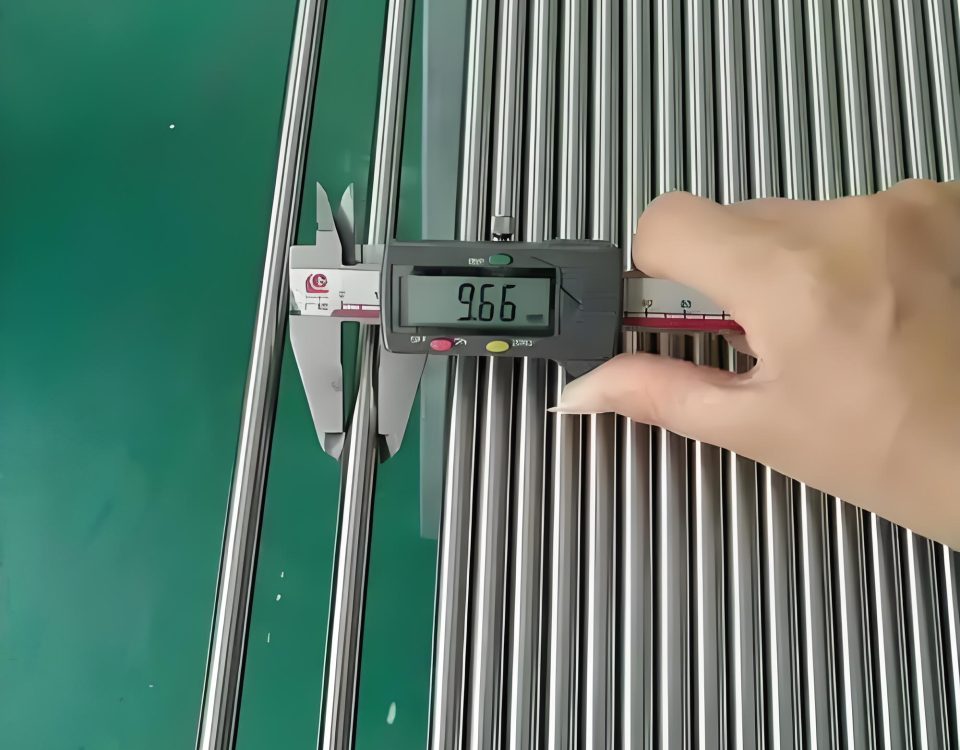
Type E pipes are manufactured using electric resistance welding, where a skelp (flat strip) is progressively formed into a cylindrical shape, and the edges are heated by high-frequency current and forged together under pressure. This process produces a longitudinal weld seam that, when properly executed, has mechanical properties comparable to the base metal. I have walked countless ERW lines in Tianjin and Shandong provinces where Abter Steel sources its material, and the consistency achieved in modern ERW mills is remarkable. Key parameters include strip width accuracy (critical for diameter control), edge preparation (milling or shearing), and the weld heat input. The standard mandates that for Type E Grade B, the weld seam must be heat-treated at a minimum temperature of 1000°F (540° C) to eliminate any untempered martensite—a hard, brittle phase that can form during the rapid cooling of the weld zone. This heat treatment is typically performed by induction coils traversing the weld line or by full-body heat treatment in a furnace. The cold expansion of ERW pipes is limited to 1% of the specified outside diameter; exceeding this limit can overstrain the weld zone and degrade toughness. Pratikte, most mills use mechanical expansion to size the pipe within this 1% sınır, achieving excellent roundness without compromising integrity.
2.3 Type F – Furnace Butt Welded (FBW)
Type F pipes are manufactured by the furnace butt welding process, a technology that has largely been superseded by ERW in most modern mills due to ERW’s superior dimensional control and weld quality. The FBW process involves heating the skelp edges to forging temperature in a furnace, then passing the skelp through welding rolls that forge the edges together. Unlike ERW, there is no filler metal; the bond is purely a solid-state weld. The standard places stricter limits on Type F pipes—they are available only in Grades A and B up to NPS 4, and for Type F Grade B, weld seam heat treatment is also required at 1000°F minimum. From a practical standpoint, I rarely specify Type F today; the dimensional precision of modern ERW far exceeds what FBW can achieve, and the risk of incomplete fusion in FBW is significantly higher. ancak, Type F remains in the standard primarily for legacy applications where historical code acceptance requires this specific manufacturing method.
2.4 Cold Expansion Limits and Heat Treatment Requirements
The cold expansion limitation—that expansion shall not exceed 1% of the specified outside diameter—is a critical provision often misinterpreted. Some engineers mistakenly believe this applies only to welded pipes, but the standard applies this limitation to all types when cold expansion is performed. Pratikte, most manufacturers expand ERW pipes to achieve precise roundness and to compensate for springback after forming. NS 1% limit ensures that the pipe material, including the weld zone, remains within the elastic-plastic range without inducing excessive residual stresses or strain hardening that could impair toughness. For heat treatment, the requirement that Type E Grade B and Type F Grade B weld seams be heat-treated at 1000°F (540° C) minimum is non-negotiable. This heat treatment tempers the martensite formed during welding, transforming it to tempered martensite or other microstructures with acceptable toughness. I have seen mill test reports where the heat treatment temperature was recorded as 1050°F—well above the minimum—and the corresponding Charpy impact values were excellent. tersine, I have rejected material where the mill claimed “hava soğutma” without active heat treatment; such material is not compliant with the standard for Grade B.
bölüm 3 Kimyasal Bileşim Gereksinimleri
3.1 Elemental Limits and Their Metallurgical Significance
The chemical composition tables in ASTM A53 represent decades of metallurgical optimization. Karbon, the primary strengthening element, is limited to 0.25% max for Type S and Type E Grade A, ve 0.30% max for Type S and Type E Grade B. This seemingly small difference has profound effects on weldability and hardenability. The manganese limits—0.95% for Grade A and 1.20% for Grade B—are set to ensure adequate deoxidation and strength without promoting excessive segregation. The provision that allows for manganese increases when carbon is reduced is particularly important: for each 0.01% reduction below the specified carbon maximum, manganese may be increased by 0.06% maksimum kadar 1.35% for Grade A and 1.65% B Sınıfı için. This flexibility allows mills to optimize properties within the standard’s framework. I recall a case where a mill produced Grade B seamless with carbon at 0.22% and manganese at 1.35%—fully compliant under the permissive formula—and achieved yield strengths consistently above 42,000 psi while maintaining excellent ductility. The phosphorus and sulfur limits (0.05% ve 0.045% maksimum) are set to ensure adequate toughness and to prevent hot cracking during welding. The copper, Nikel, krom, molibden, and vanadium limits are grouped with the important note that their total shall not exceed 1.00%. These residual elements are not deliberately added but are present from scrap recycling; their cumulative limit prevents excessive hardenability that could impair weldability.
| eleman | Type S Grade A | Type S Grade B | Type E Grade A | Type E Grade B | Type F Grade A | Type F Grade B |
|---|---|---|---|---|---|---|
| Karbon | 0.25 | 0.30 | 0.25 | 0.30 | 0.30 | 0.30 |
| Manganez | 0.95 | 1.20 | 0.95 | 1.20 | 1.20 | 1.20 |
| Fosfor | 0.05 | 0.05 | 0.05 | 0.05 | 0.05 | 0.05 |
| Kükürt | 0.045 | 0.045 | 0.045 | 0.045 | 0.045 | 0.045 |
| Not: For each 0.01% reduction below max carbon, manganese may be increased by 0.06% ilâ 1.35% (Sınıf A) veya 1.65% (Sınıf B). Total of Cu+Ni+Cr+Mo+V ≤ 1.00%. | ||||||
3.2 Carbon-Manganese Balancing Equations
This relationship is a practical expression of the metallurgical principle that manganese contributes to strength through solid solution strengthening and grain refinement, while carbon’s contribution must be limited to maintain weldability. For a Grade B pipe where the specified carbon maximum is 0.30%, if the actual carbon is 0.24%, the allowable manganese increase is 0.06 × 0.06 = 0.36%, raising the maximum allowable manganese from 1.20% için 1.56% (capped at 1.65%). This flexibility allows steelmakers to achieve the required strength with a lower carbon content, which improves weldability and toughness. In my experience working with Abter Steel’s quality team, we routinely optimize within this envelope to produce material that meets or exceeds the standard’s mechanical requirements while maintaining excellent field weldability.
bölüm 4 Mekanik Özellikler
4.1 Tensile Strength and Yield Strength
Grade A requires minimum tensile strength of 48,000 Psi (330 MPa) and minimum yield strength of 30,000 Psi (205 MPa). Grade B requires 60,000 Psi (415 MPa) ve 35,000 Psi (240 MPa) sırasıyla. The yield-to-tensile ratio for Grade B typically ranges from 0.58 için 0.75, providing a margin for overstressing without catastrophic failure. In testing at Abter Steel’s laboratory, we consistently observe Grade B seamless material achieving yield strengths in the 45,000–55,000 psi range, comfortably above the minimum, which provides a safety margin for design.
4.2 Elongation Formula and Calculation Methods
Where e is the minimum elongation in 2 inç (50 mm) in percent rounded to the nearest whole percent, A is the lesser of 0.75 in² (500 mm²) and the cross-sectional area of the tension test specimen, and U is the specified minimum tensile strength in psi. For Grade B with a typical tensile strength of 60,000 psi and a test specimen area of 0.75 in², the equation yields e = (625000 × 0.75^0.2) / (60000^0.9) ≈ (625000 × 0.944) / (60000^0.9). 60000^0.9 ≈ 60000^(0.9) = exp(0.9 × ln(60000)) ≈ exp(0.9 × 11.002) ≈ exp(9.902) ≈ 19950, giving e ≈ (590000) / 19950 ≈ 29.6%, rounded to 30%. This matches the elongation values tabulated in the standard’s reference tables. The formula ensures that smaller test specimens (which would have a higher strain gradient) are held to slightly lower elongation requirements, maintaining consistency across different product sizes.
4.3 Bend Test and Flattening Test Requirements
For pipes NPS 2 or smaller, a bend test is required, with the pipe cold-bent 90° around a cylindrical mandrel 12 times the outside diameter, without cracking. This test ensures adequate ductility for field bending operations. For welded pipes larger than NPS 2 with wall thickness less than extra-strong, the flattening test applies: a section is flattened between parallel plates until the distance between plates is no more than two-thirds of the original outside diameter for Type E and Type F pipes, without cracking in the weld or base metal. Seamless pipes are exempt from flattening testing—a detail often missed by inspectors who expect flattening results on seamless mill certificates.
bölüm 5 Test ve Muayene
5.1 Hydrostatic Test – Pressure and Duration
Grade B tubes must be held at test pressure for a minimum of 5 saniye. The hydrostatic pressure values are specified in the standard’s Table X2.2 for plain-end pipe and Table X2.3 for threaded-and-coupled pipe. NPS için 3 or smaller, the minimum hydrostatic pressure shall not exceed 2500 Psi (17,200 kPa); NPS için 3 or larger, it shall not exceed 2800 Psi (19,300 kPa). The test pressure calculation follows the standard hoop stress formula, with the test stress typically 60% belirtilen minimum verim gücünün. For Grade B, the test pressure P = (2 × S × t) / D, where S is 60% of yield (21,000 Psi), t is wall thickness, D is outside diameter.
5.2 Nondestructive Electrical Testing (NDE)
For Type E Grade B and Type F Grade B pipes NPS 2 or larger, the weld seam must be examined by E213 (API vidalı çelik boru avantajları ve dezavantajları), E273 (ultrasonic for seam), E309 (electromagnetic), or E570 (flux leakage). ERW tubes are inspected in their entirety by one of these methods. For Type S seamless pipe, nondestructive electric testing may be used as a substitute for hydrostatic testing, in which case the full pipe volume is examined and marked “NDE.” This substitution is common in large-diameter seamless pipe where hydrostatic testing becomes logistically challenging.
bölüm 6 Dimensional Tolerances and Pipe Schedules
6.1 Ağırlık, Çapı, Kalınlığı, and Length Tolerances
Weight tolerance: ±10% of specified weight. For diameter: NPS 1/2 or smaller: ±1/64 inch (0.4 mm); NPS 2 or larger: ±1%. Duvar kalınlığı: en az 87.5% of specified wall thickness. Length requirements: for lighter than extra-strong, single-random lengths are 16–22 ft (4.88–6.71 m); for extra-strong and heavier, 12–22 ft (3.66–6.71 m) with no more than 5% of the total number between 6–12 ft. Double-random lengths require an average of 35 ft (10.67 m) with no single length less than 22 ft (6.71 m).
6.2 Pipe Schedule and Weight Charts
ASTM A53 includes comprehensive tables (X2.2 for plain-end, X2.3 for threaded-and-coupled) covering NPS 1/8 through NPS 26, with schedules 10, 20, 30, 40, 60, 80, 100, 120, 140, 160, and weight classes STD, XS, XXS. These tables are essential references for design and procurement. Abter Steel maintains extensive stock of these schedules, with special emphasis on STD, XS, ve Zamanlama 40/80, which constitute the majority of industrial demand.
bölüm 7 Bitiş Sonu, Kaplama, and Surface Treatment
7.1 Düz Uçlar, Threaded Ends, and Couplings
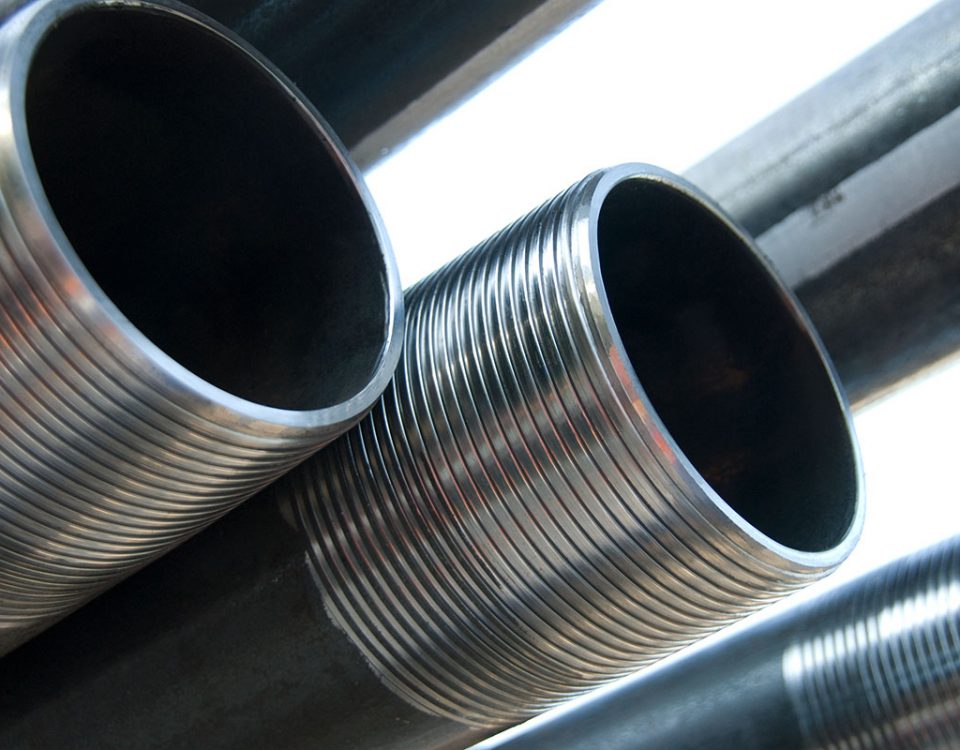
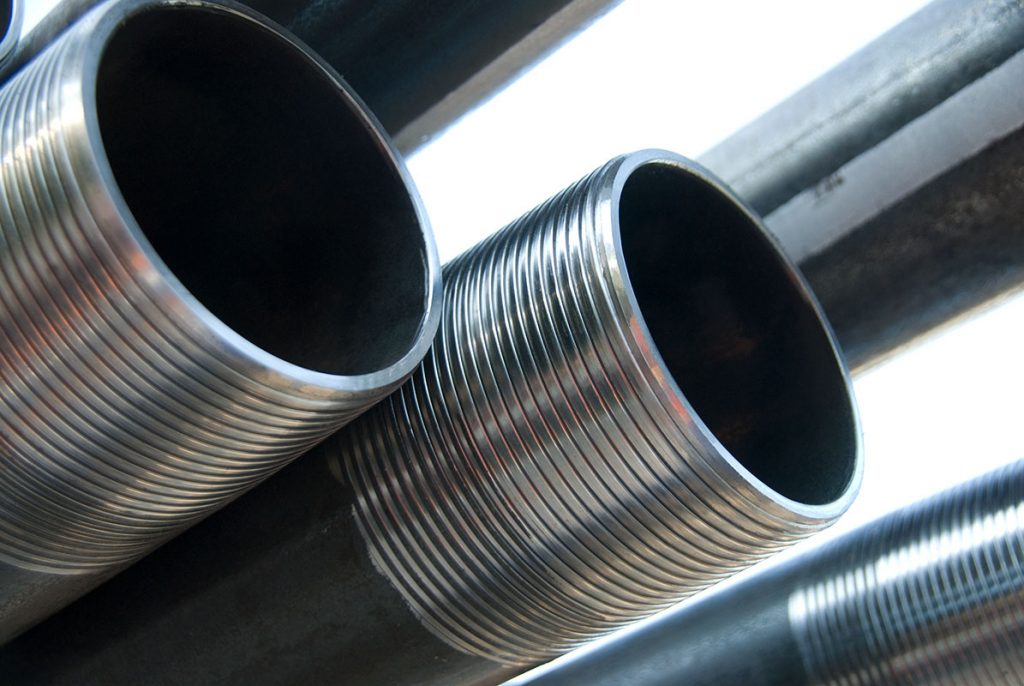
Plain ends for NPS 1½ or smaller are subject to contractual provision. For larger than NPS 1½, pipes of standard or extra-strong weight with wall thickness less than 0.500 inches are beveled at 30–35° with a root face of 0.8–2.4 mm. Threaded ends follow ANSI B1.20.1 requirements, with dimensions in standard Tables X3.1 and X3.2. Couplings for NPS 2½ and larger are taper-tapped per ASTM A865; smaller sizes use straight-tapped couplings.
7.2 Black Pipe vs. Hot-Dip Galvanized Coating
Black pipe has no surface coating. Hot-dip galvanized coating must be applied to both inside and outside surfaces using zinc conforming to B6, with a minimum coating weight of 1.8 OZ/FT² (0.55 kg/m²). The coating must be free of uncoated areas, kabarcıklar, akı yatakları, slag, and interfering zinc deposits. In Abter Steel’s galvanizing line, we consistently exceed these requirements with coating weights of 2.2–2.5 oz/ft² and thorough post-treatment inspections.
bölüm 8 Equivalent Standards and Supply Chain Considerations
8.1 ASTM A53 Equivalents (API 5L, A106, TR, JIS)
Common equivalents: API 5L Grade B is chemically and mechanically similar to A53 Grade B; ASTM A106 Grade B is the seamless high-temperature equivalent; TR 10219 S275J2H is a structural hollow section equivalent; JIS G3452 SGP is the Japanese standard for carbon steel pipe. ancak, careful comparison of supplementary requirements is essential before substitution. Abter Steel routinely supplies material to multiple standards from the same manufacturing line, with adjustments in chemistry and testing to meet each specification’s unique requirements.
8.2 Abter Steel – Manufacturing and Stocking Capabilities
Dişli Dirsek, headquartered in China, has established itself as a reliable manufacturer and stockist of ASTM A53 carbon steel pipe. With extensive inventories of seamless, ERW, and FBW pipe across all schedules from NPS 1/8 NPS için 24, Abter Steel offers short lead times and consistent quality. Products available include Type S Grades A and B, Type E Grades A and B, and Type F Grades A and B. Wall thickness options cover STD, XS, XXS, and schedules 10 aracılığıyla 160. Coating options include black, hot-dip galvanized, 3LFE, and FBE. Value-added services such as cutting, threading, eğim, and end protection are provided. With a minimum order quantity of 1 ton, Abter Steel serves both large-scale infrastructure projects and specialized industrial requirements. Each shipment is accompanied by full mill test reports traceable to the original heat numbers, ensuring full compliance with ASTM A53/A53M requirements.
bölüm 9 Conclusion and Engineering Recommendations
ASTM A53 remains the foundational specification for carbon steel pipe in North America and beyond. Understanding its nuances—the distinctions between types, the implications of grade selection, the intricacies of the elongation formula, the cold expansion limit, the heat treatment requirements for welded Grade B, and the coating specifications—enables engineers and procurement professionals to make informed decisions that balance performance, maliyet, ve güvenilirlik. For projects requiring A53 pipe, partnering with an experienced supplier like Abter Steel ensures not only material compliance but also the technical support needed to navigate specification complexities. The standard’s longevity and continued relevance are testaments to its robust technical foundation and its adaptability to evolving industry needs.
“'